I sat down recently to talk with two employees at the Washington Conservation District (WCD) who’ve played lead roles in local watershed work during the past twenty years. What excites them most about their jobs and what changes have they seen in the past two decades?
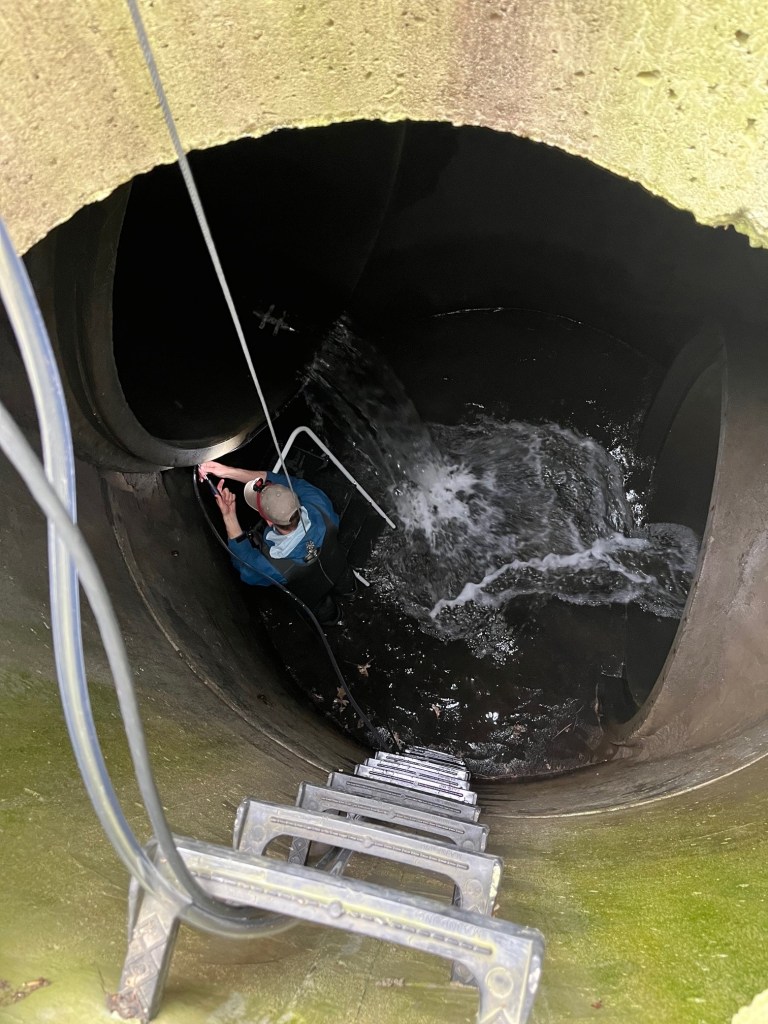
Erik Anderson, Senior Water Resource Specialist: Erik joined the Conservation District in 2002 as a seasonal water monitoring employee and was hired on full-time in 2003. He is the lead coordinator for the WCD’s stream water monitoring program.
WCD monitors roughly 50 streams and stormwater conveyances in Washington County every year, including ten sites that are confined space entries such as underground stormwater pipes. “One of the funniest sites where we conduct water monitoring is in the middle of a dog park in Woodbury,” Erik laughs. “We actually started monitoring there before the dog park was built, but now the site is inside a fence and we have dogs sniffing us while we’re there.”

The primary trend he has observed over time is improving water quality. “I remember early in my career, everything was getting worse. Now, lakes and streams are coming off of the impaired waters list,” he explains. “East Boot [on Norell Ave. in May Twp.] has been one of the most dramatic improvements. It used to turn pea green with algae every summer and now the water is clear.” East Boot was one of seven lakes in Washington County to be delisted (removed from the state’s impaired waters list) in 2022 due to improved water quality.
Erik appreciates the flexibility and variety in his job, as well as the process of analyzing the water monitoring data to determine what’s going on in a stream. “I get to spend a lot of time outside, which is great when the weather is nice, but not when it’s 35° and windy,” he says. “During the winter, I spend more time indoors analyzing the data. Sometimes it is pretty straight forward, but other times we have a stream bed that is constantly changing and it’s hard to figure out how to account for those constant changes.”
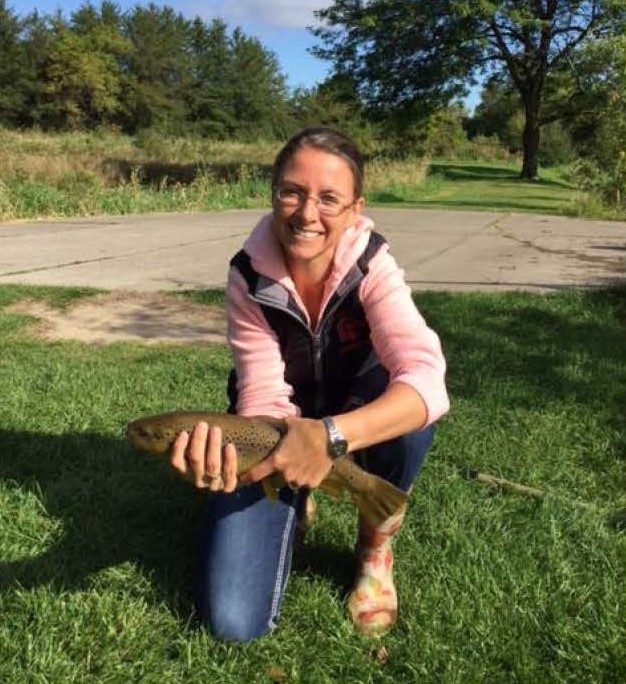
Karen Kill, Brown’s Creek Watershed District Administrator: Karen joined the WCD as a water resources specialist in 2000. In the beginning, she helped to develop lake management plans and conduct stream monitoring. Three years later, she became the administrator of the Brown’s Creek Watershed District, a leadership role she has now held for twenty years.
Karen says she most enjoys developing and implementing large capital improvement projects that help to improve water quality. One example was working with the Minnesota Department of Natural Resources (DNR) when a former rail line was converted into the Brown’s Creek State Trail in 2014. “Having public land access along the trail corridor created so many new opportunities for us to complete stream-improvement projects along Brown’s Creek,” she says.

Another example is a stormwater harvest and reuse system that was constructed last year at the Manning Ave. and Highway 36 interchange, in partnership with Washington County, Minnesota Department of Transportation, and Applewood Hills Golf Course. “All of the partners really went above and beyond what was required by watershed districts rules,” she explains. “The golf course is now reusing stormwater that would have just gone to Long Lake to grow algae and the project saves taxpayers money. It’s also easier to maintain than other stormwater management practices.”
Looking towards the future, Karen is most concerned about the long-term impacts of chloride (salt) on our local freshwater resources. “We have improving water quality trends for almost every lake and stream in our watershed district when we look at excess nutrients and water clarity, but now we’re starting to see impacts from road salt and water softeners,” says Kill. “Long Lake in Stillwater is really close to being de-listed for nutrients, but now it has a new impairment for chloride. Salt is a considered a permanent pollutant, so we need to make changes quickly to avoid additional damage.”

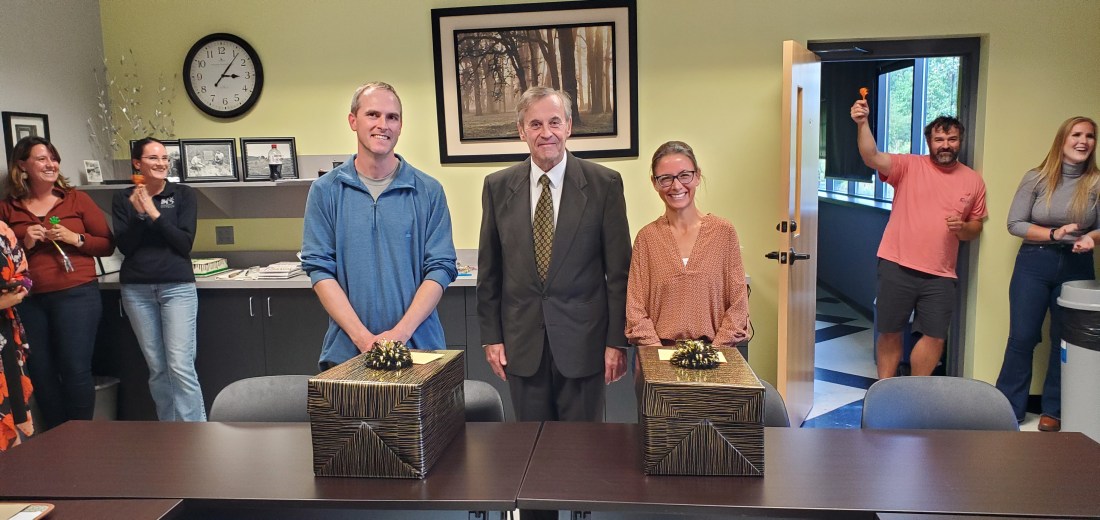
The Washington Conservation District is a local unit of government established in 1942 to provide education and technical support to private landowners and local communities to protect soil and water resources. The WCD Board of Supervisors recognized Erik and Karen for their 20 years of service during a board meeting in September.

 East Metro Water