Way down south along the Mississippi River, great blue herons are on the move. Flying alone or in small groups of three to twelve, these prehistoric creatures head slowly, steadily north. This week they crossed the border into Missouri. By the end of the month, we’ll welcome them back to Minnesota.
Great blues are one of 17 species of colonial waterbirds that call Minnesota home for at least a portion of the year. It’s a funny name that suggests you might find them dressed in waistcoats, with powdered white hair like George Washington or Thomas Jefferson. In actuality, herons, grebes, pelicans, cormorants, egrets, gulls, and terns are called colonial because they nest in large groups (colonies) along the edges of rivers, lakes, and wetlands. Most migrate south when the water freezes over, so their eventual return in March and April reassures us that spring will come as well.
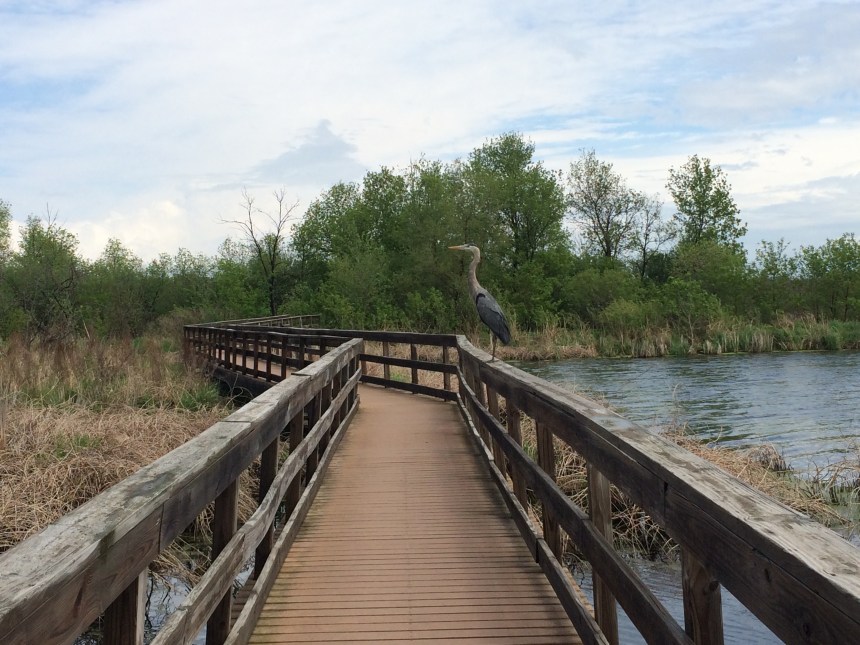
Great blue herons are the largest herons in North America and one of the first birds to return to Minnesota during spring migration. They are easy to see because they are absolutely huge, standing three to four feet tall with wings that can stretch six and a half feet wide. You can spot them along the edges of lakes and rivers around the state, where they dine on fish, as well as frogs, salamanders, turtles, snakes, insects, rodents, and birds. Great blue herons build their nests in trees along the water’s edge and create giant colonies – known as rookeries – that can have as many as 500 nests.
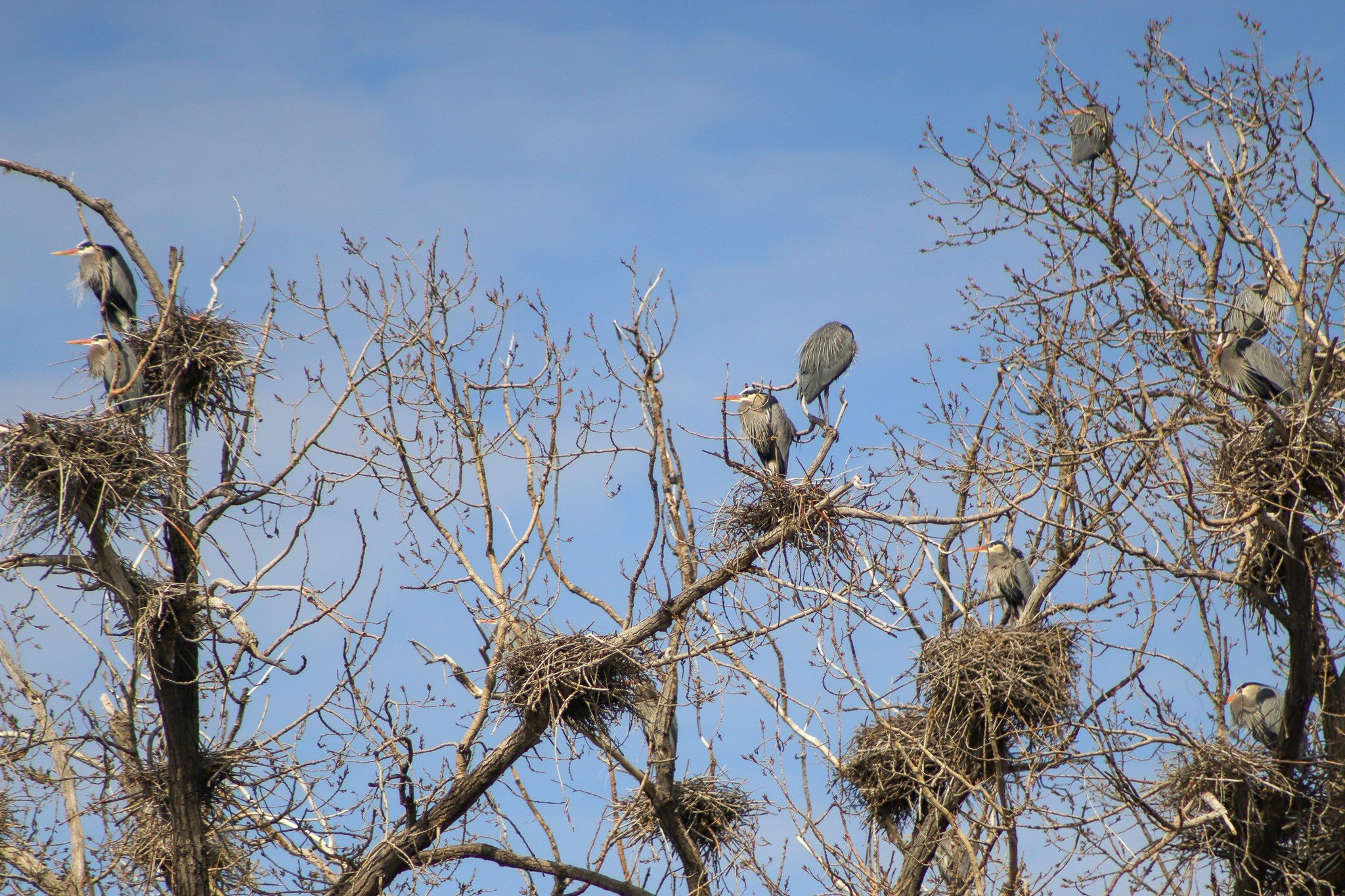
Pig’s Eye Island Heron Rookery Scientific and Natural Area along the Mississippi River in St. Paul is one of the largest heron and egret rookeries in Minnesota and has more than 1600 nesting pairs of birds. There are also several great blue heron colonies along the St. Croix River north of Stillwater and near Osceola.
Green herons are another intriguing waterbird that returns to Minnesota each spring. Unlike their regal cousins, who stand tall and proud, green herons hold their necks folded in an “S” shape, which gives them the appearance of being a short man in a trench coat, standing on long thin legs.
Green herons are secretive but can occasionally be spotted along the shores of wooded lakes and streams in central and southeastern Minnesota. They especially love small lakes with trees, shrubs, willow thickets, and tall marsh plants. Green herons fish with bait and will sometimes drop feathers or twigs onto the water’s surface to lure fish within striking distance. The epitome of patience, some people consider them a symbol of self-reliance, wisdom, and the skill to navigate life’s challenges independently.

Lastly, we have the black-crowned night heron, which is actually the most widely distributed heron in the world despite being relatively uncommon in Minnesota. Like the name suggests, these birds feed at night to avoid competing with other herons and egrets during the day. Black-crowned night herons are most common in the prairie biome of Minnesota but also nest at the Pig’s Eye rookery in St. Paul. According to the Minnesota Department of Natural Resources, their populations in Minnesota have been declining 5% annually since 1980, mostly due to wetland loss and degradation.
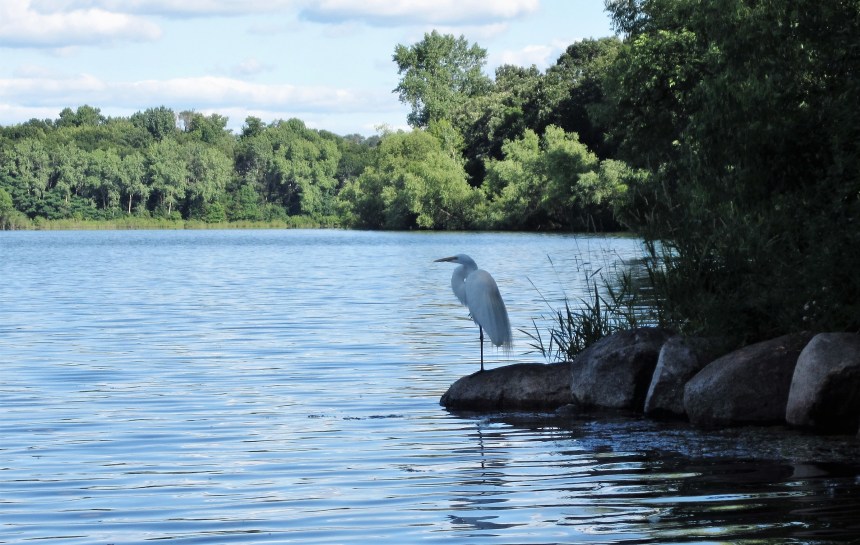
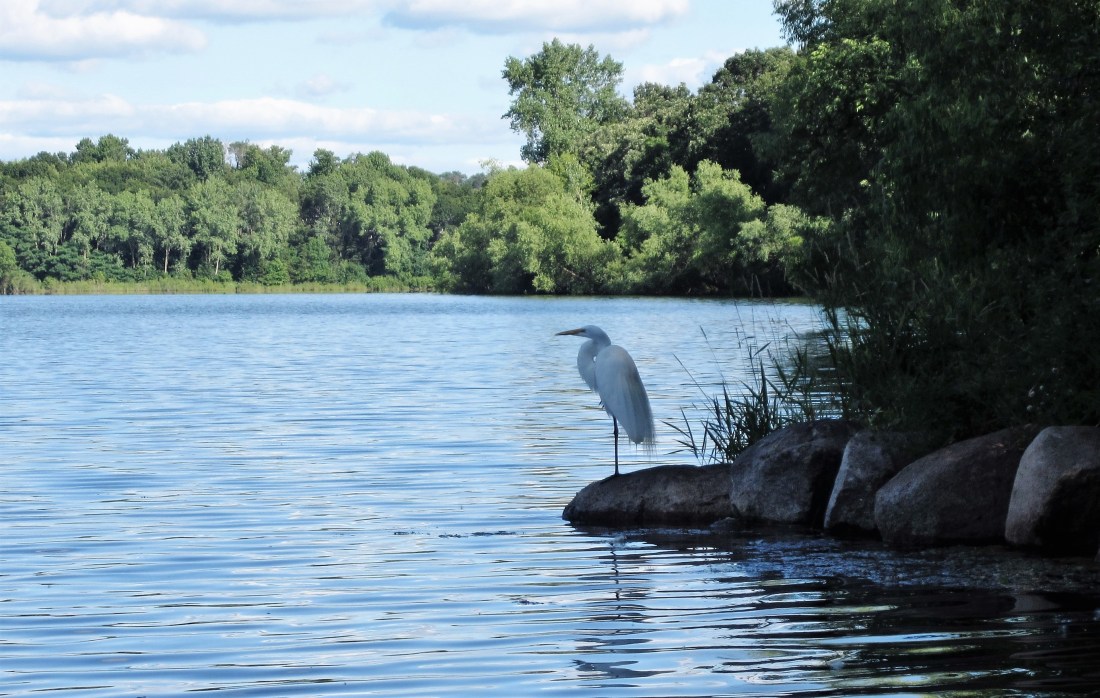
Then, there are the great egrets which are tall, thin, and brilliantly white. Here we have a trick, because these birds are actually another type of heron, even though we call them by a different name. Great egrets were nearly driven to extinction in the United States in the late 1800s, when people killed them to use their beautiful white feathers for women’s hats. At the time, egret feathers were worth twice their weight in gold! After the Migratory Bird Treaty Act was passed in 1918, egret populations slowly rebounded and they are now considered stable across most of their range in North America.
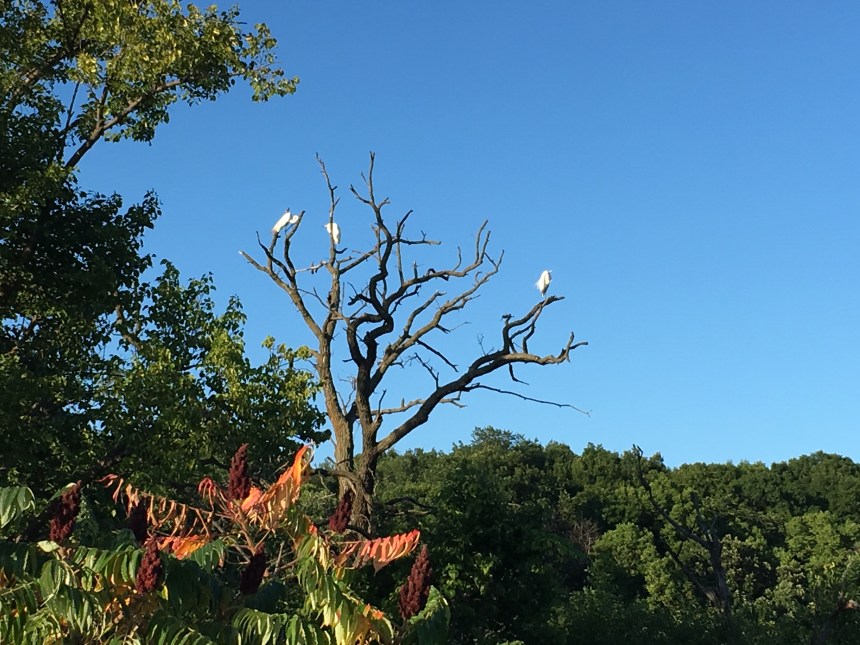
Surprisingly, if we step even further back in time to the early 1800s, there are actually very few reports of great egrets living in the place now known as Minnesota. Today, however, there are small populations of egrets throughout the Mississippi River valley in southern and central Minnesota. Look for them in marshes and on mud flats, as well as along the shores of lakes and ponds, beginning sometime in mid-April.
Way down south, the birds are moving. Soon we’ll welcome them and spring.

 East Metro Water