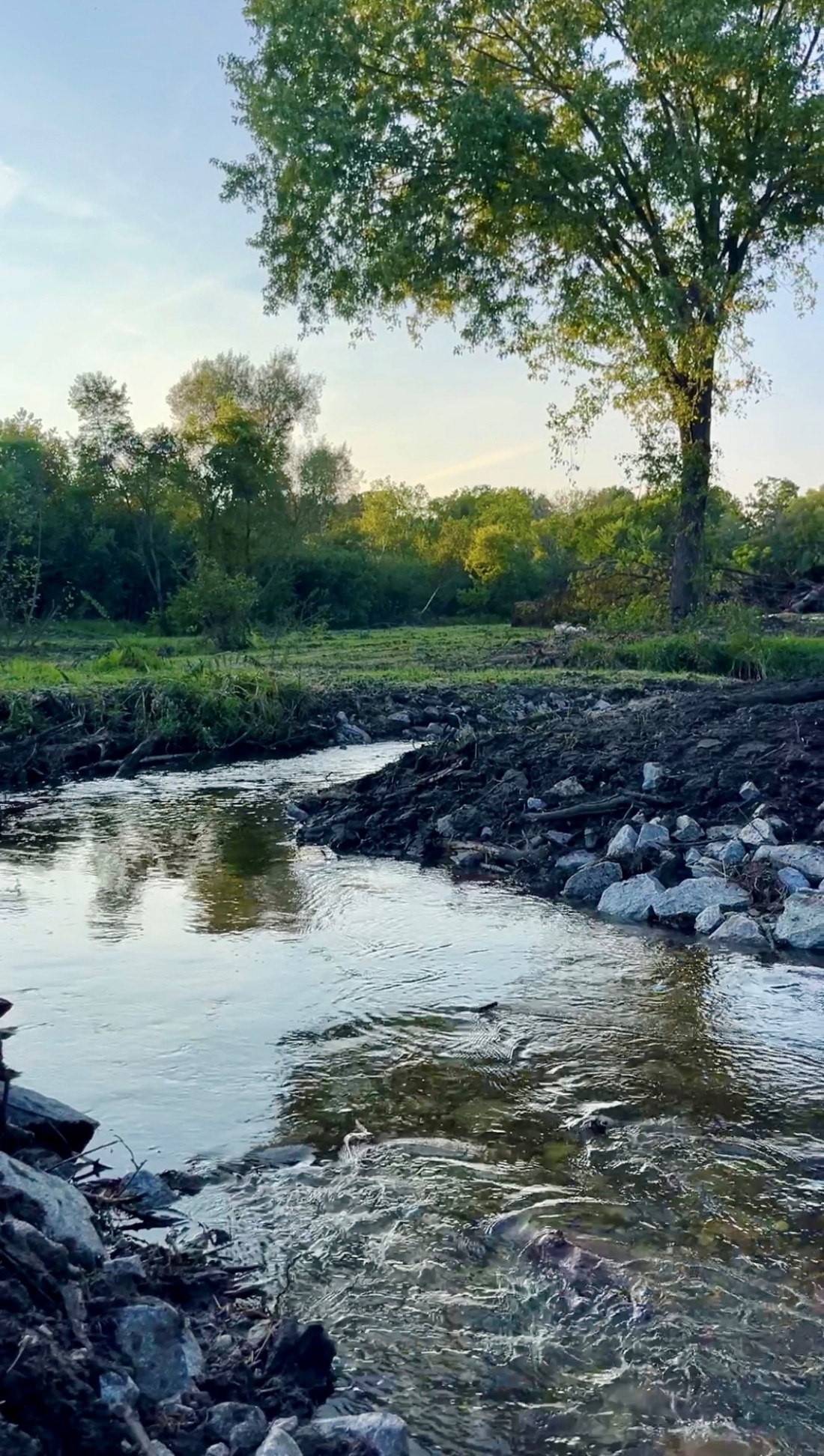
If you’ve traveled the Brown’s Creek State Trail through Stillwater in recent weeks, you may have noticed heavy machinery at work and a newly clear view from the trail down to the water’s edge in Brown’s Creek Park. The changes are part of a large-scale stream restoration project, designed to reduce bank erosion, re-create the natural floodplain, and improve habitat for fish along a half-mile stretch of the creek that flows between McKusick Ave. and the Brown’s Creek Trail.
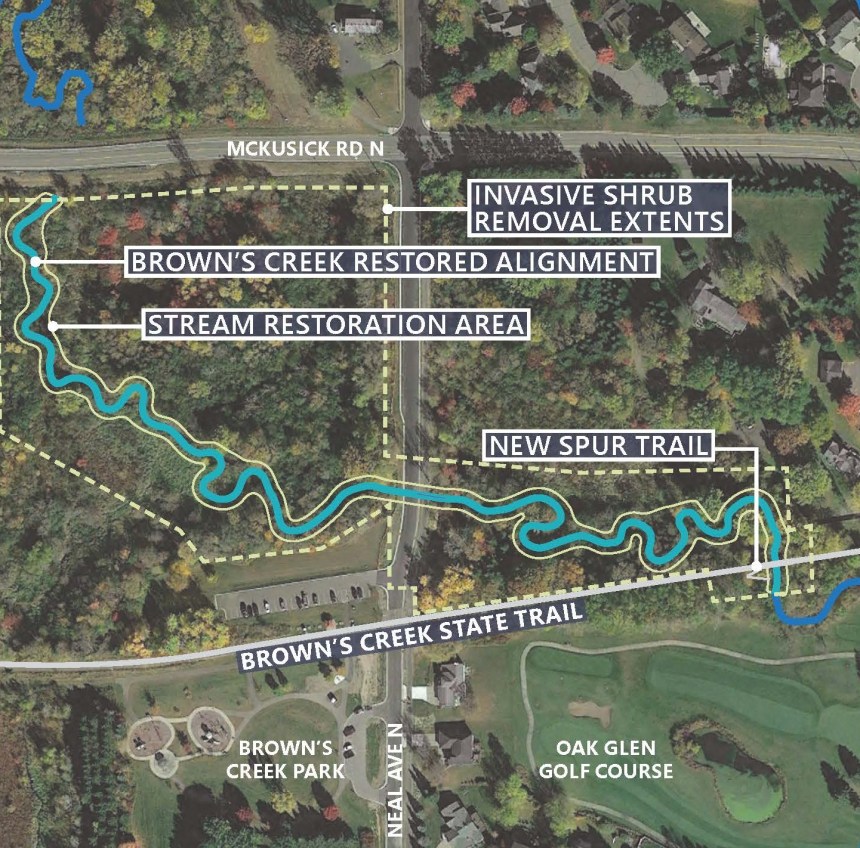
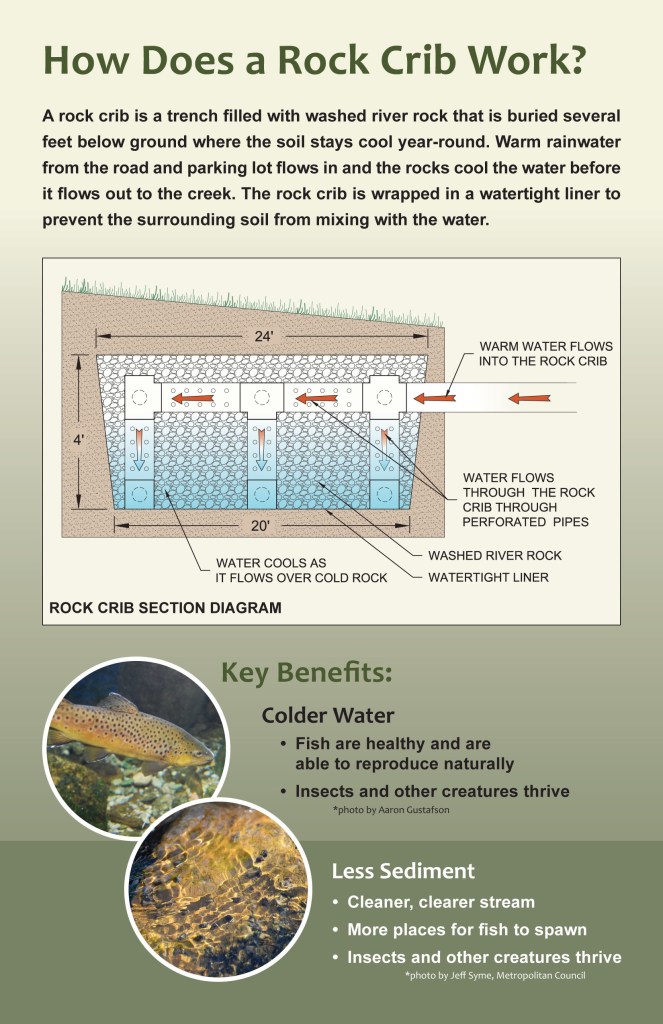
Previously, the area around the stream was overrun with buckthorn and the stream had become shallow and incised, leading to poor conditions for fish and aquatic invertebrates. “One of the main stressors for trout and other coldwater fish in Brown’s Creek is temperature,” explains Karen Kill, Administrator of the Brown’s Creek Watershed District. When summer stream temperatures climb above 64° F, brown trout struggle to grow and reproduce. At sustained average stream temperatures above 73° F, trout begin to die.
“We’ve conducted a thermal study for the creek and found that we can maintain enough shade to keep the water cool with native grasses and forbs,” she continues. “We’re also creating a new floodplain so that the stream is better able to absorb large rain events.” The system is designed to handle 7.2 inches of rain in a 24-hour period of time, which is sometimes referred to as a “100-year storm event.”
Brown’s Creek is one of only a handful of designated trout streams near the Twin Cities metro area and plays an integral role in the history of Stillwater. Over the past twenty years, the Brown’s Creek Watershed District has implemented numerous stream-improvement projects along the creek, including establishing native buffers in the Oak Glen Golf Course, planting raingardens at Stillwater Country Club, and installing underground stormwater treatment systems along McKusick Ave and at Brown’s Creek Park.
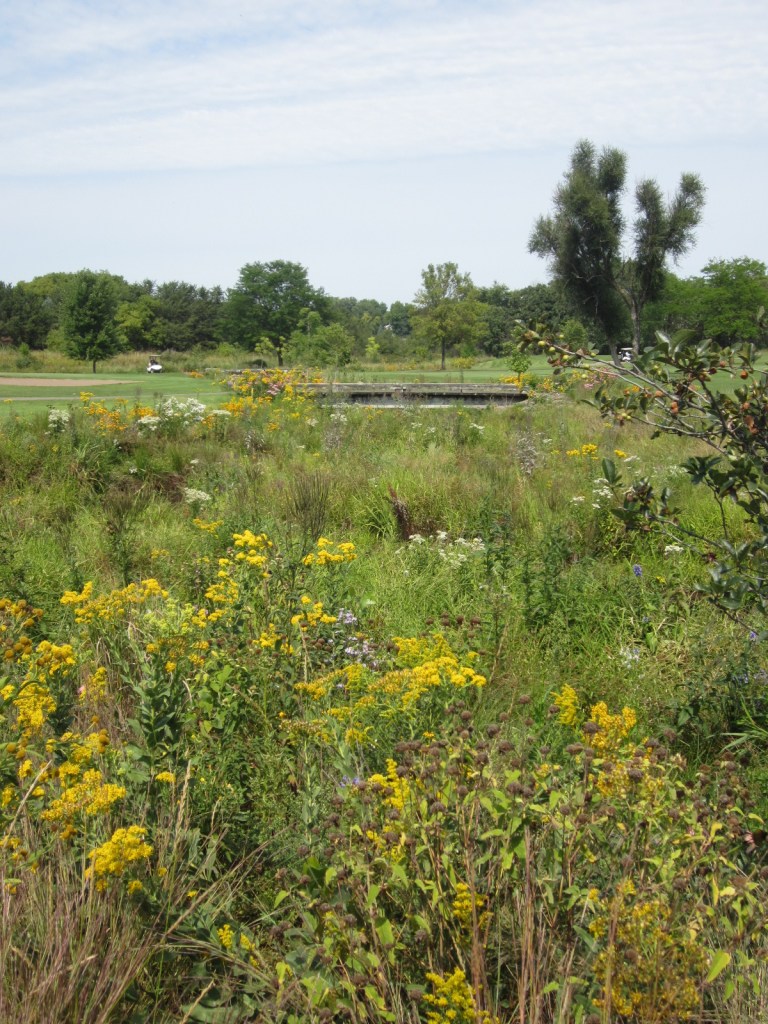

Kill notes that it took the watershed district several years to plan and implement the current project because there were so many factors to consider. The restoration plan needed to protect historical and archaeological features and avoid harming the northern long-eared bat (a federally endangered species). In addition to improving habitat for birds, fish and pollinators, the completed project will also feature a new, ADA accessible trail spur to provide public access to the creek.
“There are a lot of cooks in the kitchen and that can sometimes make for a slow dinner,” Kill joked during a recent project tour. “We might be eating at midnight but it will be a really good meal when we do.”
Brown’s Creek Watershed District is leading the project, with $320,700 in grant support from the Minnesota Pollution Control Agency, via a Federal 319 grant. Minnesota Department of Natural Resources and City of Stillwater are additional partners. Geomorphic Restoration, the project contractor, has completed dozens of similar stream restorations in Minnesota and other states.

Trail users and local residents can expect to see buckthorn and tree removal continuing into the fall. The watershed district will also work with Trout Unlimited and volunteers to plant native shrubs and trees in key locations along the stream next spring. Currently, the floodplain is covered in a greenish material known as hydro-mulch, which helps to hold the soil in place until seeds can sprout and get established.
“It’s kind of like cleaning out a closet,” Kill explains. “It can look really messy in the middle but will end up better in the long-run. We really do expect to see trout in this stretch of Brown’s Creek when we are done.”

 East Metro Water