
For nearly two decades, local watershed management organizations have been laser-focused on reducing phosphorus flowing into lakes, rivers and streams from untreated stormwater runoff. Phosphorus is a naturally occurring nutrient found in leaves, grass clippings, sediment, and manure and the primary culprit leading to algae blooms in freshwater systems. Now, with water quality improving in most east metro lakes and 13 lakes “de-listed” for excess nutrients in the past two years (meaning they are now meeting state standards), many watershed organizations are turning their attention toward shorelines.

A recent report from the Natural Shorelines Partnership noted that Minnesota has lost 40-50% of its natural shorelines over the past 100 years, and continues to lose shoreline habitat at a rate of 1-2% per decade. In the metro area this challenge is even more pressing. Surveys conducted by the Minnesota Department of Natural Resources (DNR) find that 69% of all residential shoreline lots in Washington County have low quality habitat. As a result, biologists are observing less diversity in wildlife, less aquatic invertebrates, and fewer, smaller fish, even in lakes with relatively “good” water quality.
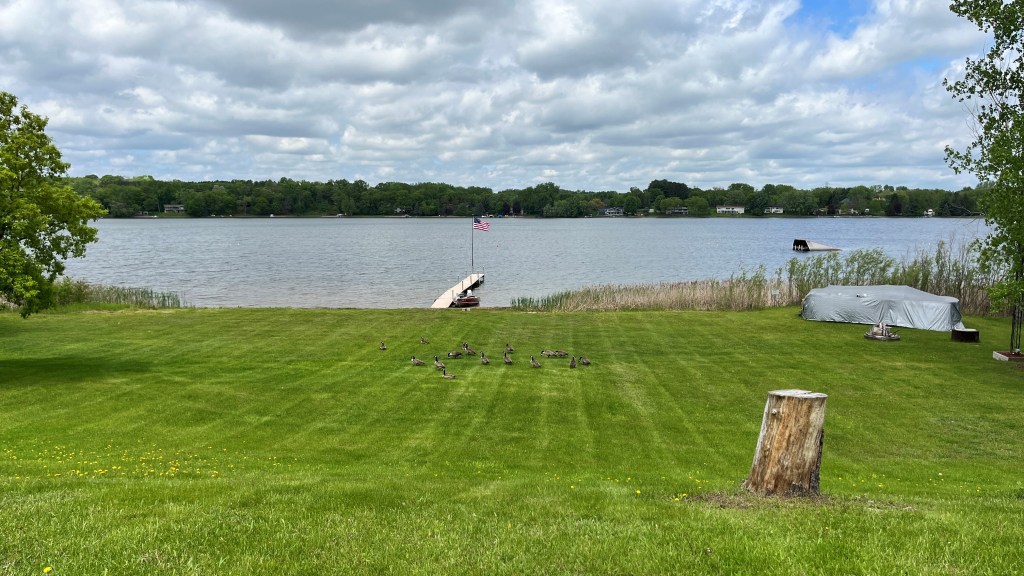
One watershed district has developed an incentive program to encourage lakeshore landowners to maintain existing habitat on their properties – trees, shrubs, aquatic plants, and native upland plants. Comfort Lake – Forest Lake Watershed District’s (CLFLWD) “Legacy Payment Program” was developed in 2023 and provides landowners with $300 annual payments to maintain natural shorelines and high quality habitat. “My favorite type of restoration project is the one that we don’t have to do,” says Aiden Read, CLFLWD’s Land Management Specialist. A similar program in Burnett County, Wisconsin provides landowners with an initial payment of $250, plus a $50 check every year. The Burnett County program has been in place since 2000 and has 800 landowners enrolled.

The Lower St. Croix Watershed Partnership and East Metro Water Education Program have also developed numerous training modules for lakeshore landowners, shoreline contractors, and realtors selling shoreline properties. The goal is to help people understand how to care for their shoreline properties and how to address common concerns such as erosion and invasive species.

In addition, watershed organizations look for opportunities to restore degraded shoreline habitat, in partnership with public and private landowners. One example underway this month is a shoreline restoration project at Wildwood Park in Mahtomedi, where the Rice Creek Watershed District, Washington Conservation District, and City of Mahtomedi are replanting native habitat near the fishing pier and public boat launch.
Though shoreline restoration is similar in many ways to other native plantings, these types of projects are usually more expensive and require special materials, such as biologs, temporary wave breaks, and erosion control blankets, to help protect the trees and plants until they are fully established. Biologs are made out of shredded coconut fibers that are bound together inside of a casing (sort of like a sausage) and are staked into the ground right at the water’s edge. Temporary wave breaks are placed a few feet further out into the water, and erosion control blankets (also made from coconut fibers) are laid over the bare soil along the shoreline to retain moisture, prevent erosion, and minimize weed growth. The blankets and biologs are left in place after planting and naturally break-down over time.
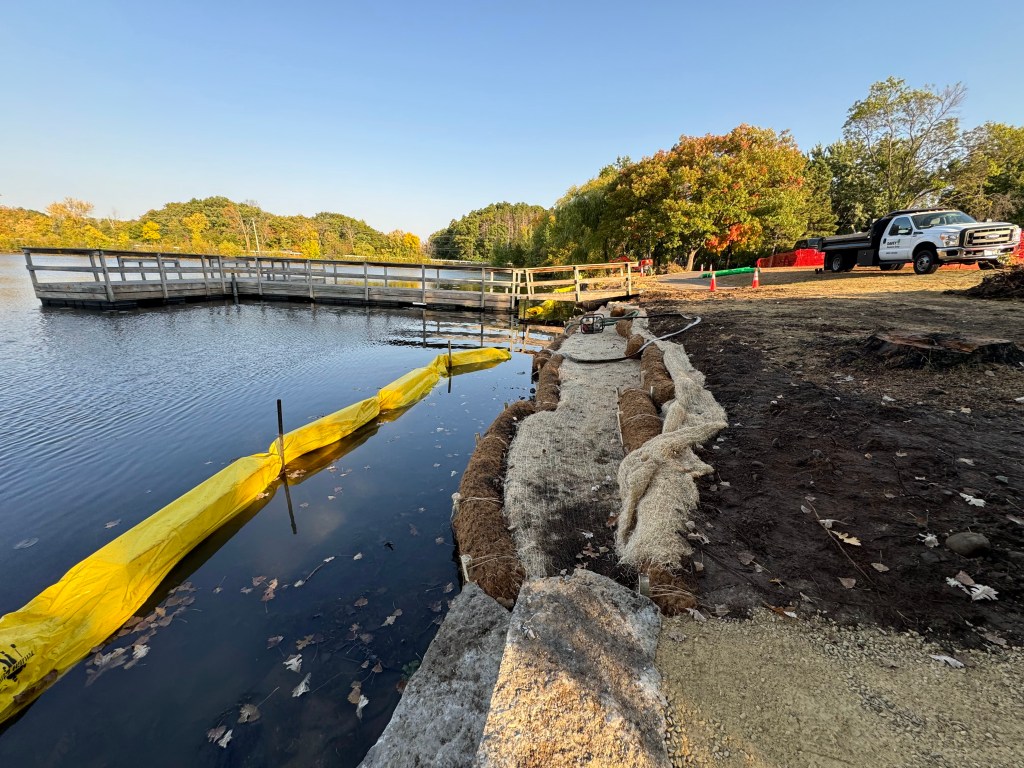
At Wildwood Park, the native shoreline planting will feature a mix of trees and shrubs (serviceberry, buttonbush, red twig dogwoods, dwarf bush honeysuckle, red-osier dogwood, maple, cottonwood, bur oak); aquatic plants (blueflag iris, common arrowhead, marsh milkweed, monkey flower, sweet flag, soft rush, lake sedge, water plantain); and upland native plants (butterfly weed, wild onion, narrow-leaved coneflower, dotted blazingstar, great blue lobelia, large-flowered penstemon, side-oats grama, big bluestem, yellow coneflower) to provide high quality habitat for fish, birds, insects, pollinators and other wildlife.
Are you a lakeshore or riverfront landowner looking to improve the health of your shoreline? Get started by perusing the collection of resources available at www.lsc1w1p.org/shorelines. In addition, you can sign up for a free site visit with Washington Conservation District (www.mnwcd.org) to learn more and connect with funding support from your local watershed organization.

 East Metro Water