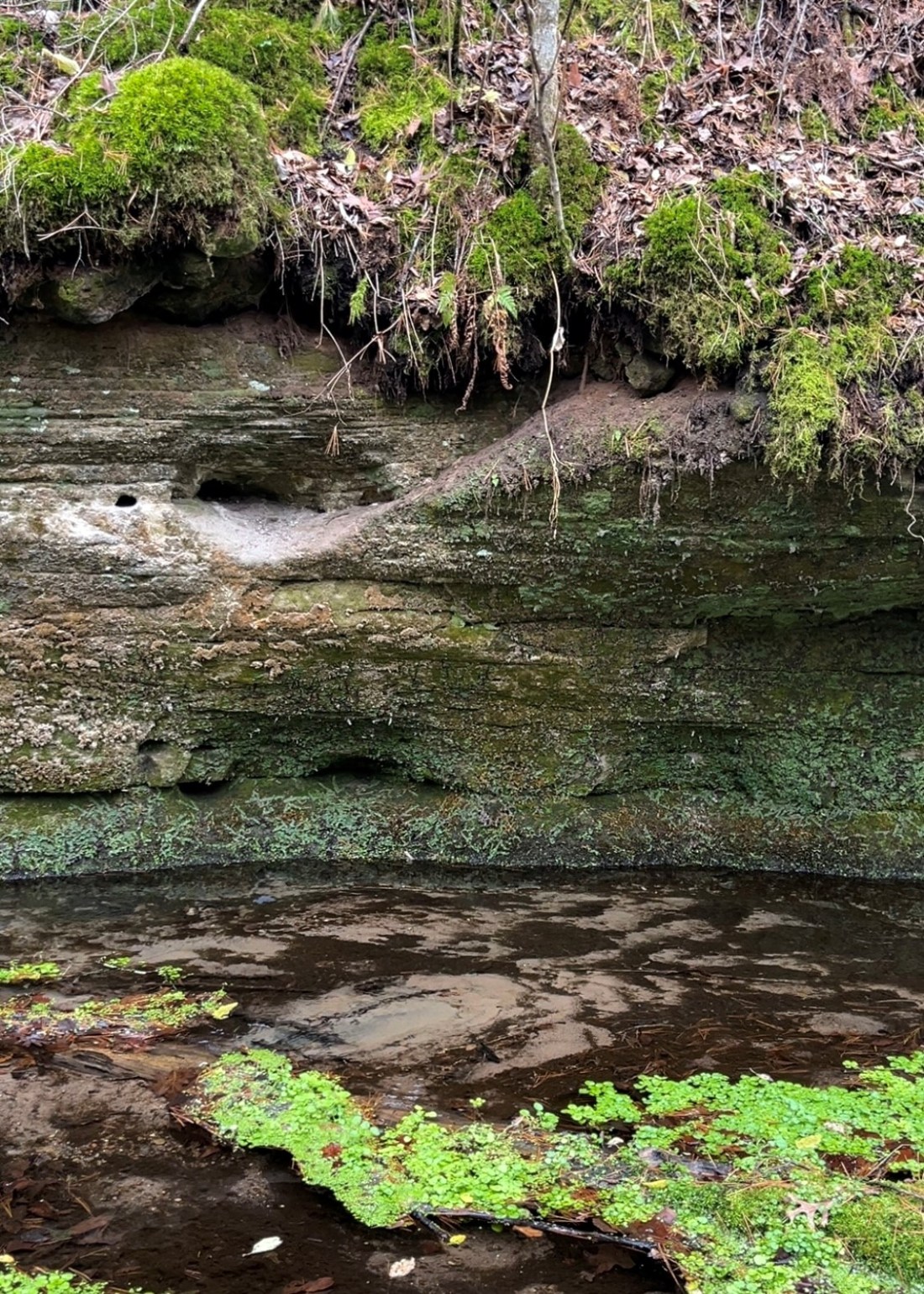
It was November.
To be honest, I feel as though I could end the sentence there and you’d all know what I mean. But I’ll carry on to let you know that it was also cold and grey. It was the kind of mist that occasionally becomes a drizzle and causes you to look around and think, “Well. What a bare tree, brown leaf, bummer kind of day.”
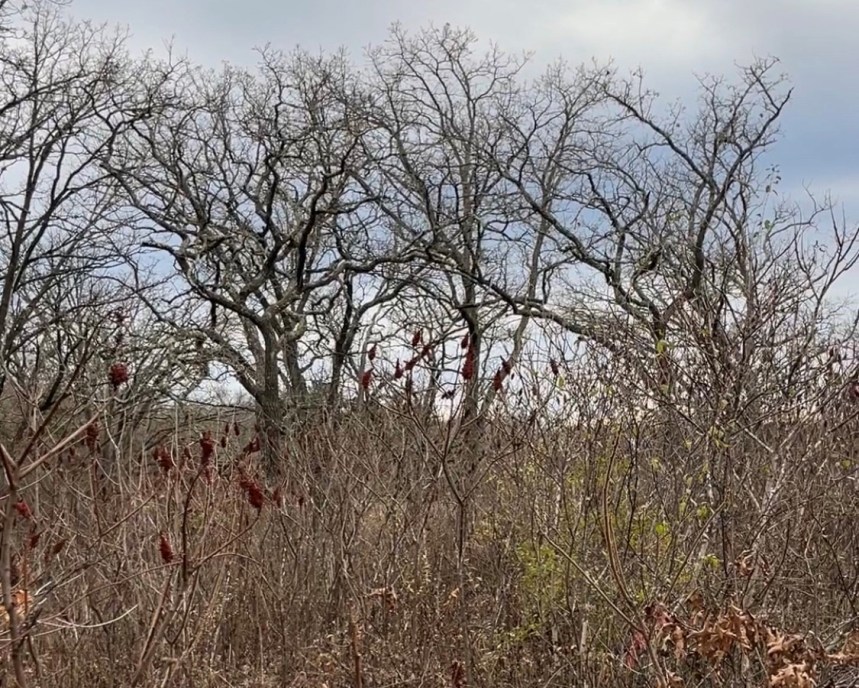
None-the-less, I decided to look for green.
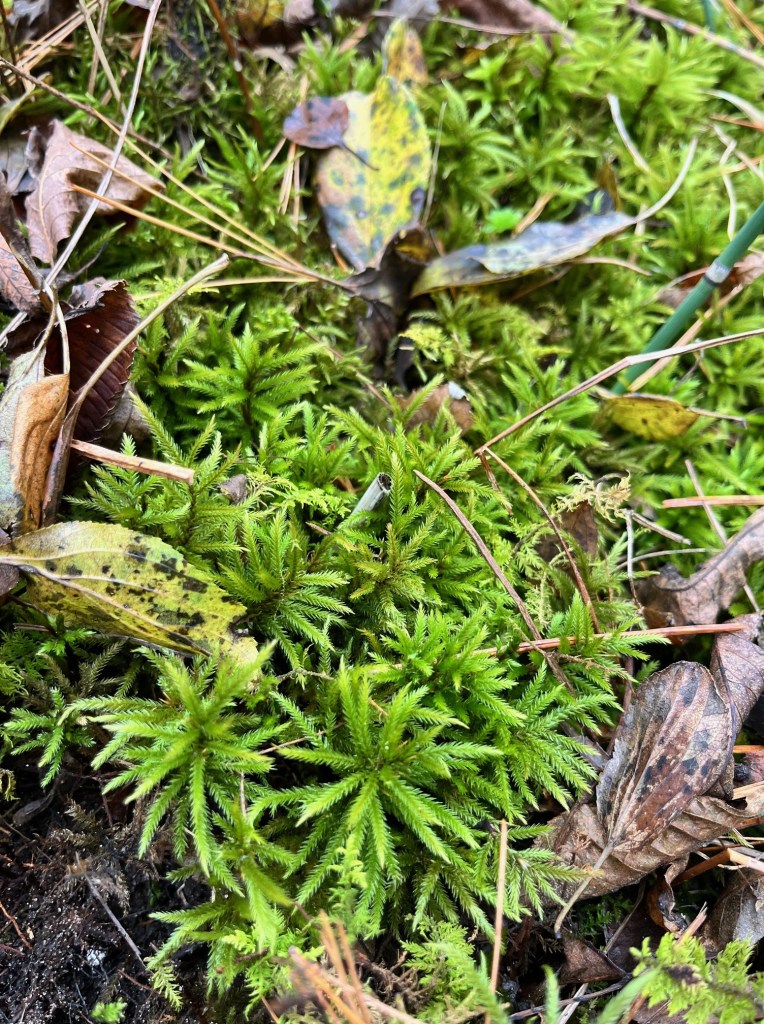
My first find was a patch of lush green moss along the edge of the trail. It was thick, like a 1970s shag carpet, and my son and I pressed our palms into the green to feel its warmth and softness. We found moss on rocks and the bottoms of trees, under brown leaves, and along the edge of a stream. Our favorite was a species that looked like miniature palm trees. I’ve since learned that there are more than 500 species of mosses, liverworts and hornworts that grow in Minnesota. Collectively, these rootless, non-vascular plants are known as bryophytes.
On the topic of liverworts, we found plenty of those as well. Like scales on a dragon, they stretched across the limestone rocks that were deep in the valley where it always stays wet. It’s rare to find a liverwort alone. Rather, they grow mixed amongst and living in community with mosses, lichens, and ferns.
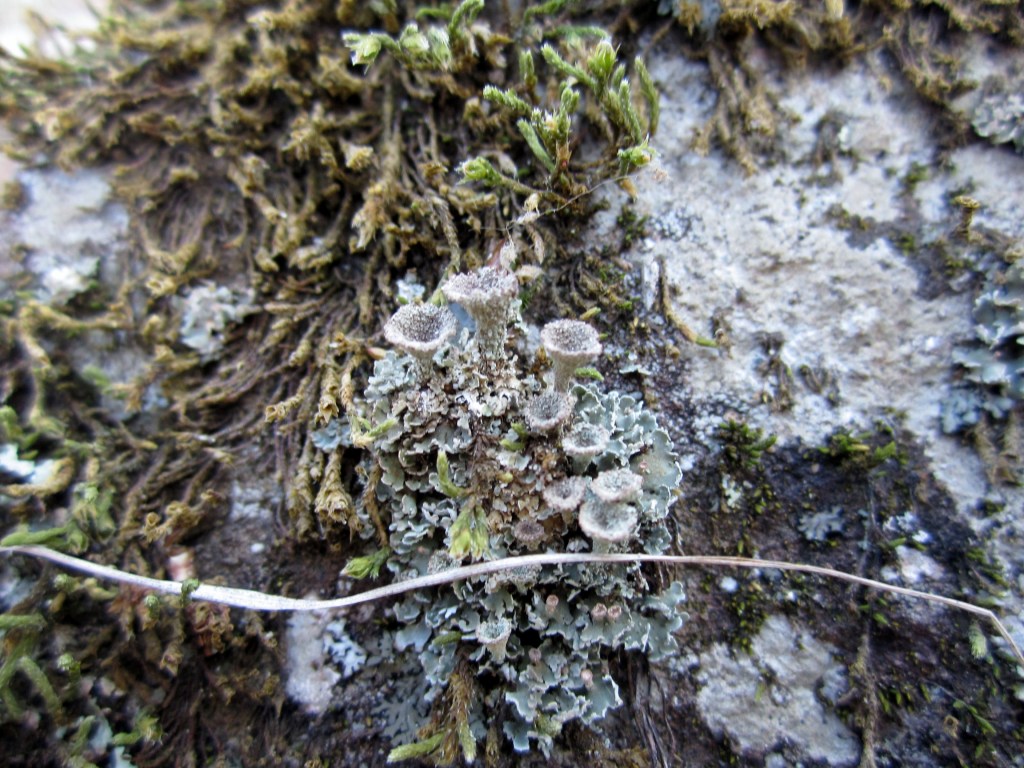
And now that I’ve mentioned lichens, I should also tell you about those. Lichens form through a symbiotic relationship between algae or bacteria and fungus and you’ll most often find them growing on the sides of rocks and trees. Lichens come in all different colors and textures, but there are three main kinds. The first, crustose, looks like it was spray painted on the surface of rocks and trees. The second one, foliose, has a more leaf-like structure. The third, fruticose, is basically an all-out village with structures that look like itty-bitty trees, growing among moss and mushrooms.
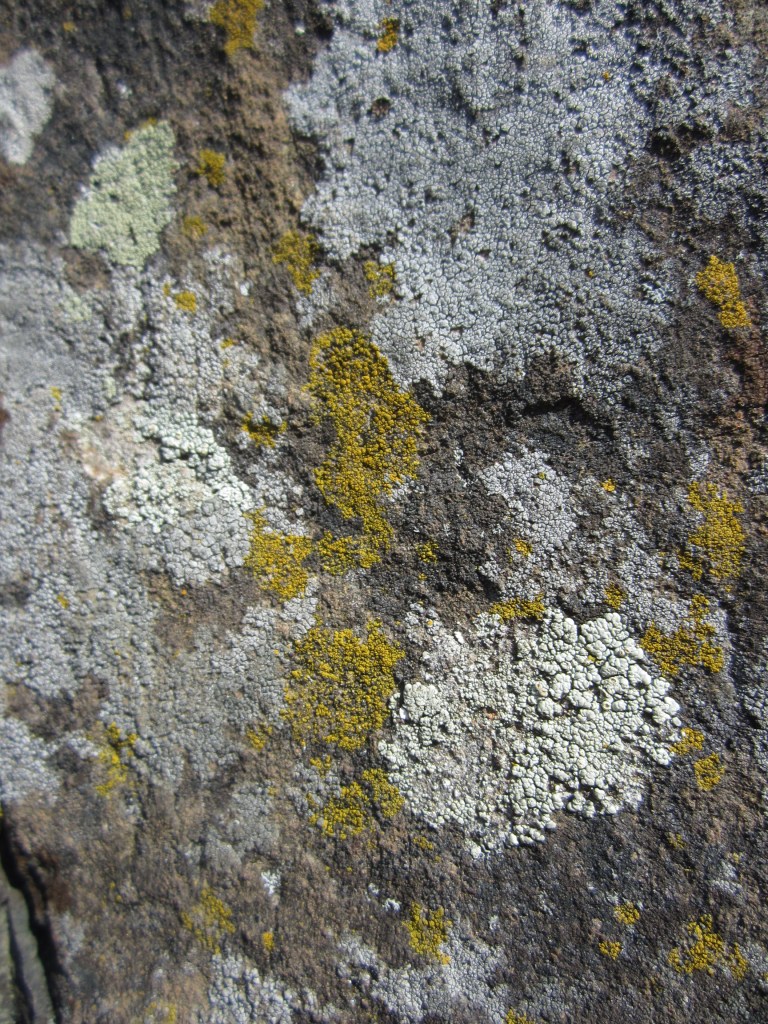
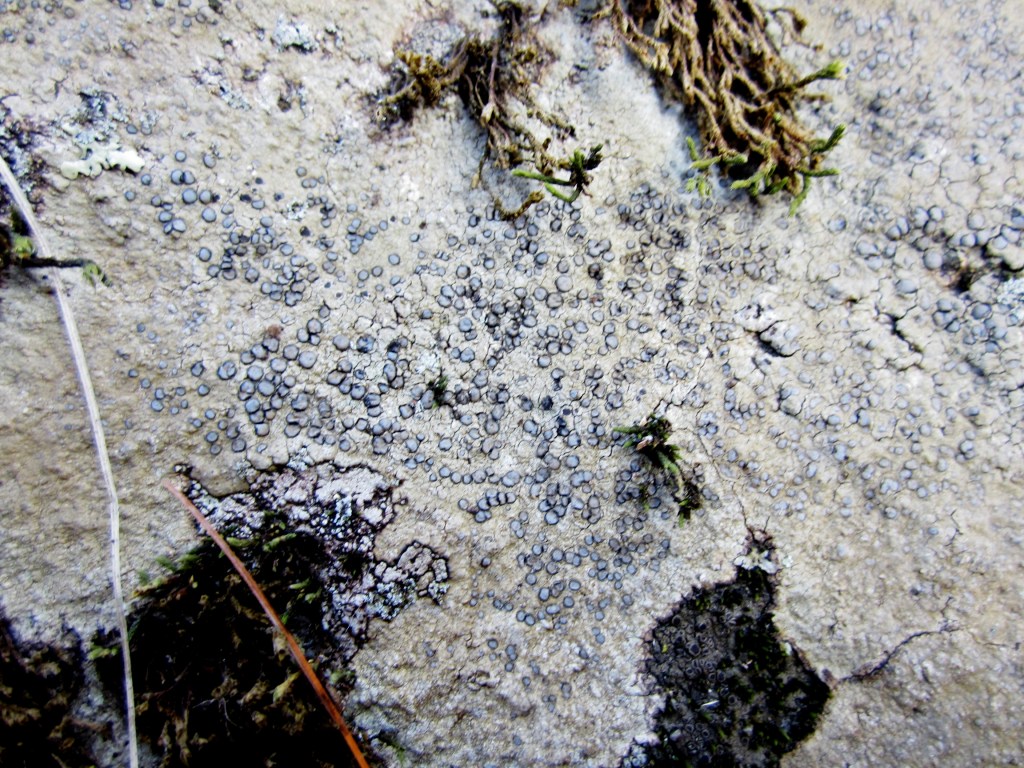
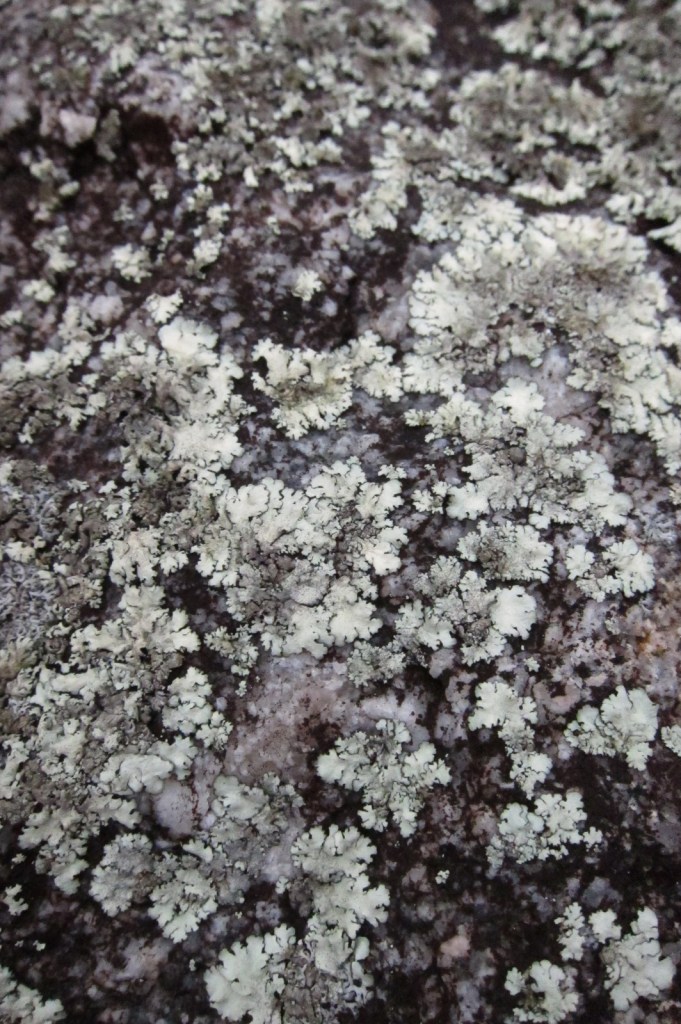
Another place we found green in the forest was in the water itself. The stream we walked along is spring-fed and continues flowing even in the deepest cold of winter. It is filled with the green leaves of watercress (edible but invasive) as well as duckweed and forget-me-not. Underneath a small wooden bridge, we saw young trout swimming. This year, they are big enough for us to see the red on their fins and tails.
Lastly, I searched for the stubborn plants that have steadfastly held onto their green leaves, long into November. One of these, Virginia waterleaf, has green and white speckled leaves and grows pale purple flowers in the early summer. Down on the forest floor, I also found round-lobed hepatica, whose green and purple leaves are covered with small white hairs like velvet. In the spring, these will be among the first plants to flower when the snow melts. There were wood ferns, with their emerald fronds draped across the dried brown leaves, and large communities of polypody ferns, which grow in damp, shady gorges with rocks and walls. Both of these will hold their green throughout the winter, even when it snows.


And so, it was November and it was a bare tree, brown leaf, bummer kind of day.
But also, there was some green.

 East Metro Water