
136 million years ago when dinosaurs still ruled the earth, humans were but a twinkle in the eye of a distant future, and North America had just begun to split and drift away from Eurasia, there were sturgeon. Ten thousand years ago, when human ancestors first made their way to the lands now known as Canada, United States, Minnesota, Wisconsin, and Michigan, these living dinosaurs roamed the Great Lakes and inland rivers. The Menominee, among the oldest inhabitants of Wisconsin, have been known for thousands of years as “People of the Sturgeon,” and the St. Croix River’s largest tributary, the Namekagon, is derived from the Ojibwe word Namekaagong-ziibi, which means “river at the place abundant with sturgeons.”
Two hundred year ago, when European Americans first began to settle the upper Midwest, sturgeon were so abundant that they tangled fishing nets and toppled boats. The settlers sold sturgeon eggs as caviar and piled their bodies along shorelines to dry, before stacking them like cord wood and burning them to fuel steam ships. By 1920, the St. Croix, Namekagon, and Kettle Rivers were three of the only remaining rivers in Minnesota and Wisconsin where sturgeon still survived.
Eventually, the commercial sturgeon fishing craze came to an end and new harvest rules were enacted. Sturgeon populations have slowly rebounded since then, though only in places where the water flows freely. A sturgeon will travel hundreds of miles to spawn and find food – anything less is just not enough.
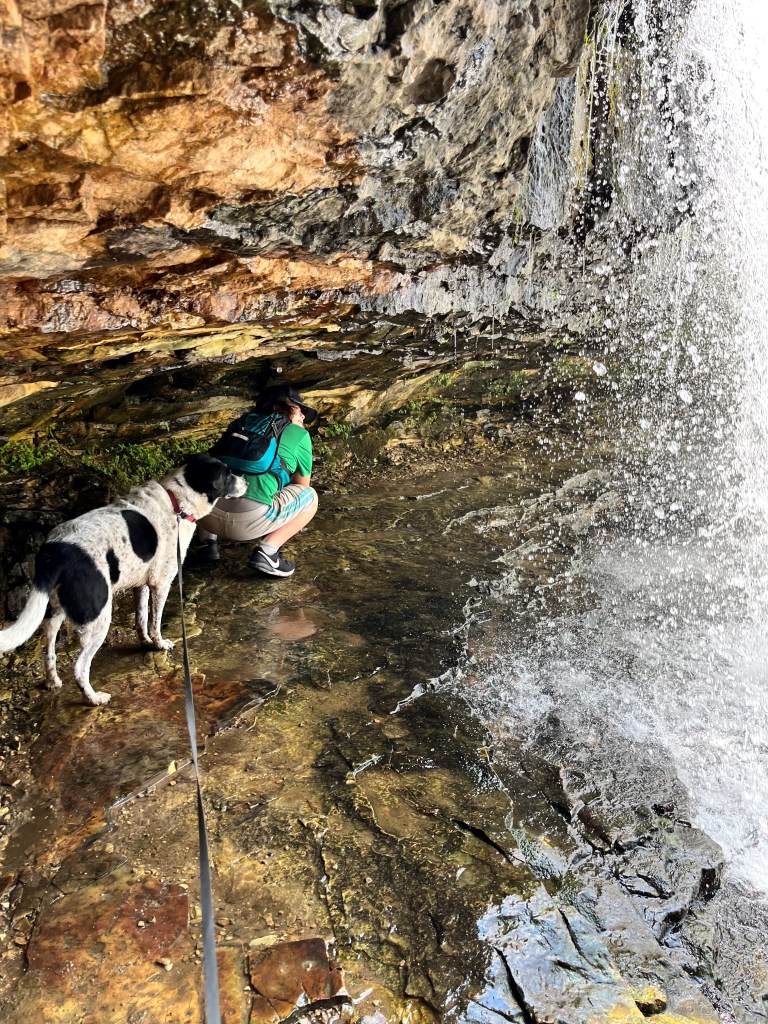
Happily for sturgeon, brook trout, and several other species of native fish, there has been a movement underway for nearly 30 years to re-wild rivers and streams in many parts of Minnesota and Wisconsin. In the St. Croix River watershed, you can once again visit thundering falls at Willow River State Park, thanks to dam removal projects at Willow Falls (1992) and Mounds Plant (1997), led by the Wisconsin DNR. Further south in River Falls, the city is working with the U.S. Army Corps of Engineers on a feasibility study to remove the Powell Dam and restore the lower Kinnickinnic River. The dam was damaged during a large storm in 2020 and was decommissioned in 2022. Previously, the River Falls City Council passed a resolution to remove the Powell Dam in 2026, followed by the Junction Falls Dam in 2035-40.

On the other side of the border, the Minnesota Department of Natural Resources (DNR) removed dams from the Kettle River (Sandstone) in 1995 and the Willow River (south of Sturgeon Lake) in 2021. A third dam, located on the Grindstone River in Hinckley, may also be removed in the future. Statewide, the Minnesota DNR has removed more than 50 dams over the past thirty years and has found that an average of 73% of the lost fish species return to these rivers once the dams are gone.

In addition to dam removal projects, watershed districts in the east metro area are working to restore natural contours, floodplains, and aquatic habitat in several smaller streams, including Rice Creek in Arden Hills and New Brighton (multi-stage project completed in 2019), Trout Brook in Afton (multi stage project completed 2024), Perro Creek in Bayport (small section completed in 2024), Brown’s Creek in Stillwater (in-progress), and Mill Stream in Marine on St. Croix (currently planning for a future project). Fish surveys show that populations of brown trout have boomed in Trout Brook since restoration work began, and the DNR released 2500 fingerling brook trout into the stream last fall. In Brown’s Creek, fisheries staff have also begun to find rainbow darters in the gorge along Brown’s Creek State Trail. These tiny but beautiful fish prefer clear, fast-moving water with gravel or boulder bottoms and are sensitive to pollution and silt.

Sturgeon have survived 136 million years of change, from dinosaurs to asteroids, ice ages, climate change, and drifting continents. One hundred years ago, these gentle giants almost disappeared from our world forever, but today, they roam our rivers and lakes again. Each individual sturgeon can live to be 100 or even 150 years old, so if you find one today, it could be one of the survivors who lived to tell the tale and kept on swimming into a brighter, wilder future.

 East Metro Water