
It’s a beautiful spring day and I’m lying in the sun, enjoying warm rays seeping into my skin, and…IS THAT A TICK CRAWLING ON MY ARM?
Spring brings us birds, bees, and the glorious color green, but is also the season when tedious pests like mosquitoes and ticks hatch and turn their attention to us and our delicious blood.
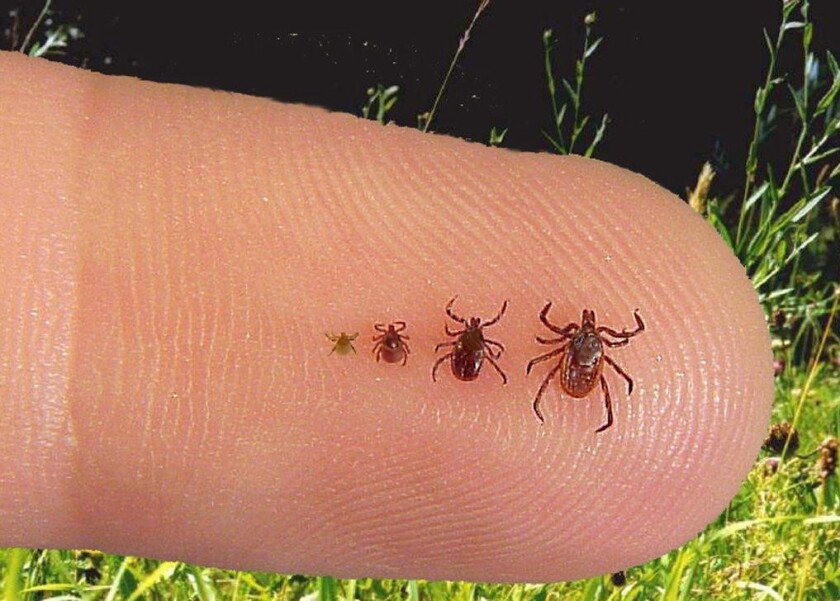
“We see fewer ticks during years with dry weather and low humidity,” says Jon Oliver, an Associate Professor with the University of Minnesota, School of Public Health. “Wet weather in summer 2024 means that immature ticks were able to thrive. This year, those ticks will have grown to be adults and nymphs.” Unluckily for us, mid-May through mid-July is the time when we are most likely to be bitten by a tick while hiking, camping, or enjoying the outdoors.
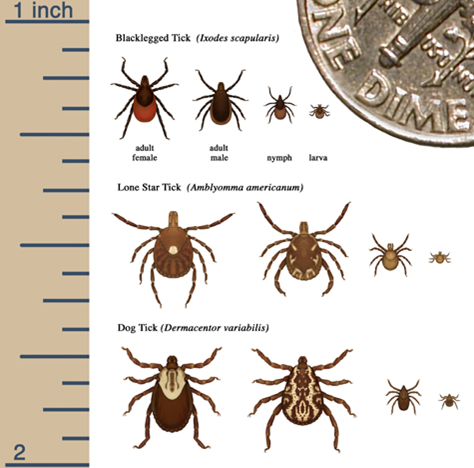
The two most common types of ticks in Minnesota are wood ticks (also known as American dog ticks) and deer ticks (also known as blacklegged ticks). A third species – the Lone Star tick – is much less common but has been reported at least once in Washington County. Of these three species, deer ticks are of most concern because they are very small (the size of a pencil tip) and can carry Lyme disease. Deer ticks are most often found in forested areas, including every forested county in Minnesota.
Many homeowners assume that a tidy lawn with short grass is the best defense again ticks. On a large scale, however, suburban lawns may actually be making our tick problem worse.

“Intuitively, the neat and managed neighborhood looks like the sort of place where infectious diseases couldn’t thrive,” says James Shepherd, MD PhD at Yale University School of Medicine. “The experience of the last few decades in southern New England would suggest otherwise!”
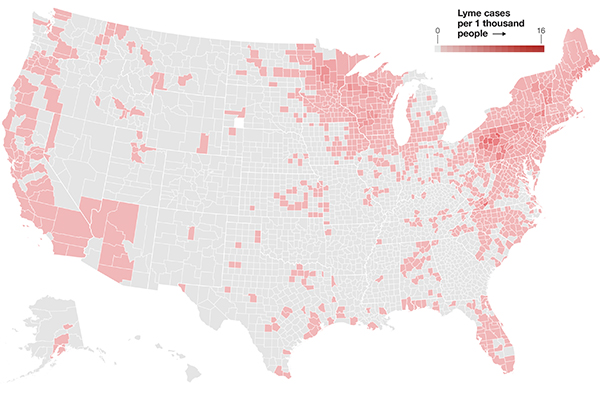
Shepherd goes on to explain that Lyme disease has dramatically spread in New England states over the past 50 years, largely due to suburbanization, the introduction of invasive plants, and habitat fragmentation. To understand why, it’s helpful to know a bit about the lifecycle of deer ticks.
During their first year of life, deer ticks feed on blood from small mammals, like mice and birds. In particular, white-footed mice are most likely to transmit Lyme disease. In the second year of their lives, deer ticks feed on larger animals like white-tailed deer and humans. This is when they can transmit the Lyme disease from the mice to us. Eventually, adult female ticks lay their eggs in leaf litter, grass, or soil and then die.
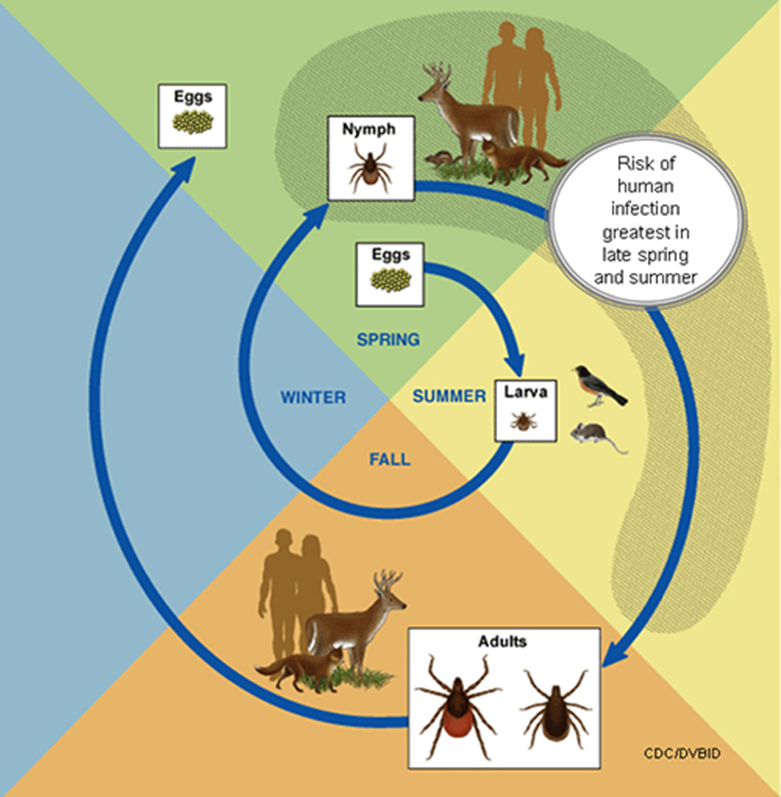
Unfortunately, habitat fragmentation favors animals like white-tailed deer and white-footed mice – both of which are hosts for deer ticks – at the expense of predator species. We don’t just see fewer foxes and raptors, but also fewer predatory arthropods that eat ticks and their eggs. “Animals like mice and ticks thrive when predators disappear and forests are broken up,” says Shepherd.
Research from the University of Illinois has also found that Lyme disease is more prevalent in disturbed landscapes with a mix of young woods and open fields, compared with larger areas of contiguous forest and prairie.

This summer, there are a few precautions you can take to protect your human and canine family from Lyme disease. The first is to get in the habitat of doing a “tick check” after spending time in the woods or tall grass. Be sure to check everywhere, including in your hair, and not just on top of your clothes. If you spend a lot of time outdoors, you may also want to consider treating your field clothes with permethrin, a repellent/insecticide that works on ticks. Your veterinarian can also provide a monthly pill or topical medication to protect your dog from ticks.
If you find a deer tick on you that’s still walking around, there’s no cause for concern. If you find it embedded in your skin, however, talk with your doctor about a prophylactic antibiotic treatment to prevent Lyme’s. Lyme’s sometimes (but not always) starts with a bullseye shaped rash and later causes fever, headache, fatigue, and muscle or joint pain. If left untreated, it can also cause more severe symptoms like arthritis, nerve problems (numbness, tingling, facial paralysis), and heart problems. Note that you do not need to contact your doctor about embedded wood ticks.

Lastly, help to support a healthy ecosystem with predators, prey, and beneficial insects by planting native flowers, shrubs, and trees in your yard. And, whatever you do, avoid planting Japanese Barberry, as this nonnative garden plant is highly favored by ticks.
Looking for help to get started on a native planting project? Visit www.BlueThumb.org for plant recommendations, how-tos, workshops, and more.



 East Metro Water
Angie: excellent article. The one bit of advice I’ve been given is to take Doxycycline if you miss a tick that has been attached to your skin. A suggestion from one of my neighbors is to remove outdoor clothes and leave them hanging outside or in entryway. Then take a shower to rinse off any ticks while they are still moving. It helps to have a partner do a buddy check for areas that are hard to see on your own body.
Unfortunately, if you wait for symptoms to occur it may be too late for the antibiotic to kill the very clever Lyme carrying bodies moving through your blood system.
Understanding these connections between the problems with suburban disturbed landscapes and emerging issues with many invasive species is so very critical. This article is a great primer on the need for more native diversity.
LikeLike