
On a chilly October morning, a hardy group of volunteers gathered at Pine Point Regional Park garbed in garden gloves and mucking boots and armed with shovels and pitchforks. In a few short hours, they had planted dozens of native shrubs – dogwood, rose, hazelnut and ninebark – and hundreds of pollinator-friendly prairie plants, including compass plant, wild indigo, milkvetch, prairie violet, larkspur, and penstemon. The eco-gardeners ended their morning, smiling and covered in mud.
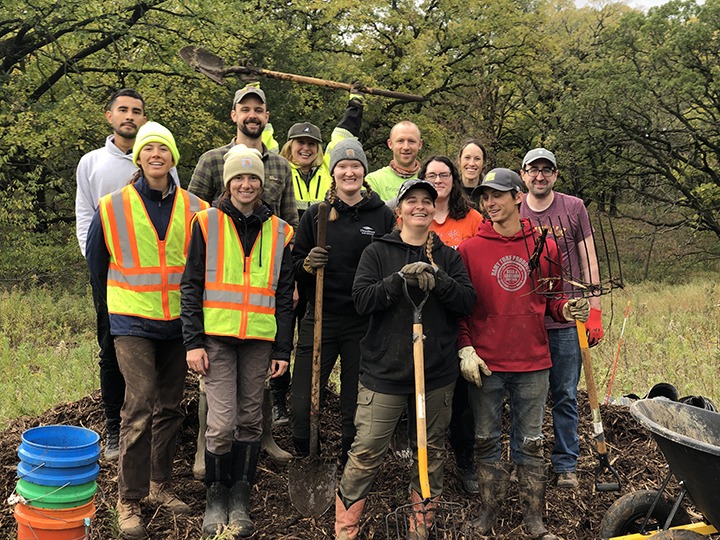
As Minnesotans become increasingly aware of the risks facing pollinator insects such as rusty patched bumblebee and monarch butterflies, many are rolling up their sleeves and getting to work to help restore native habitat that was previously lost to farming and development.
The Pollinator Friendly Alliance (PFA), established in 2016, has worked with cities and counties around the state to adopt pollinator-friendly resolutions, increase habitat, and reduce pesticide use. PFA led the community planting project at Pine Point last weekend, and also organized a similar planting event at Lake Elmo Park Reserve earlier in the week. The projects were completed in partnership with Washington Conservation District, Washington County Parks, and Wild Ones Oak Savanna, and with funding support from the Hugh J. Andersen Foundation and Saint Paul Garden Club.

In addition to supporting large-scale habitat restoration projects, many nature-lovers are turning their attention toward their own yards and looking for places to plant butterfly gardens, bee lawns, and flowering native trees in order to provide nectar for native bees and butterflies. Pollinator planting projects also help to restore natural landscapes, reduce stormwater runoff pollution, and build climate resiliency for drought and mega-rains.
Since 2019, 18,000 Minnesotans have applied for Lawns to Legumes pollinator planting grants from the Minnesota Board of Water and Soil Resources. Though the program has only been able to fund a third of the applications, it has already succeeded in creating 3.5 million square feet of new pollinator habitat on private lands, with projects completed in 86 of the 87 Minnesota counties. This spring, the Minnesota legislature approved $4 million in new funding for Lawns to Legumes, which will enable the program to continue for several more years.
In Washington County, watershed management organizations also offer stewardship grants to help support clean water and pollinator planting projects. Washington Conservation District has mapped more than 5000 conservation projects completed in the county since 2006, ranging in size from tiny backyard gardens to multi-acre prairie restorations.
Though it might not seem intuitive, experts say that fall is actually a great time to plant native flowers, shrubs, and trees. “By planting in the fall, plants are going to focus more on developing their roots,” says Jennifer Ehlert from Metro Blooms, a Minneapolis-based nonprofit that supports homeowners in planting native gardens and raingardens. Ehlert notes that a robust root network gives plants a strong foundation to survive through the winter and emerge well-established in the spring.
Fall plantings take advantage of the cooler soil temperatures and more plentiful rain, which tends to be less stressful for new plants. Seeding a bee lawn early in the fall gives flowers and fescue grasses enough time to germinate and develop roots before the ground freezes.
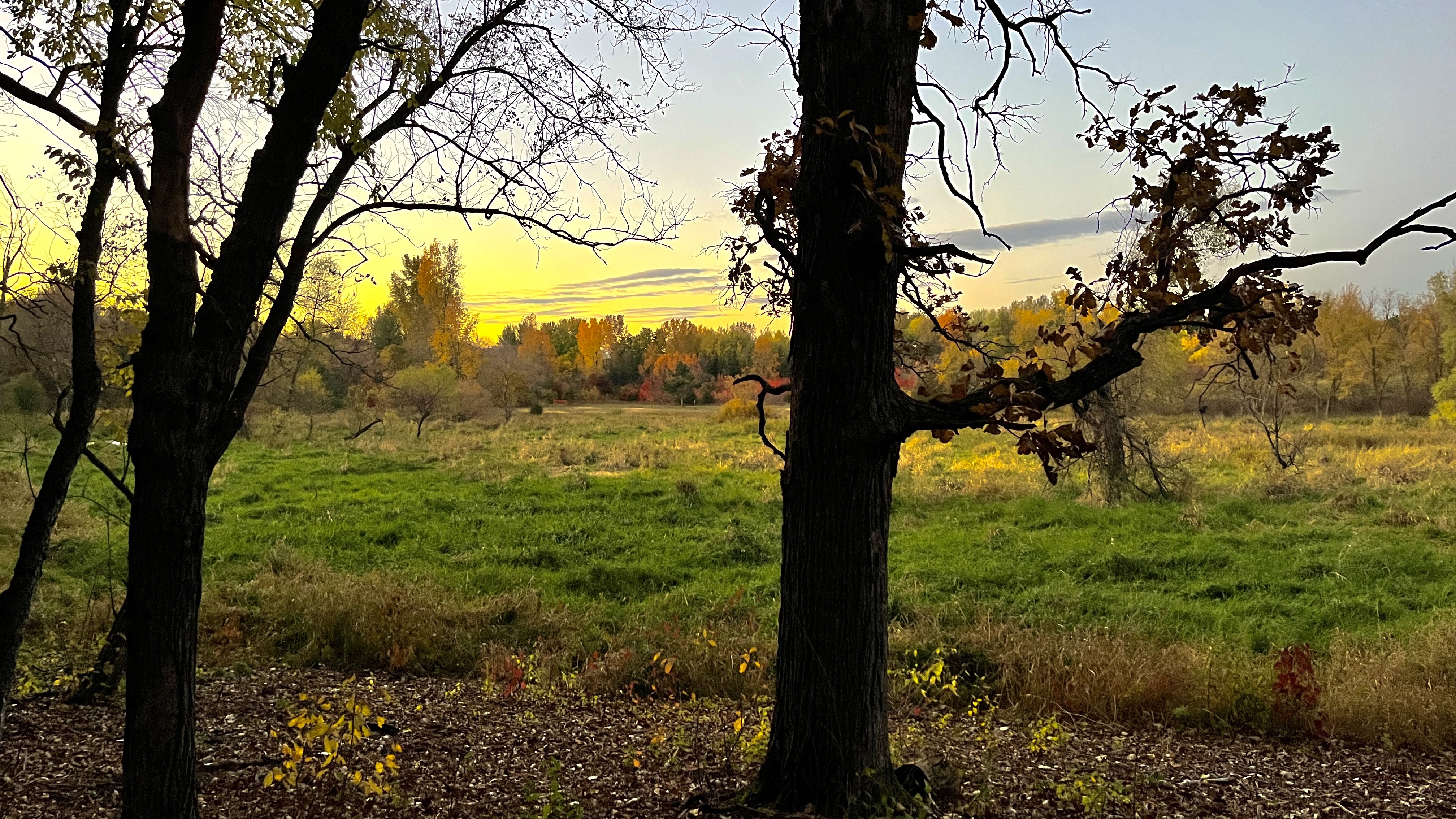
Marsha Frey of Mother Earth Gardens offers additional advice for fall planting projects, “Plant at least 6 weeks before the ground freezes and wait to mulch until later in the season, because the warmth of the October sun will help plants with root development.” She suggests waiting to add mulch until nighttime temperatures start dropping to 32 degrees Fahrenheit and the ground starts to freeze.
If you’re not ready to start a new gardening project this month, now is also a great time to plan for the spring. Washington County residents can sign up for a free site visit from Washington Conservation District (www.mnwcd.org) to get advice on native gardens, raingardens, shoreline plantings, and larger prairie and woodland restoration projects, as well as learn about and apply for watershed district stewardship grants. Minnesotans can also apply for Lawns to Legumes cost-share funding between now and November 30 (www.Bluethumb.org). The grants are up to $400 and recipients will be notified in mid-December. Lawns to Legumes grants and watershed district grants can be paired together to support larger planting projects.


Angie, would you send me your email? Mine is : newlifeconstructioninc@gmail.com
I left some contact information a couple days ago. I am not the most computer literate person so perhaps it did not reach you. I am inquiring on behalf of West Boggs Lake in SW Indiana. We want to follow-up on a report you did on Lilly Lake. It received Alum as a way to sequester phosphorus. We have a similar hyper eutrophic lake. Did the treatment work? Short-term? Long-term?
Look forward to hearing from you, sincerely, Chris Herbertz
LikeLike