
By now, most people in the Twin Cities east metro are familiar with PFAS (aka. Forever Chemicals) and their growing impact on the drinking water supplies of communities in Washington County from Oakdale and Lake Elmo south to Cottage Grove. A 2018 settlement between the State of Minnesota and 3M created a $720 million fund, which cities and townships are now using to secure safe, clean drinking water for their residents.
Unfortunately, PFAS is not the only contaminant of concern that affects drinking water in Minnesota.
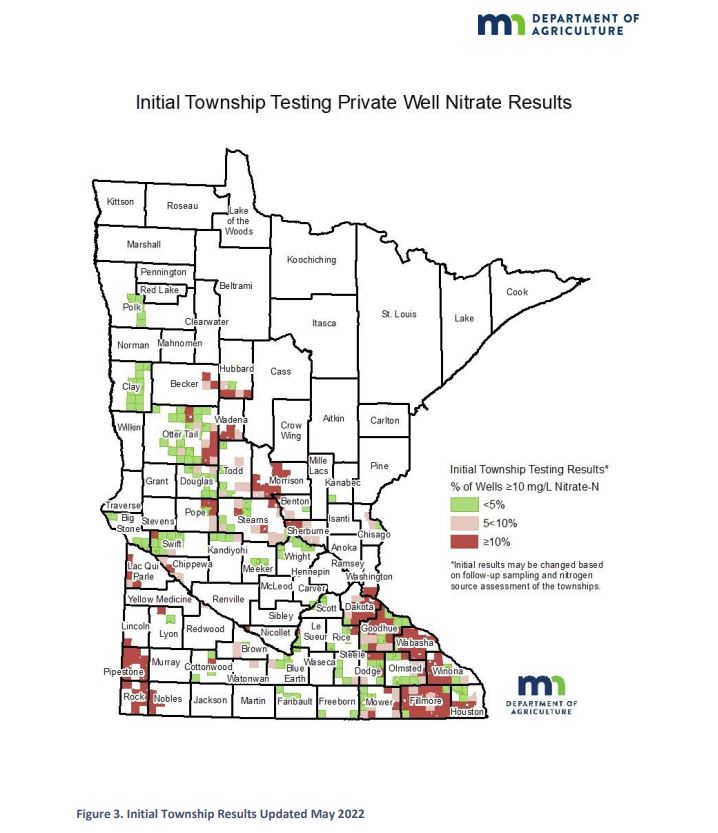
Between 2013 and 2019, the Minnesota Department of Agriculture (MDA) conducted private well water testing in 344 cities and townships to evaluate the impact of nitrate. The “Township Testing” program focused on locations that are vulnerable to groundwater contamination due to their geology and have significant row crop production, which translates into widespread use of nitrate fertilizer. In Washington County, this includes Cottage Grove and Denmark Township.
In total, 2925 of the 32,217 private wells tested statewide (9%) were found to have nitrate levels above 10 mg/L, which is the health risk limit. In Cottage Grove, 28% of the wells tested in 2014 had nitrate levels above 10 mg/L, and in Denmark Twp., 14% of wells were above 10 mg/L.

The biggest risk associated with elevated nitrates is a disorder called “blue-baby” syndrome (methemoglobinemia), which can affect pregnant women and infants younger than six months old that drink formula mixed with water. Blue-baby syndrome reduces the oxygen carrying capacity of blood, causing babies to turn bluish, and can also cause long-term digestive and respiratory problems. A growing body of scientific evidence also suggests that elevated nitrates may cause health impacts for adults as well, including increased heart rate, nausea, headaches, and abdominal cramps, and possibly gastric cancer.
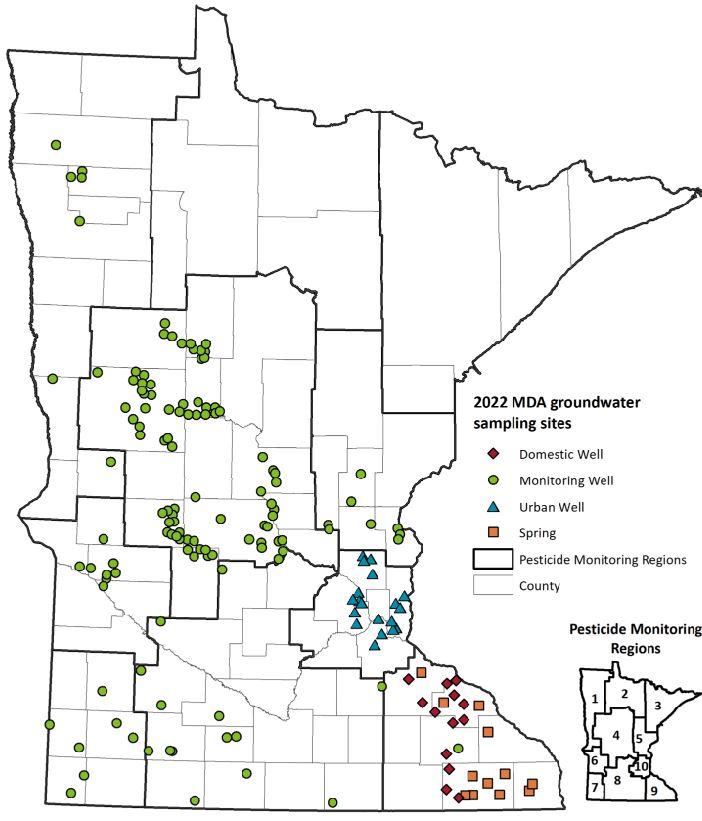
Because the majority of nitrate groundwater contamination comes from farming and fertilizers, MDA has also expanded its groundwater monitoring program to test for pesticides. In 2022, MDA tested 167 monitoring wells and 583 private wells and found atrazine or cyanazine compounds in 74% of the water samples. Twenty-seven wells were found to have cyanazine levels above the health risk limit of 1000ng/L, including several in Dakota County.
If you live in the country and have a private well, Washington County recommends that you have your water tested annually for coliform bacteria and every two years for nitrate. Drinking water should also be tested at least once for arsenic, lead, and manganese. Visit www.co.washington.mn.us/637/Water-Tests to learn more about fee-based testing services offered through the county.
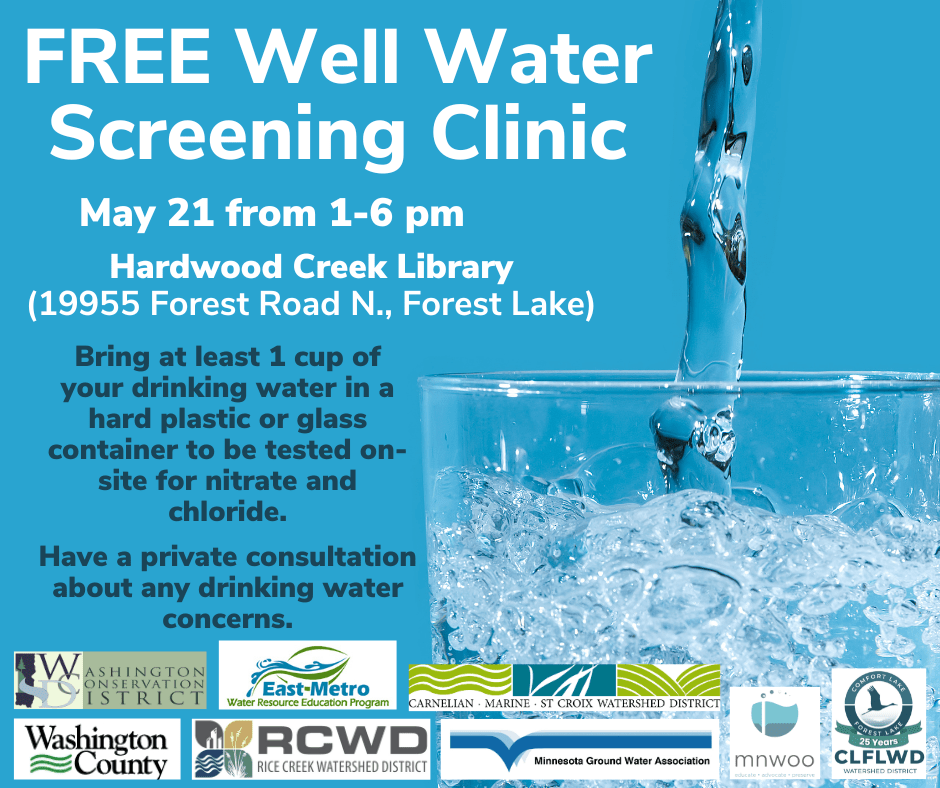
Next week Tuesday, May 21, local partners in the East Metro will offer a free well water screening clinic from 1-6pm at the Hardwood Creek Library in Forest Lake. To participate, bring a sample of drinking water from your home (minimum of one cup – 8oz) in a clean, hard plastic or glass container and include the location and date that you collected the sample. Water samples will be tested for nitrate.
During the clinic, experts will be available to review your testing results and discuss wellhead protection and groundwater concerns. The event is free and open to everyone regardless of where you live. Lastly, if you’re looking for an effective water treatment system for your home, reverse osmosis systems are designed to fully or partially remove 25 contaminants of concern, including arsenic, chloride, nitrate, atrazine and cyanazine, and PFAS. Carbon filters will also remove PFAS and pesticides but do not remove arsenic, chloride or nitrate.

 East Metro Water
great article!
LikeLike
Atrazine I heard is a hormone disruptor and is water, I’m not sure if I’m understanding correctly that it’s in 74% of only well water? How do we get rid of that? It sounds like that is a huge correlation to the transgender thing that is becoming so popular. Hormone disruptors are a big problem but how do we get them out of the water?
thank you so much for posting this article
LikeLike
Atrazine is a common pesticide used in farming and is one of the chemicals that leaches into groundwater over time. The MN Department of Agriculture has only been testing wells in farming areas, not municipal water supplies, so I don’t know if it would also be found in metro area municipal water supplies. Currently, they are finding it at “acceptable” levels below the health risk limit in most locations but I think it is still concerning to see how prevalent it is. Also, there are numerous endocrine disrupting chemicals found in river water as well (for communities that use rivers as a public water source) so it’s not even the only chemical for us to be worried about. I think the main strategies for fixing the problem are eliminating/reducing the use of atrazine and other pesticides, and implementing conservation farming practices that help to minimize the amount of chemicals running off into lakes and rivers or leaching into groundwater.
LikeLike