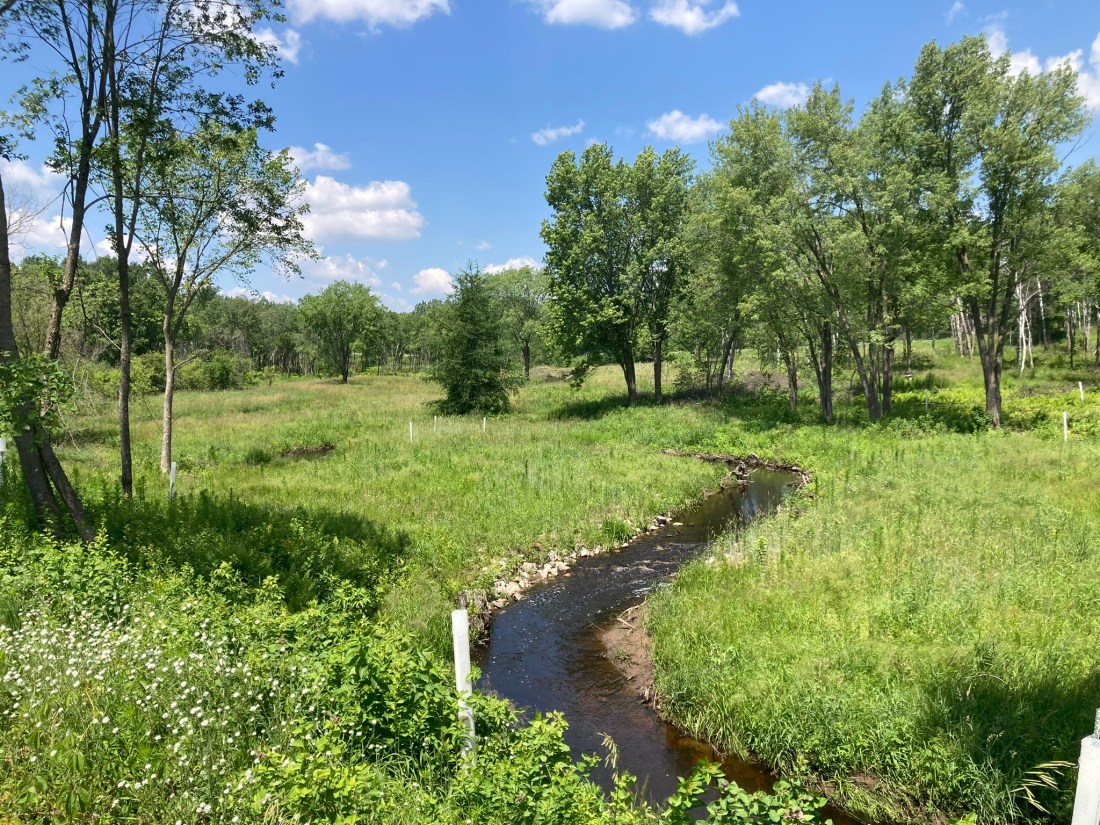
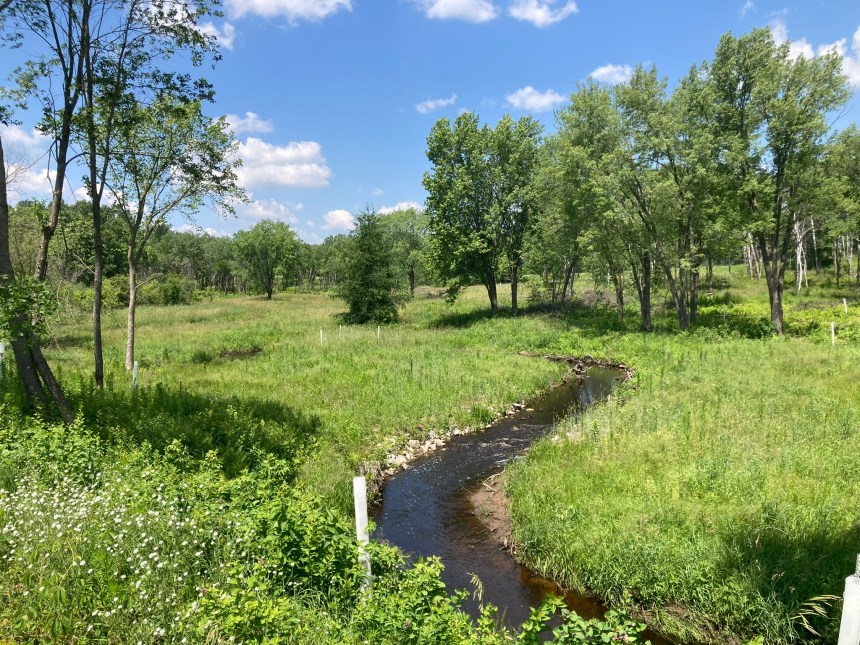
This summer, the Brown’s Creek Watershed District completes a large-scale stream restoration project, designed to reduce bank erosion, manage floodwaters during large rain events, and improve habitat for fish along a half-mile stretch of Brown’s Creek that flows between McKusick Ave. and the Brown’s Creek State Trail. The final step in the project, which is almost completed, is to construct public access to the creek and an accessible fishing area off of Neal Avenue.
Members of the community are invited to view and learn about the Brown’s Creek stream restoration during a tour on Aug. 12 (6:30pm) and a community festival on Sept. 20 (10am-1pm).

Though small, Brown’s Creek plays a central role in the history of Stillwater and Minnesota’s establishment as a state. When a fur trader named Joseph R. Brown arrived in 1840, he built a small warehouse on the St. Croix River near the mouth of what was then called Pine Creek. At the time, the location was part of St. Croix County in the Wisconsin Territory, and the newly established settlement was known as Dacotah.
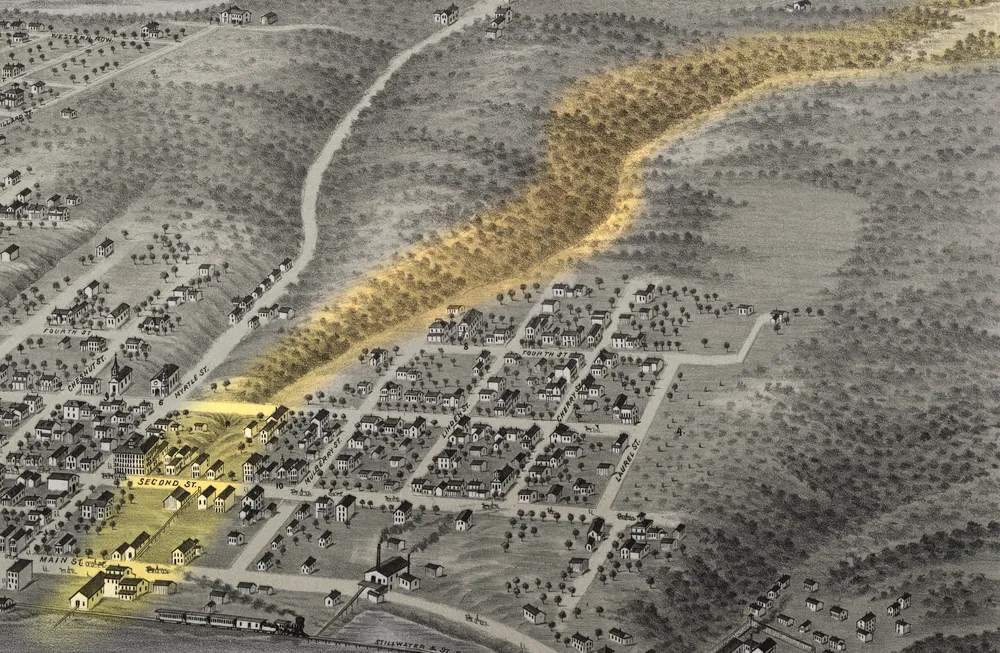
During the next five years, lumbermen and entrepreneurs began to flock to the region. Jacob Fisher, John McKusick and others re-routed the creek to flow through a lake (now called Lake McKusick) and a ravine to power several lumber mills. By 1846, the Stillwater Lumber Company was up-and-running and the newly minted town of Stillwater was home to 600 people, nearly all of whom were lumbermen. Eventually, Stillwater was incorporated as a city in 1854, with McKusick as its first mayor. Brown, meanwhile, is credited with suggesting the name “Minnesota” when the state was established in 1858.

Over the ensuing decades, Brown’s Creek and its surrounding watershed continued to change. A stone bridge was built over the creek in 1863 as part of a military road that connected Point Douglas to Superior. Stillwater’s first railroad was built in 1870 and followed the creek for its first several miles. Eventually, when the lumber era came to a close, small farms and residential neighborhoods gradually took the place of lumbermills and workers’ camps.
Today, Brown’s Creek is enjoying a revival thanks to 25 years of work by state and local government to restore the stream and improve recreational opportunities. A paved multi-use trail now follows Brown’s Creek along the old railroad corridor and numerous watershed projects have helped to improve water quality and restore wildlife habitat.



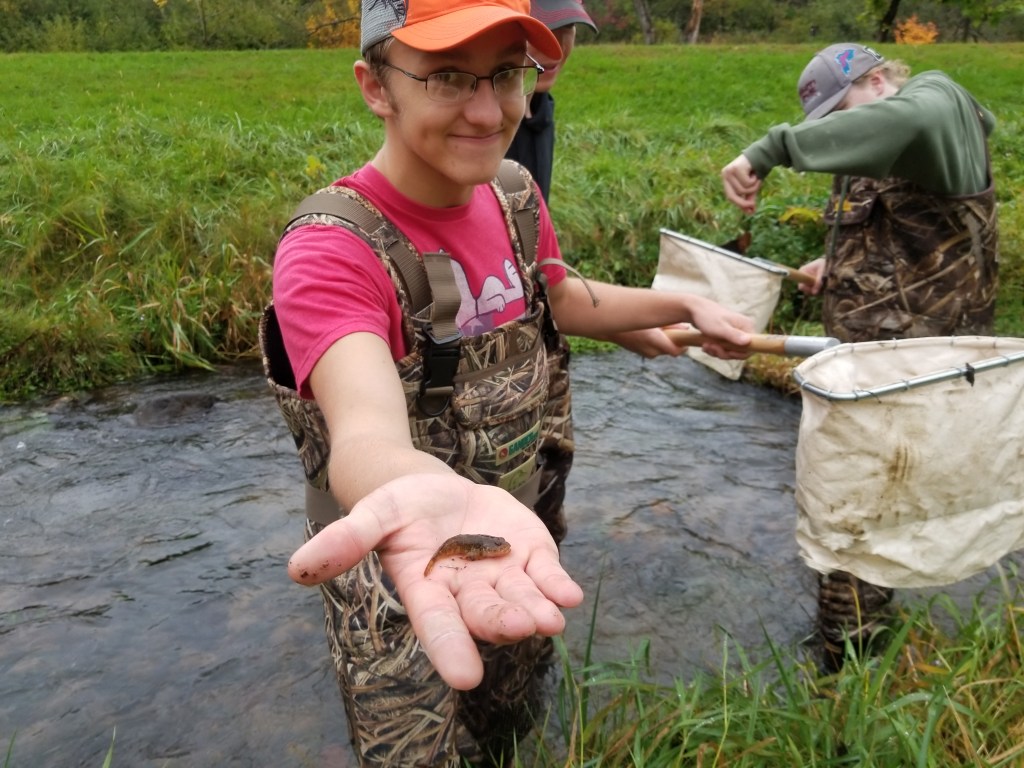
Key components of Brown’s Creek’s most recent stream restoration project include re-creating a natural stream channel and floodplain to provide better provide habitat for fish and buffer against large rain events. The system is designed to handle 7.2 inches of rain in a 24-hour period of time (sometimes known as a “100-year storm event”). Last winter, crews cleared buckthorn from the woodlands surrounding the creek and, this spring, more than 60 volunteers helped to plant over 200 native trees and shrubs in the restoration area.
Brown’s Creek Watershed District led the stream restoration, in partnership with Minnesota Department of Natural Resources, and City of Stillwater. Minnesota Pollution Control Agency has provided $320,700 in grant support, via a Federal 319 grant.
Want to learn more? Join Brown’s Creek Watershed District for a tour on Tuesday, Aug. 12, 6:30-8pm at Brown’s Creek Park (8312 Neal Ave N, Stillwater). There will also be an opportunity to see and learn about stream improvements along Brown’s Creek at a Community Watershed Celebration and Bird Festival on Saturday, Sept. 20, 10am-1pm (also at Brown’s Creek Park). The annual event features live raptors, environmental education stations, crafts, games, live music, and free ice cream. New this year, there will also be a bird costume contest for kids and adults.

 East Metro Water