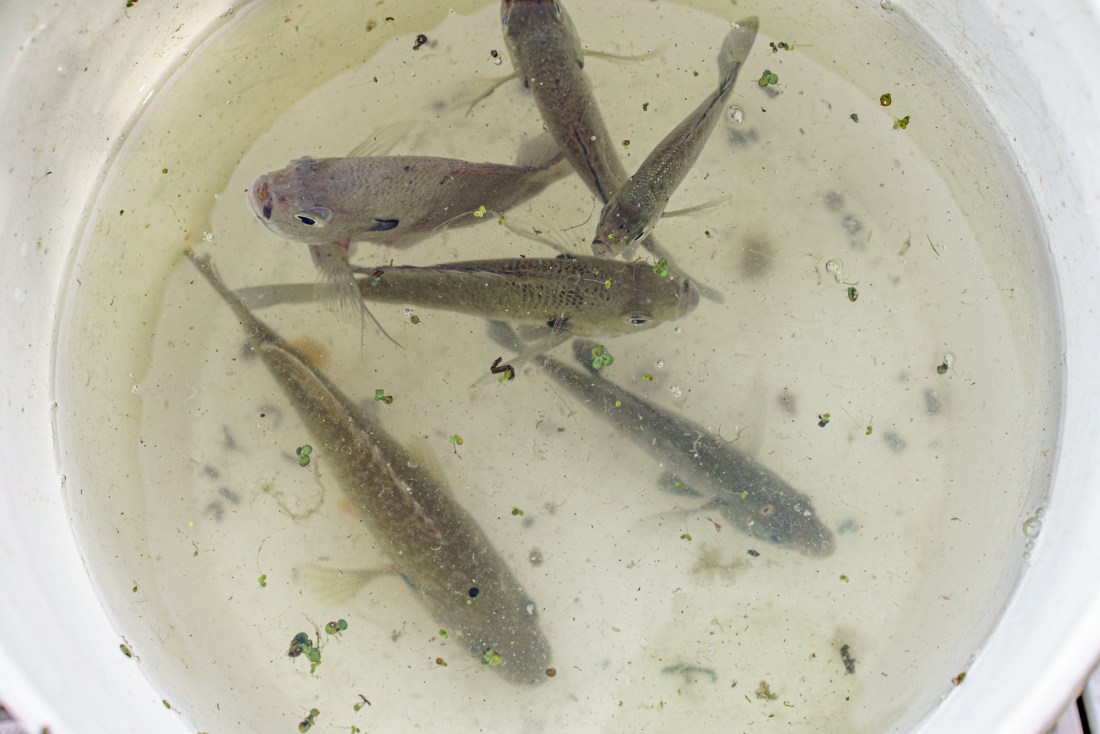
In the Land of 10,000 lakes, fishing is a treasured pastime and a major source of tourism revenue. The Minnesota Department of Natural Resources (DNR) sells 1.4-1.5 million fishing licenses each year, and it is estimated that fishing in Minnesota generates between $4.2 billion and $5.9 billion in economic activity annually. Unsurprisingly, state and local partners also dedicate countless hours and dollars toward protecting Minnesota lakes from a wide variety of threats, including pollution, development, over-fishing, and aquatic invasive species.

In spite of our hard work and collective action, however, some kinds of water pollution remain nearly impossible to resolve.
This March, the Minnesota Department of Health (MDH) issued updated fish consumption advisories for several lakes and rivers statewide. In northeastern Minnesota (St. Louis, Lake and Cook Counties) the MDH updated its guidelines for mercury, a toxin that comes from the atmosphere (major sources include coal burning and artisanal gold mining) and can reach even the most pristine and remote locations. In the Twin Cities metro, the MDH updated its fish consumption advice for several lakes and rivers that have recently been impacted by PFAS (perfluorinated alkylated substances).
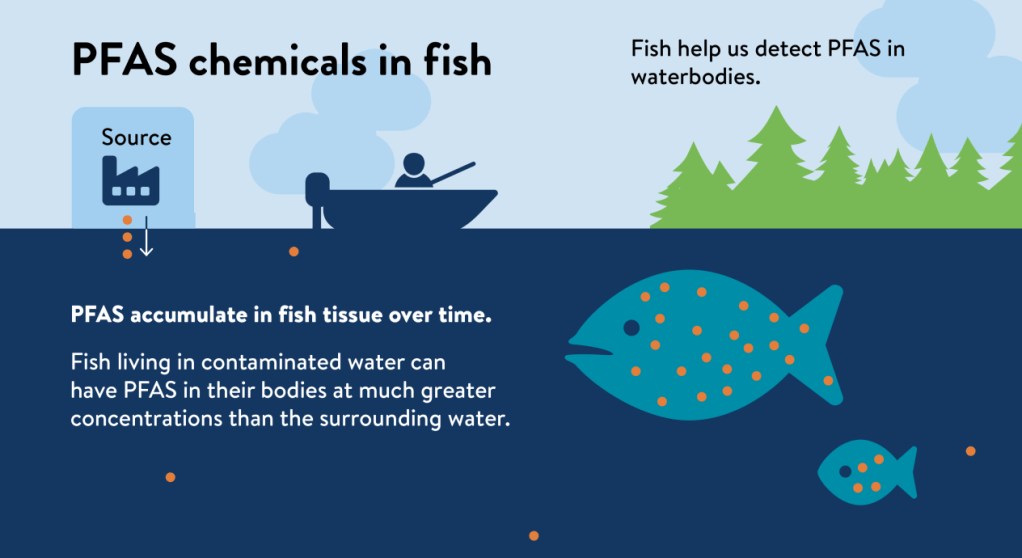
PFAS are a group of chemical compounds used to manufacture Scotchguard, nonstick coatings, and fire-fighting foams and are commonly known as “forever chemicals” because they are incredibly long-lasting and slow to break down. According to a 2019 report by CHEMTrust, PFAS polymers can have half-lives as long as 8.5 years in human blood, 40 years in water, and more than 1000 years in soil. The term “half-life” is used to describe the length of time it takes for half of the molecules in a sample to decay.
Locally, 3M disposed of manufacturing waste containing PFAS in landfills in Oakdale, Lake Elmo, Woodbury, and Cottage Grove during the 1950s and ‘60s. Over time, the chemicals leached into groundwater aquifers used as a source of drinking water for communities in the area. The Pollution Control Agency (MPCA) first discovered the groundwater contamination in 2002 and has been continuously working with 3M, local communities, and the MDH ever since to ensure that local residents have safe water to drink.
In 2018, the State of Minnesota and 3M agreed to an $850 million settlement to address PFAS contamination in the Twin Cities east metro. The majority of these funds have been used to treat and provide safe drinking water in 14 communities in central and southern Washington County. In addition, $20 million in funding will be distributed later this spring to support natural resources restoration, as well as fisheries and education projects in the region.
Though scientists are still researching the long-term human health impacts from PFAS exposure, we know that it can affect people’s immune systems, decrease the success of vaccinations, and cause higher cholesterol, elevated liver enzymes, and kidney cancer. Pregnant women exposed to PFAS can also have babies with lower birth weights.
While the MDH still encourages people to eat fish as part of a healthy diet, they do urge caution in some of our local lakes and rivers. In the east metro, this includes:
- Lake Elmo:
- No one should eat any fish from this lake. Swimming, however, is safe.
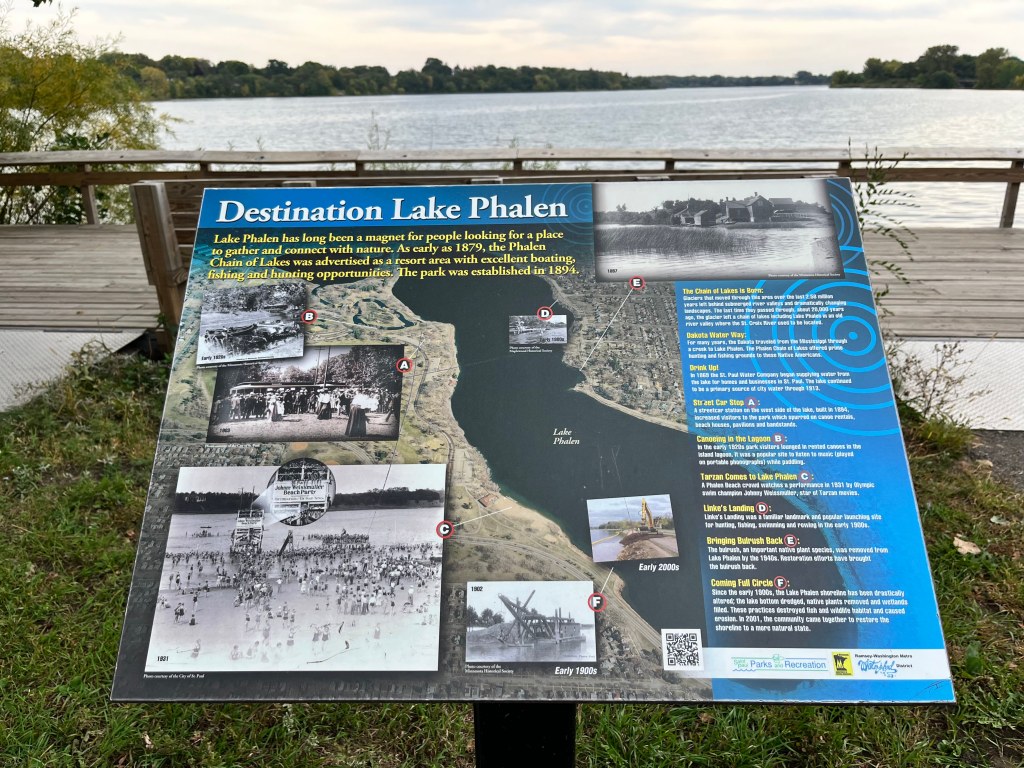
- Clear and Mud Lakes (City of Forest Lake), Tanners Lake (Oakdale), Battle Creek Lake (Woodbury), Johanna and Little Johanna (Arden Hills), Gervais (Little Canada), Keller (Maplewood), McCarron (Roseville), Phalen (St. Paul), and Mississippi River (Pool 2 – Ford Dam to Hastings Dam):
- Men and women not planning to get pregnant can eat one meal of fish a month. Children and all other women should not eat fish from these water bodies.
- Centerville and Peltier Lakes (Lino Lakes):
- Men and women not planning to get pregnant can eat one meal of sunfish a week. Children and all other women can eat one meal of sunfish a month.
Would you like to learn more about PFAS and its local impacts? Freshwater and the East Metro Water Education Program will co-host an info session for volunteers and local residents on Wednesday, April 8 (6-8pm) at the Oakdale Discovery Center (4444 Hadley Avenue N.). Dr. Ali Ling of the University of St. Thomas will present and there will also be time for questions and conversation. Register at minnesotawaterstewards.org/pfas.
The Minnesota Department of Health will also hold a webinar on April 8 at 3pm to discuss updates to the fish consumption guidelines: Fish Consumption Guidance Update Webinar.
Learn more about Minnesota’s work to address PFAS on the MPCA’s website: www.pca.state.mn.us/air-water-land-climate/minnesotas-pfas-blueprint.

 East Metro Water