This is a story about the water we drink, though it might not seem like it at first. Stick with me through the patch of stinging nettle, and I promise we’ll get there eventually.
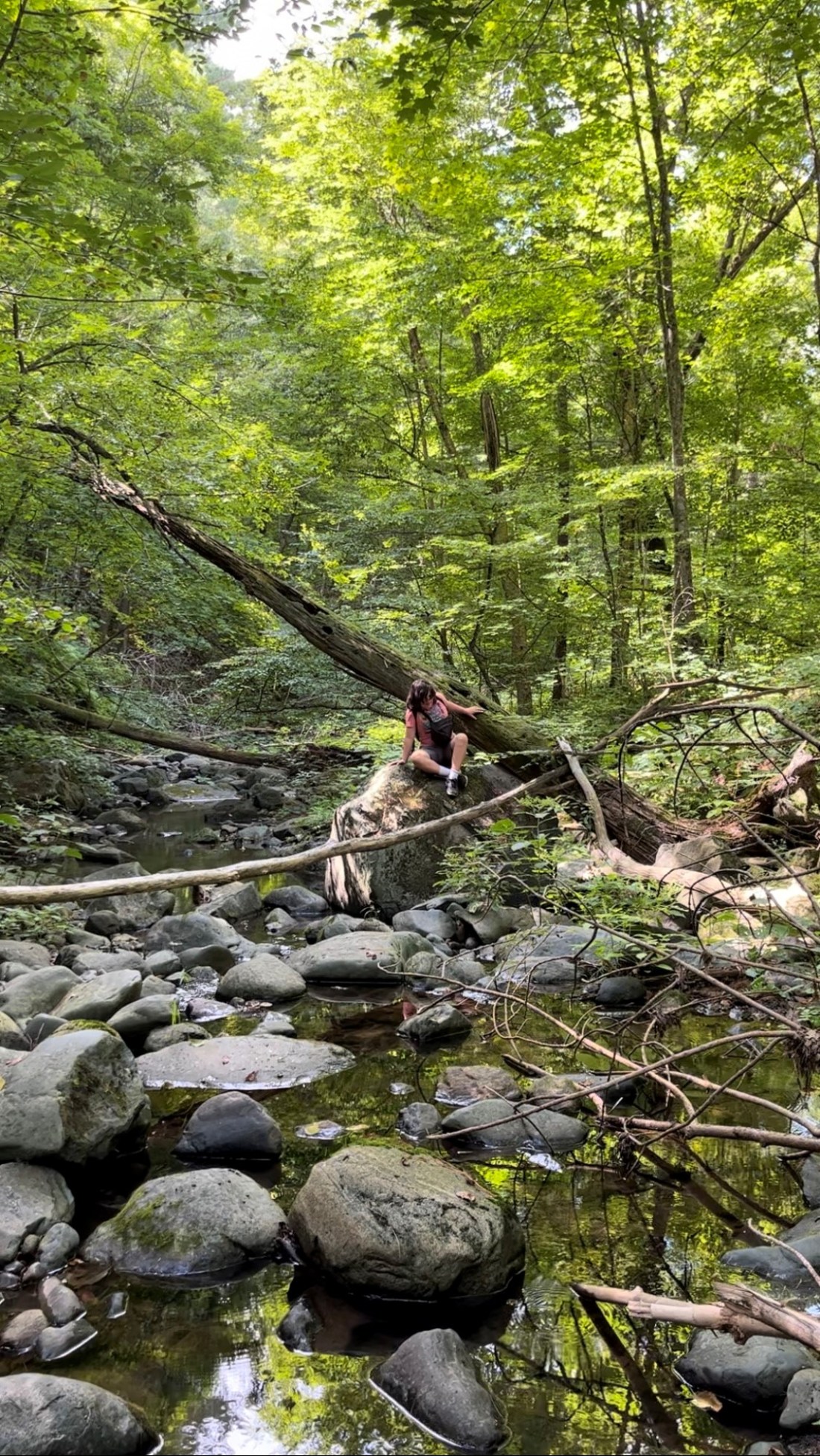
Last weekend, my son and I set out to look for fossils in a new-to-us destination near Taylor’s Falls. The sun was warm, the air was cool, and we gorged ourselves on wild plums we found growing at the head of the trail. The woods plunged down into a steep ravine and we were happy to find a long thin rope to guide us on our descent.

We arrived in a deep and verdant valley that was an absolute plant-lovers dream. There were groves of wild ginger, with velvet heart-shaped leaves, ferns in all shapes and sizes, moss-covered rocks, and giant patches of liverwort, a strange, scaly plant with no vascular system that reproduces with spores instead of seeds. I was especially excited to find a swath of Lycopodium, which is commonly known as clubmoss or ground pine, though it is neither a moss nor a tree. This strange, ancient plant evolved 400 million years ago, reproduces by spores, and grows in clusters that look like miniature pine trees.
Eventually, we made it down to a stream at the bottom of the hill and began picking our way along, looking for fossils and interesting rocks. In the streambed, we found river rocks, worn smooth by water and time. Ahead, loomed a crumbling sandstone cliff, waiting patiently to tell us of its life as an ocean beach, 500 million years before tiki huts and piña coladas.
I was briefly seduced by a charismatic, dark grey rock that was covered in yellow patterns that looked like fossilized graptolites – prehistoric marine animals that lived in colonies in the ocean. After a little research, however, I realized that the rock was actually basalt porphyry, which is an even older type of stone that formed one billion years ago from cooling lava. Eventually, our adventure came to an unpleasant end when we found ourselves surrounded by nettle and we headed home with stinging skin and pockets void of fossils.

In Chisago and Washington Counties, 100% of the water we drink comes from groundwater. Though few people think about it when they turn on the sink, the origins of this water are intricately woven into the history of the rocks and the land. Sand from ancient seas that covered Minnesota 500 million years ago eventually compressed into layers of sandstone that are buried beneath our feet. When it rains, the water soaks into the ground, filling pore space between the grains of sand to create formations known as aquifers. There are also layers of limestone that formed when plant and animal remains were buried and compressed over time. The limestone creates confining layers that separate shallow sandstone aquifers from ones that are deeper down.
Today, this beautifully designed natural system provides us with a steady supply of pure, clean drinking water that is filtered by layers of gravel, sand and soil. Groundwater also feeds streams and seeps along the St. Croix River, as well as deep, clear lakes like Square Lake and Lake Elmo. Unfortunately, however, we’re beginning to see elevated levels of nitrate from fertilizer and chloride from road salt and water softener salt in the groundwater that people are drinking.

This September, the East Metro Water Education Program and Lower St. Croix Watershed Partnership will offer two well water screening clinics in partnership with the Minnesota Well Owners’ Association and Minnesota Groundwater Association. Local residents with private wells are invited to bring in water samples to be tested for nitrate and chloride and will also learn about abandoned wells, arsenic, bacteria, nitrate, pesticides, PFAS, and proper well maintenance.
To participate, bring drinking water from your home in a clean, hard plastic or glass container (minimum of one cup (8oz) of water) and include the location and date that you collected the sample. You can wait for your results or request them via email. The well water screening clinics will be held on Thursday, Sept 7, 1-5pm in North Branch (Lakes EMS, 40245 Fletcher Ave) and Monday, September 18, 1-6pm in Cottage Grove (Washington County South Service Center, 13000 Ravine Pkwy S). The clinics are free and open to everyone, regardless of what city, county or state you live in.

 East Metro Water