If you could travel back in time to 150,000 years ago, you’d need a good pair of ice cleats and a warm fur coat. Back then, a layer of ice one-mile thick blanketed the landscape, covering all but the southeastern-most corner of the place now known as Minnesota. In fact, the Upper Midwest has been smothered by glacial snow and ice at least a dozen times over the past two million years, with the most recent ice age ending approximately 9000 years ago. Nonetheless, each time the glaciers advanced, southeastern Minnesota, southwestern Wisconsin, northwestern Illinois, and northeastern Iowa always managed to escape the chill. Today, this region is known as the Driftless Area.
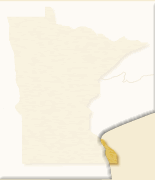

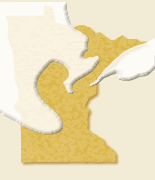
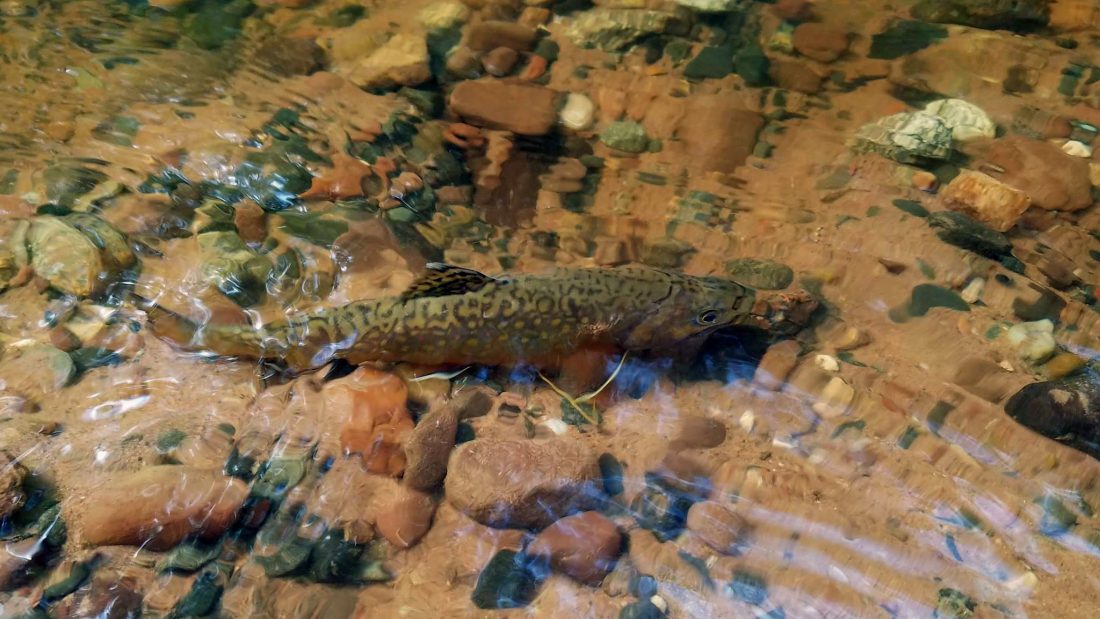
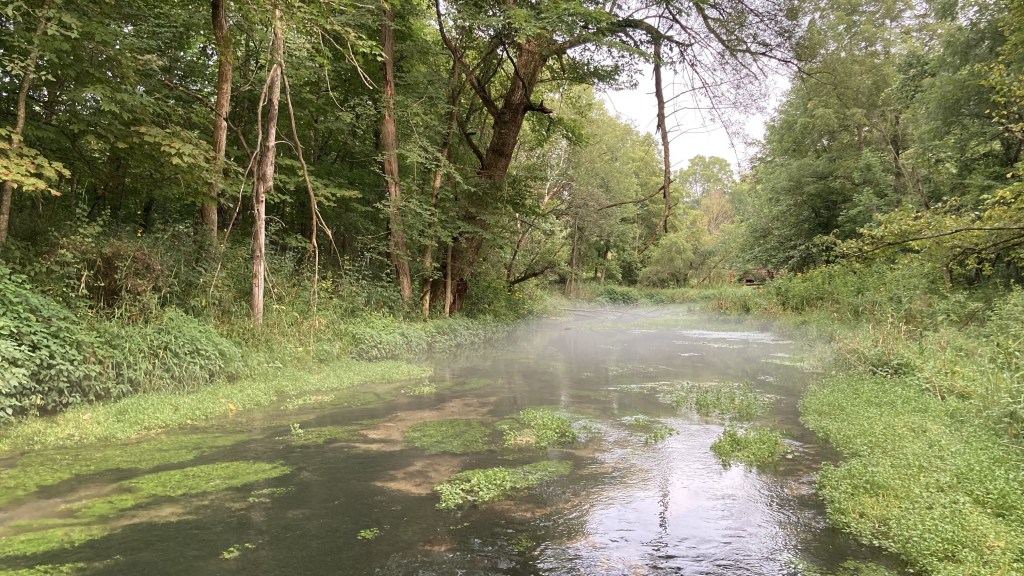
Unlike other parts of Minnesota, which are characterized by gently rolling hills dotted with prairies, lakes, woods and wetlands, the Driftless Area is rocky and rugged. There are deep valleys, spring fed streams, and fractured bedrock formations that easily crumble to form sinkholes and underground caves. Once upon a time, the water in these streams flowed clean and clear and was home to a distinct strain of brook trout that are different from brown trout, rainbow trout, and even the brook trout that live out east in Massachusetts, New Hampshire, and West Virginia.
Brook trout, aka. “brookies,” are part of the salmon family and are the only species of trout native to Minnesota. Like the landscapes they inhabit, brookies are beautiful but fragile. They require cool, clear water with sandy and gravelly bottoms and are highly susceptible to stream degradation, sedimentation, runoff pollution, and warming waters.
“The angler holding a brook trout feels like he has stumbled upon a secret, artistry transcending natural selection, like a jeweler who cuts into a stone and finds otherworldly light and color inside,” writes Tom Hazelton in a 2018 article for the Minnesota Conservation Volunteer. “A diamond, though, is hard, indestructible. The brookie is delicate. It needs cold, clean water and abundant insect life to eat. It needs in-stream debris to hide behind and upwelling gravelly springs to spawn over.”

When brook trout populations began to decline in Minnesota, the Department of Natural Resources (DNR) initially responded by stocking streams with brown trout and rainbow trout, which are hardier and more tolerant of degraded habitat. Over the past 20 years, however, the DNR has turned its attention to remnant populations of native brook trout, which can still be found in some small streams in southeastern Minnesota. After conducting genetic testing to identify populations of “heritage” trout, the DNR began to gather eggs and milt and rear them at the Peterson Hatchery near Lanesboro. In 2023, the DNR stocked hatchery-raised brook trout into 14 streams around the Driftless Area. Next week, Trout Brook in Afton will welcome its very own community of heritage brookies.
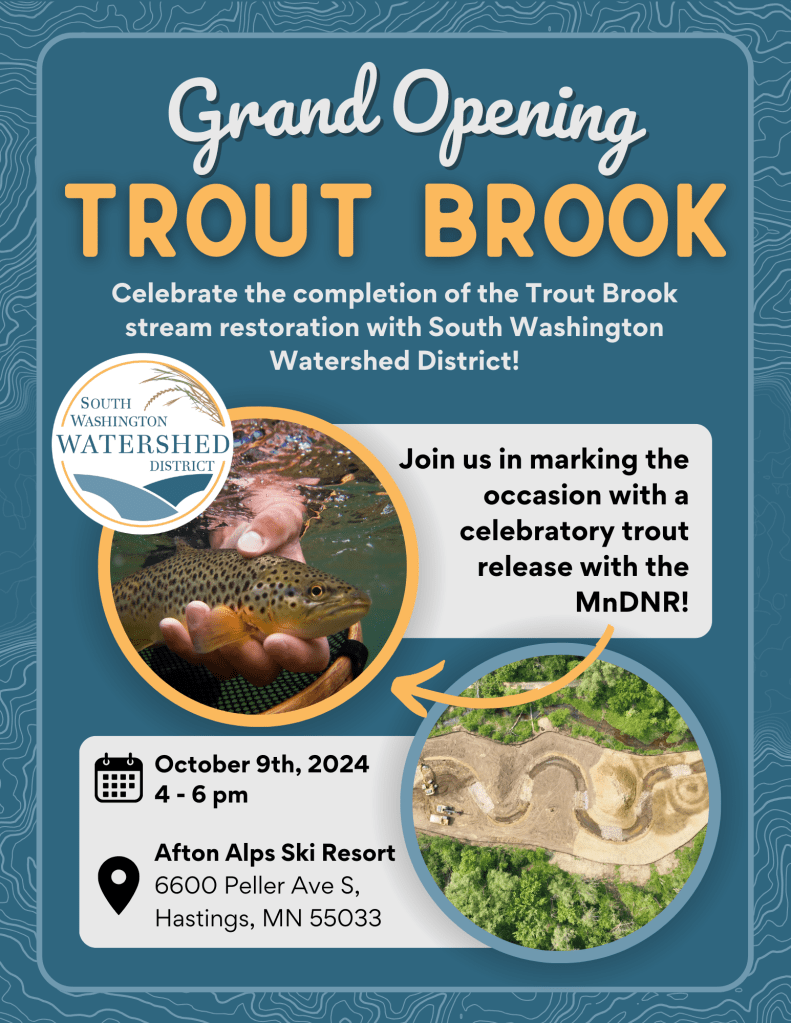
Trout return to the aptly named Trout Brook thanks to a multi-year effort to improve water quality and restore aquatic habitat. Led by the South Washington Watershed District, components of this effort have included working with upland landowners to establish grassed waterways in farm fields, plant prairies, and create streamside buffers, and working with Afton Alps and Afton State Park to “re-meander” segments of Trout Brook that were artificially straightened in the early 1900s. In addition to public and private landowners, other project partners have included Minnesota DNR, Great River Greening, Washington Conservation District, and grant programs created by Minnesota’s Clean Water, Land, and Legacy Amendment.
Stop by Afton Alps on Wednesday, October 9, 4-6pm to celebrate completion of the Trout Brook restoration and cheer for the fish as Minnesota DNR releases a population of heritage brookies into Trout Brook. The event is free and open to the public.
To learn more about Trout Brook’s restoration journey, you can view a story map with historical photos, maps and videos at tinyurl.com/troutbrookafton.

 East Metro Water