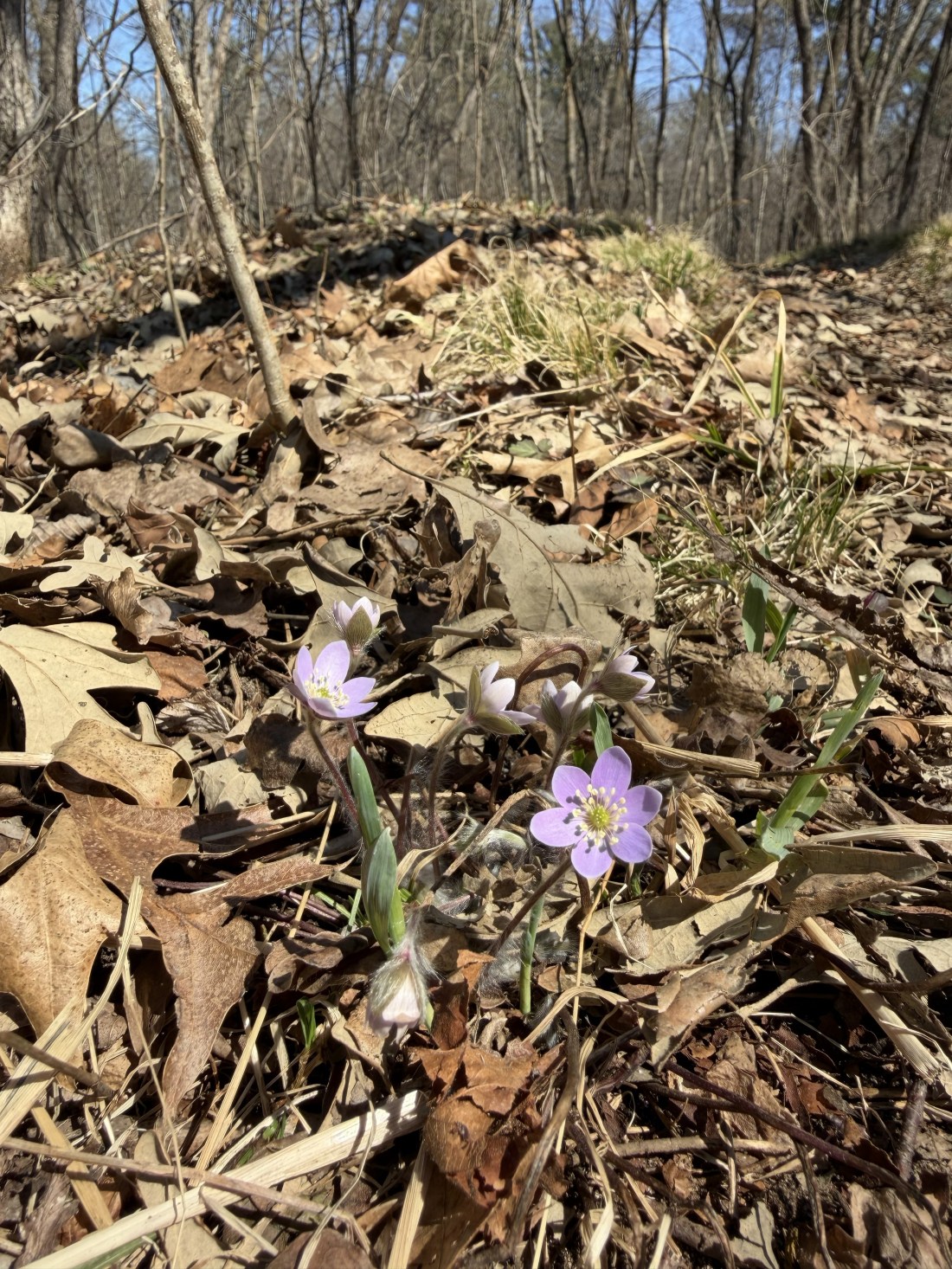
At first, the leaves were brown, and the sky was grey, and the air was cold, and I was sad that day.
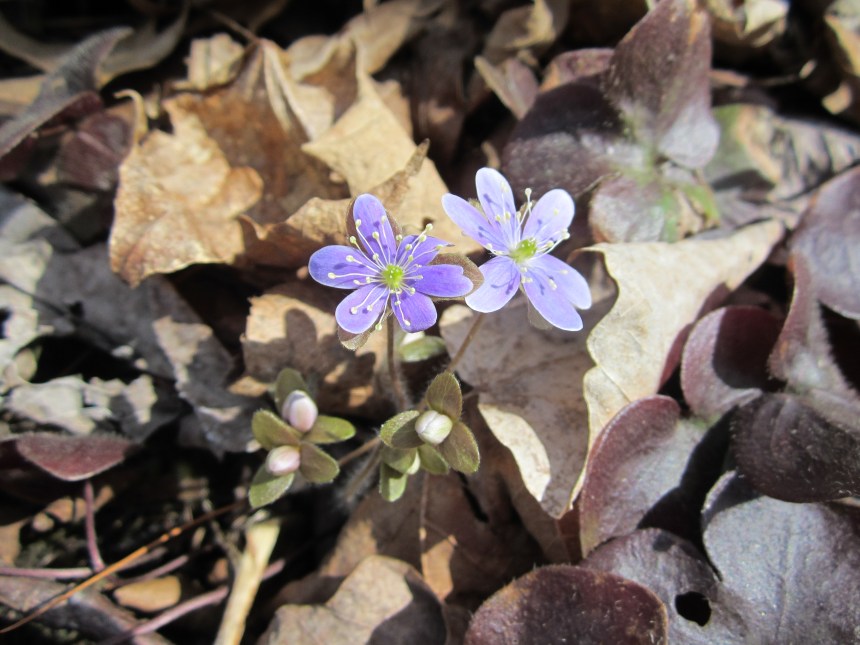
And then, there was a flower.
It was a tiny lavender flower in pile of dead brown leaves and one could have easily missed it if they weren’t looking hard enough. But I was.

The flower was (still is!) a hepatica and is one of the first woodland wildflowers to bloom in the spring. Early in April, while the trees are still without their leaves and the forest is brown and drab, little hepatica unfurl their delicate pink and purple petals. Their three-lobed leaves appear somewhat like a cluster of hearts and people call them “ephemerals” because their existence is so short and fleeting.
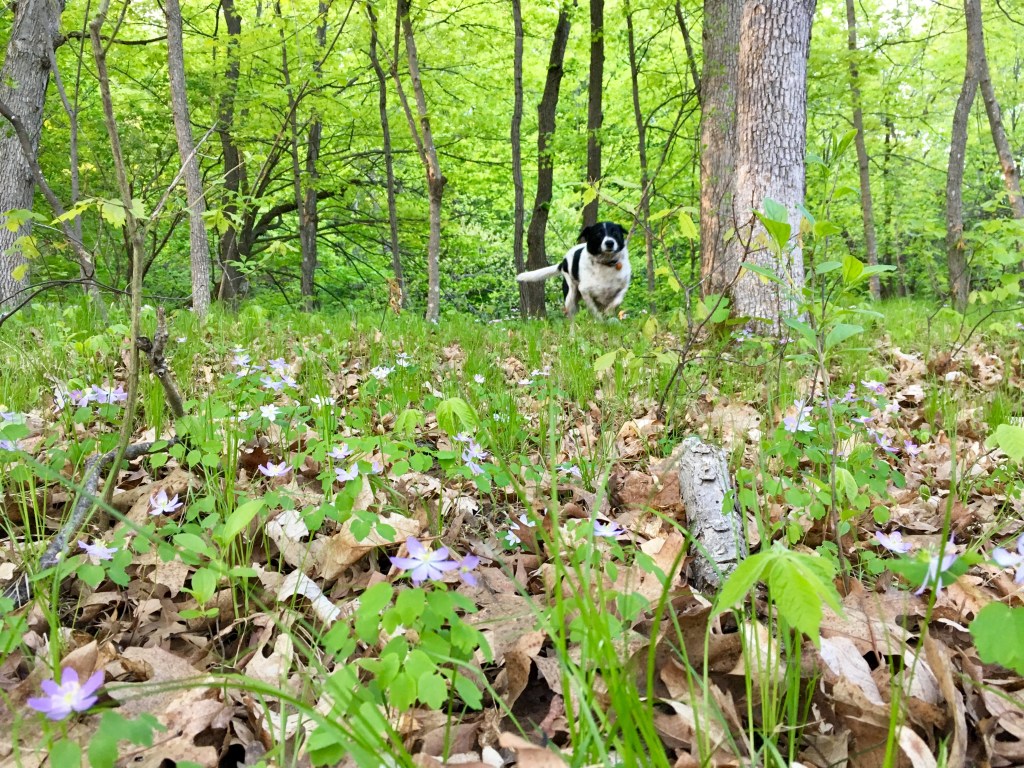
Later in the spring if I am lucky, I might return to the same woods and find other ephemerals – bloodroot, rue anemone, violets, and Dutchman’s breeches. It is a magical kind of woods, without invasive buckthorn or garlic mustard to rob the wildflowers of their beauty, and the trails are small and meandering. I never hike there, only explore.
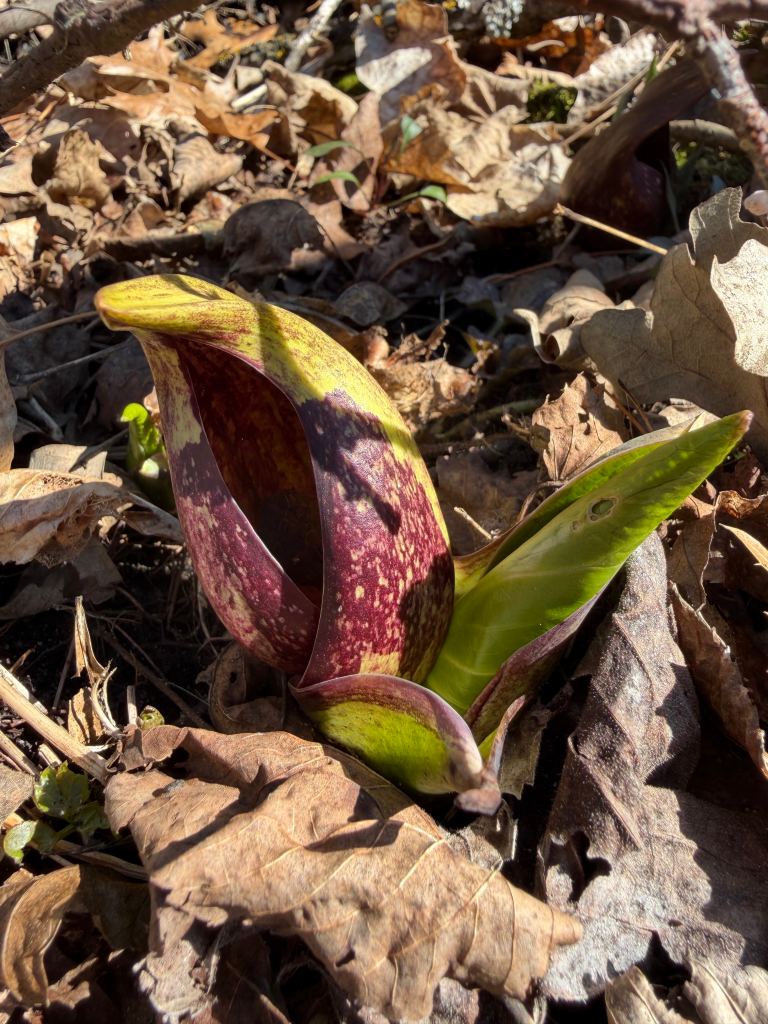
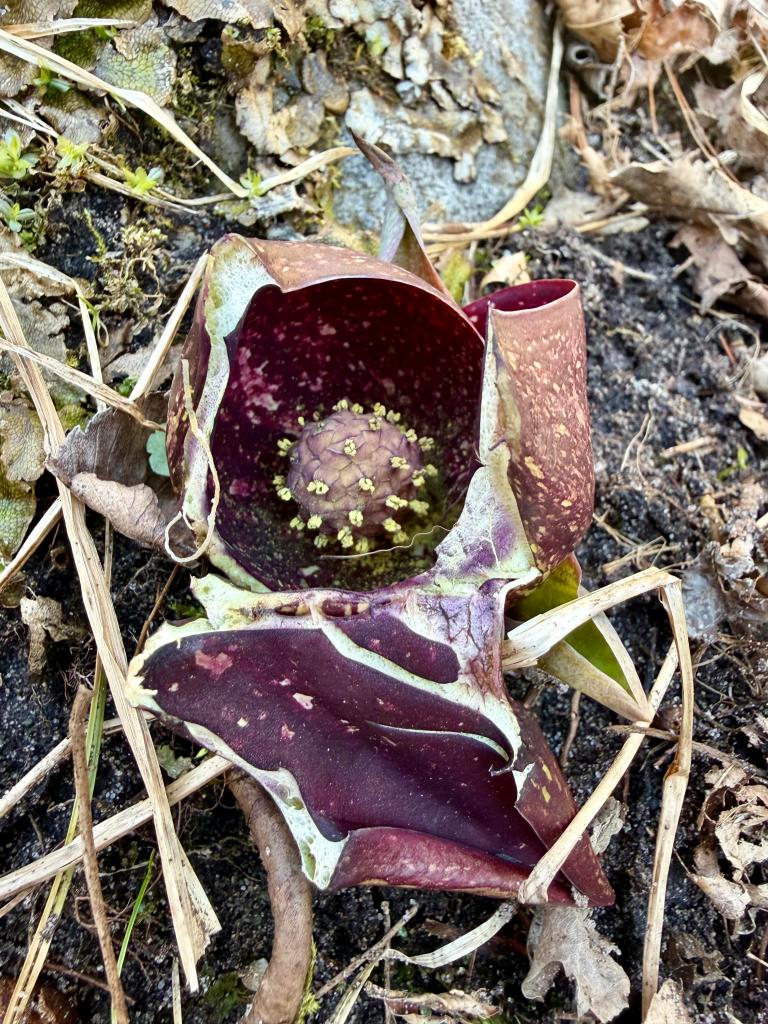
Down by a stream, I found my first skunk cabbage, then my second, third, fourth, and more. These stinky wetland-loving plants have strange purple flowers that reach out of the mud like talons from an underground beast. Through a chemical process they can create heat to melt the snow in early spring and you can sometimes find them as early as March. Later, once the flowers have faded, the skunk cabbage will grow giant green leaves that look like elephant ears and they’ll fill the soggy edges of the stream with lush, green, vibrant vivacity.
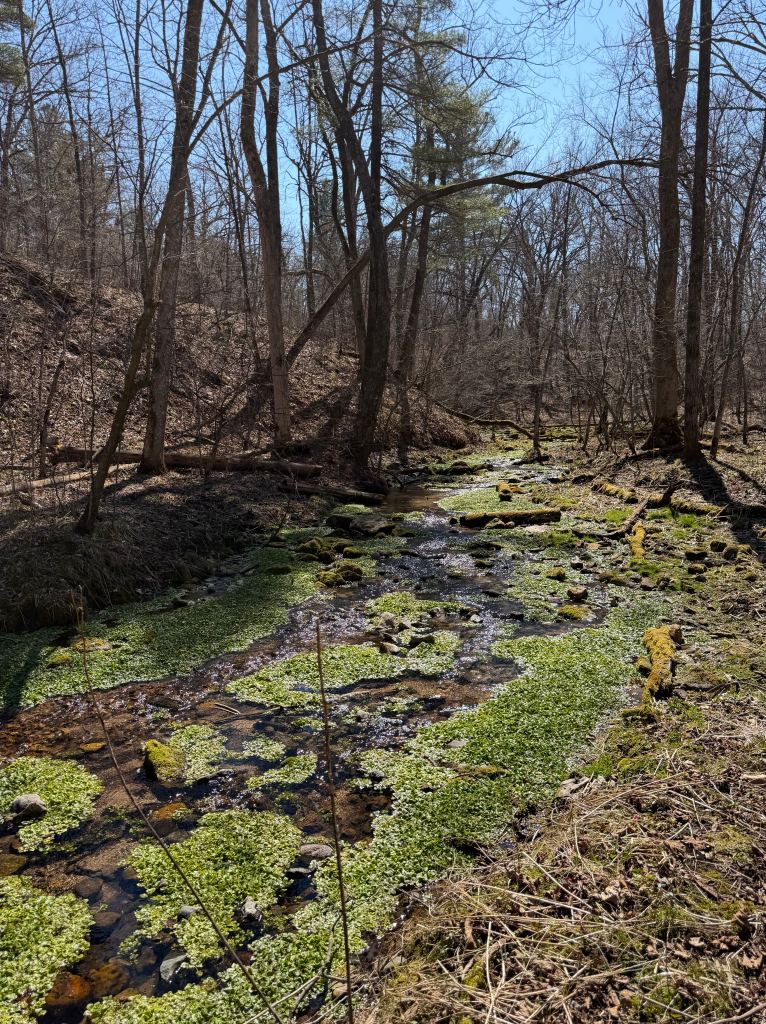
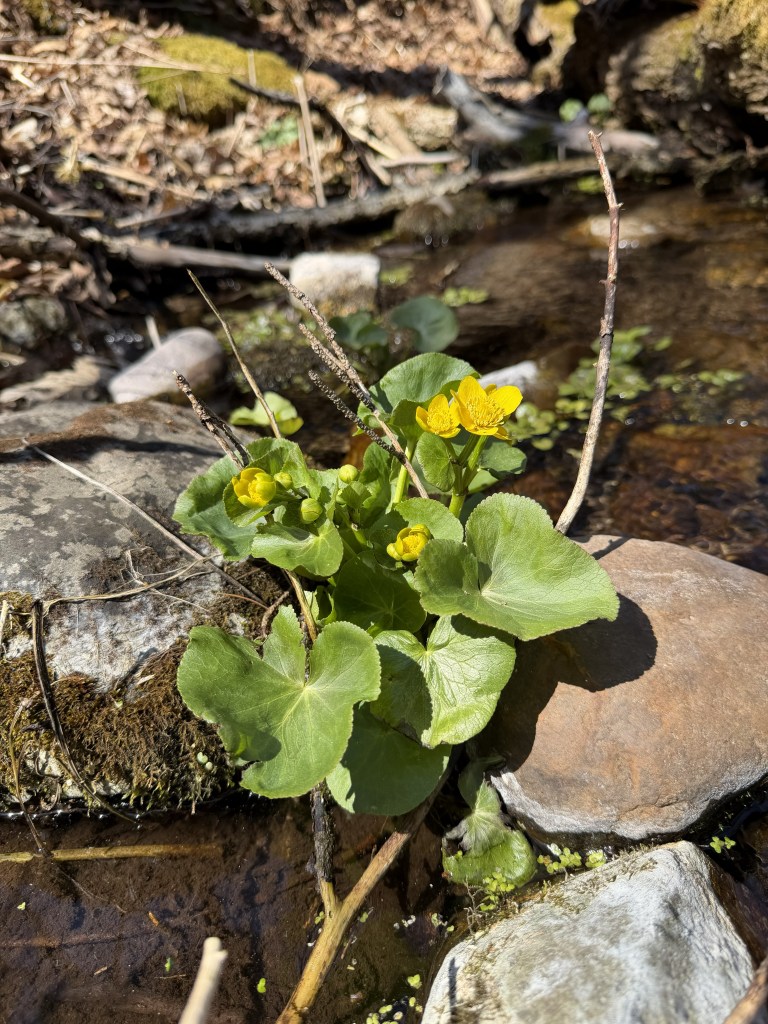
When traveling through the universe, it’s always wise to carry a towel, and when heading into the woods in spring, you’ll have much more fun if you wear rubber boots. Because I did, I decided to walk along the stream a while, sometimes crossing on fallen logs, and other times hopping from stone to stone. Soon, I was pleasantly surprised to find marsh marigold, a native plant with cheerful, bright yellow flowers that grows in streams and water-logged woods.
By now, the sun had joined us for the afternoon and the forest was bathed in soft golden light. Little birds flitted about in the bushes along the water’s edge, creating a scene that was fit for Snow White or Sleeping Beauty. There were tiny trout swimming in the stream and they darted around in circles under an old wooden bridge where the moss was green and the sun cast diamonds on the water.
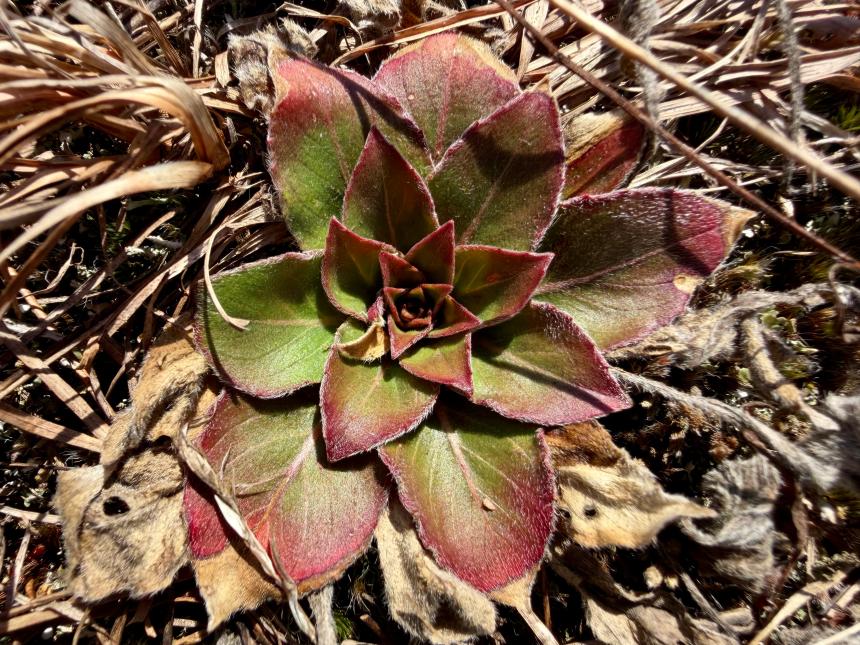
Eventually, I climbed out of the woods and into a small prairie. Here, the landscape returned to drab and brown. At this time of year, the lupine and blazing star are still underground and sleeping. Same is true for the bluestem and Indiangrass. But the ground was warm and the sun was out and I found a large flat rock that was perfect for an afternoon nap. It wasn’t a place where you’d sleep all day, but lovely to spend a little while.
Then, it was time to head back to the car. The leaves were still brown, but the sky was blue and the air held the promise of warmth. And my heart still felt a little bit sad, but it held the promise of happy.


