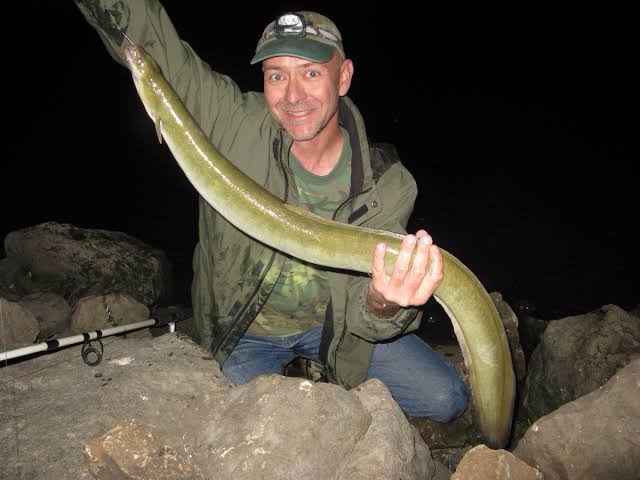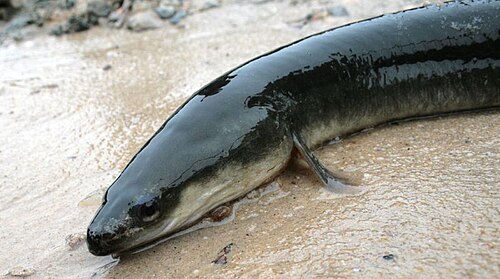
It’s Thanksgiving Day and the table is set. A golden turkey, fresh out of the oven, sits at the center, ready to be eaten. There are mashed potatoes, vats of rich brown gravy, cranberries, squash, and of course, a delicious, nutritious bowl of eels. Mmmmmmm. More eels please!

America’s Thanksgiving tradition dates back to 1621, when Wampanoag leader Ousamequin (Massasoit) and 90 other men joined 50 English colonists in Plymouth, Massachusetts for a three-day harvest celebration. The event took place sometime between September 21 and November 9 and we only know that it happened because of a letter that colonist Edward Winslow mailed home to his friend in England who was still living across the sea.
Inconceivable as it may seem to us now, historians widely agree that eel was likely one of the delicacies on the menu for that first Thanksgiving meal. At the time, there was no wheat for pie crust and no cows to provide butter and milk. Potatoes had not yet arrived in North America and the colonists had not yet learned to harvest cranberries. On the shores of the Atlantic Ocean, however, there was seafood in abundance.
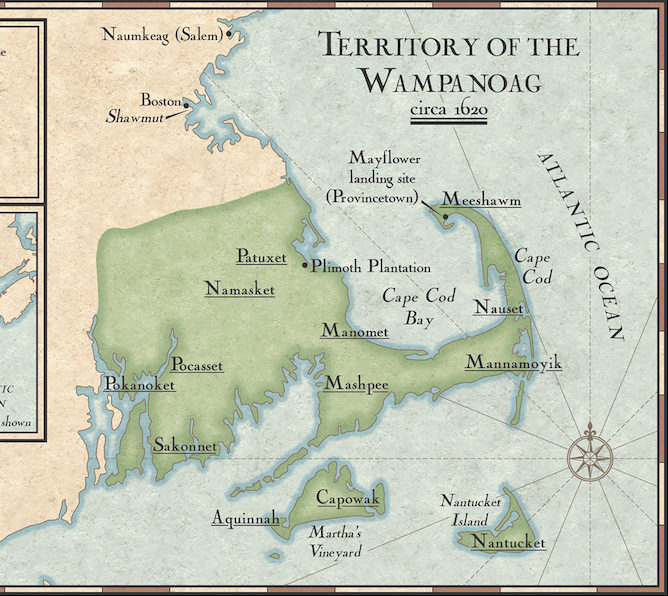
According to Oceana, a non-governmental organization dedicated to protecting the world’s oceans, the Cape Cod Bay during the 1600s was a veritable Jurassic Park. The bay was filled with hundreds of 70-ton North Atlantic right whales, so many that it actually made it challenging to navigate the Mayflower. The whales fed on shoals of Atlantic menhaden that could stretch for 40 miles. Gargantuan 20lb lobsters prowled the coastline and the rivers were filled with spawning salmon and 18ft sturgeon. Also, there were thousands of eels.
In The Book of Eels, author Patrik Svensson describes eels as “a gift from God in their hour of need, the salvation they had never stopped praying for.” The colonists came to recognize this long and snake-like fish as a dietary staple after meeting with Tisquantum (also known as Squanto), who was a member of the Patuxet tribe of Wampanoags. Later, one of the pilgrims wrote, “They were fat & sweet, he trod them out with his feete, and so caught them with his hands without any other instrument.”

Though eels once made up over a quarter of the total fish found in Atlantic coastal streams, their populations have plummeted since the Pilgrim days and they are now considered an endangered species by the International Union for Conservation of Nature (IUCN). In Minnesota, the American eel has been listed as a “species of special concern” since 2013 due to its population decline globally and within our state.
An American eel’s life cycle is just as strange as its appearance. All eels start their life in the Sargasso Sea in the Atlantic Ocean and then eventually travel inland to freshwater rivers to spawn. Given the distance and number of impediments along the way, it’s amazing that any eels make it to Minnesota at all and even more fascinating when you realize that every eel in Minnesota is a female. Major threats affecting eels include historic over-fishing, dams that prevent migration, habitat destruction, and water pollution.
Could eels be poised for a Thanksgiving comeback?
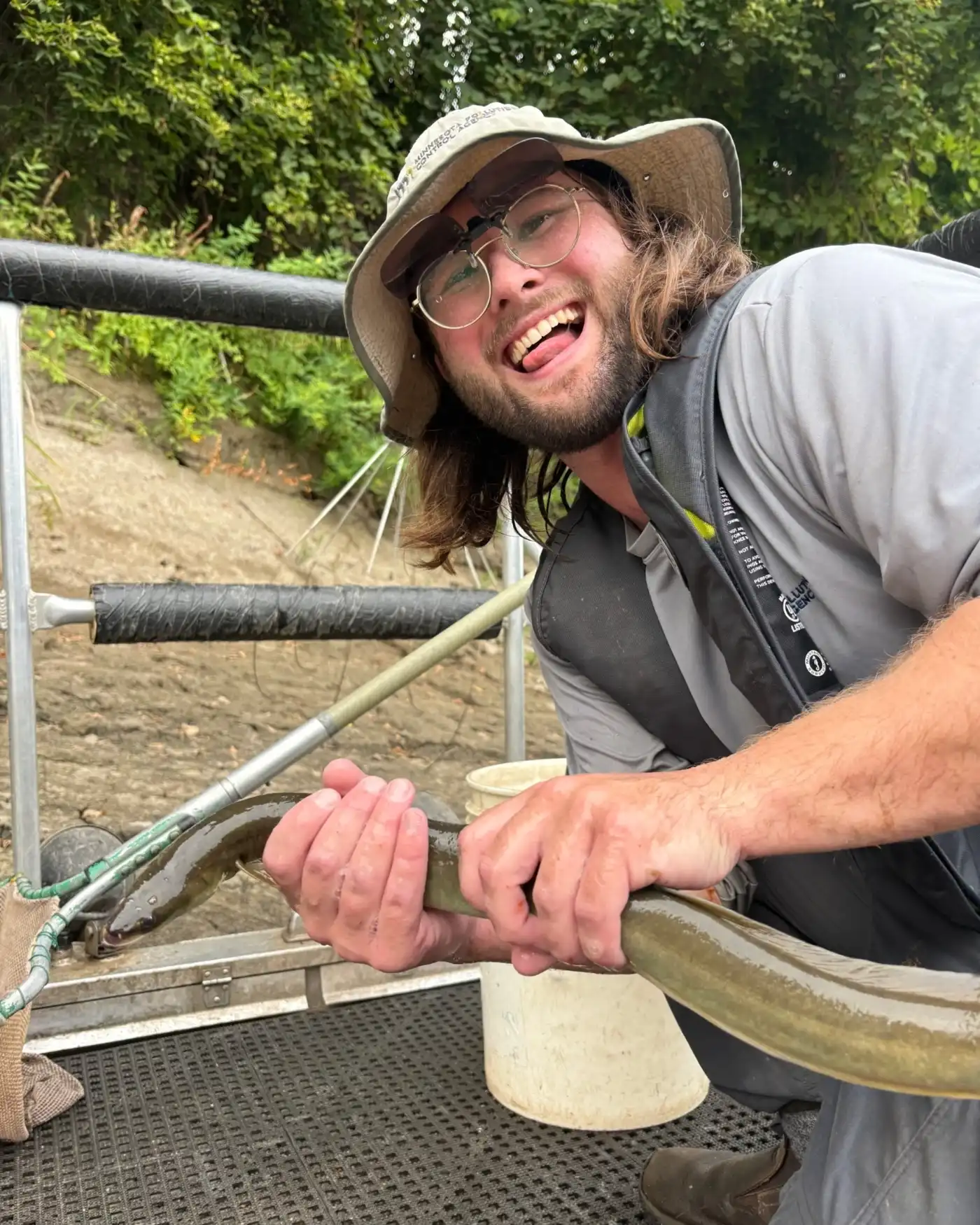
This September, a biomonitoring team for the Minnesota Pollution Control Agency (MPCA) found an American eel in the Minnesota River near Judson, Minnesota – one of only four found by the MPCA since 1990. Though there is no reason to expect an influx of eels anytime in the near future, biologists consider this eel to be a possible sign that habitat and water quality are improving in the river.
If and when eels become common again, it will behoove all of us to have a few recipes in our Thanksgiving collections. Eels can be served smoked, grilled, steamed, or boiled, but I’d recommend them without gravy.