How a billboard helped to transform weeds into prairie

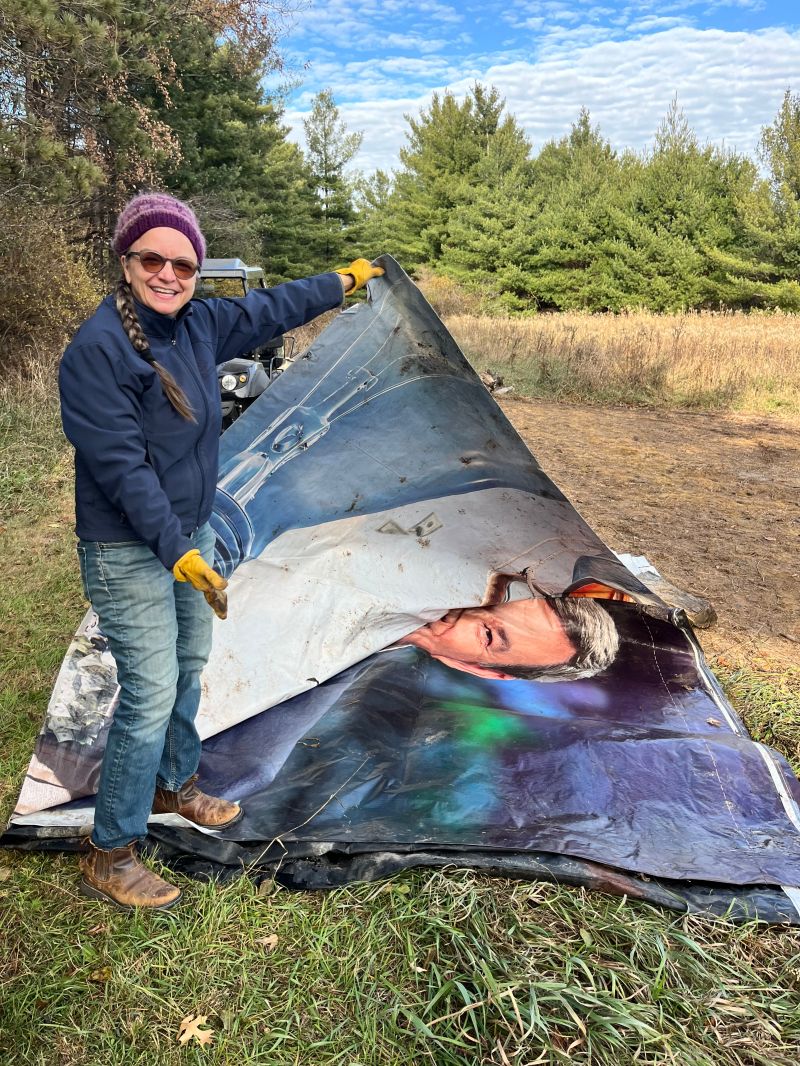
Round leaf bittersweet is an invasive woody vine, native to China, Korea, and Japan, that was introduced to North America in the mid-1860s as an ornamental shrub. The vines girdle and smother trees and out-compete our indigenous American bittersweet, making it a formidable foe in our Minnesota woodlands. In an attempt to eradicate bittersweet from their soon-to-be prairie, Wendy and Mark tried killing it off with a low-heat fire, digging up the roots, and smothering it with a large blue tarp. All efforts proved unsuccessful until now.

Read More

Fall yard & garden – no it’s not too late to plant!

In the coming weeks, there are several steps you can take to prep your yard and gardens for winter and continue to support pollinators, birds and other wildlife. But, you might be surprised to learn that fall is also a really great time to plant a native garden!

Read More

Meet our 2025 Natural Shoreline Award winners!

We are excited to announce the winners of our inaugural Natural Shoreline Awards, sponsored by the East Metro Water Resource Education Program and Lower St. Croix Watershed Partnership. These awards recognize Minnesotans who are protecting lake, stream, and wetland habitat in Chisago, Isanti, Ramsey and Washington Counties.

Read More

Submit a nomination for 2025 Natural Shoreline Awards

The Natural Shoreline Award Program recognizes beautiful lakeshore, riverfront and streamside properties that incorporate native flowers, shrubs, trees and plants. Award-winning properties can be located in Chisago, Isanti, Ramsey or Washington Counties.

2025 Program Timeline:
– July 1 – August 7: Call for nominations
– August 7 – 31: Program judges will tour and evaluate shorelines
– September 9: Award recipients are announced

Learn more and submit your nominations.

Read More

Score your shore: A tool to measure the health of your lakeshore property

Maintaining and restoring lakeshore habitat isn’t just good for wildlife, it also helps to protect valuable real estate from literally washing away.

Read More

Do turf lawns protect us from ticks or make the problem worse?

Many homeowners assume that a tidy lawn with short grass is the best defense again ticks. On a large scale, however, suburban lawns may actually be making our tick problem worse.

Read More

No Mow May & Slow Mow Summer

Participating in No Mow May is a great entry-level action that anyone can take to help protect the environment, and best of all, it is FREE!

Many people who participate in No Mow May become inspired to take the next step and transition their conventional turf lawn into a low-mow or alternative lawn. Drought tolerant turf-grass species like fine fescues reduce the need for mowing, watering, and chemicals, while low-growing flowers like Dutch white clover, self-heal, yarrow, creeping thyme, and pussy-toes can also be incorporated to provide food for native bees.

Read More

Always the right time to plant a garden

To plant a tree or a garden is an act of hope. We hope that the snow will melt and the sun will return. We hope that that neighborhood deer and rabbits will find enough food to eat, though not so much that our garden fails to grow. We hope that the earth will keep spinning, and the rain will fall, that there will be a warm home to live in, and hands to do the work. It’s a small act of courage in an uncertain world, though really, when you think about it, not so small at all.

Read More

New grant funds will help to improve habitat connectivity in Washington County

In the coming year, Washington Conservation District (WCD) will receive $185,000 in funding through the Pollinator Pathways program and $246,000 through the Habitat Enhancement Landscape Program (HELP) to restore and improve wildlife and pollinator habitat in more than a dozen priority locations.

Read More