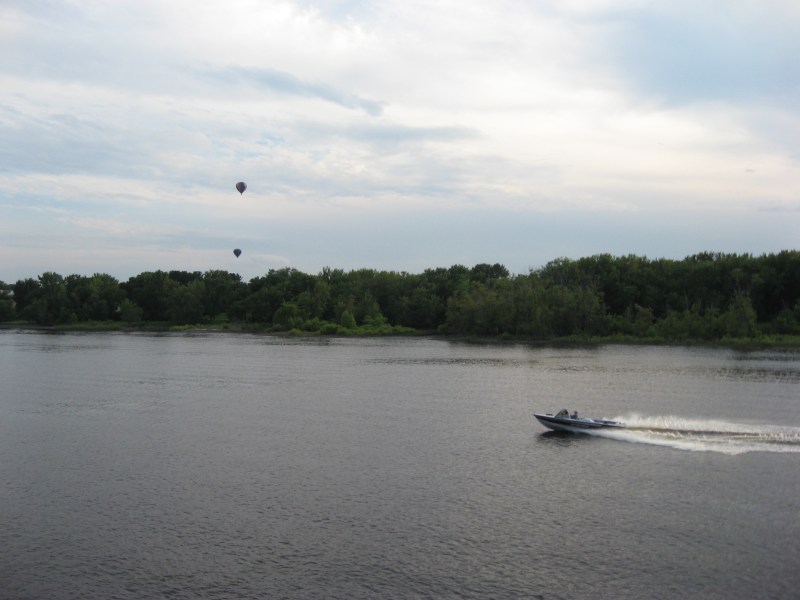
Zebra mussels and starry stonewort spread to more Minnesota lakes

This summer, the Minnesota Department of Natural Resources has reported new infestations of aquatic invasive species – zebra mussels and starry stonewort – at a dozen lakes across the state. The discoveries underscore the inherent challenge of protecting Minnesota waterways in a state with more than 11,000 lakes, thousands of natural and manmade connections, and countless ways to access the water from public and private lands.

Read More

Keeping invaders out of Minnesota waters

In 2024, Minnesota deployed more than 800 watercraft inspectors to public boat launches around the state to help staunch the spread of zebra mussels, spiny waterflea, and other aquatic invaders. The goal? Preserve Minnesota’s famed “good life” and protect fishing, tourism, and cultural mainstays such as wild ricing and “up north at the cabin.”

One reason for optimism is that we are seeing fewer new infestations and better compliance with state laws for watercraft cleaning and inspections.

Unfortunately, however, the DNR still reported 41 new AIS infestations in Minnesota lakes and rivers last year.

Read More

Zebra mussels found in Big Carnelian Lake

Fourteen new zebra mussel infestations were discovered in Minnesota in 2024, including Big Carnelian Lake in northern Washington County.

While news of a new zebra mussel infestation is discouraging, it is important to remember that 96% of lakes in Minnesota do NOT have zebra mussels and can still be protected from future infestations if lakeshore landowners, contractors, boaters, and anglers commit to taking action. 

Read More

Avoid spreading AIS during this year’s fishing season

Currently, only 8% of the lakes in Minnesota have invasive species present and we need everyone’s help to keep it that way.

If you use waders or hip boots when fishing, be sure to clean off any visible aquatic plants, animals, and mud when you’re done and use a stiff brush to scrub the bottom of your boots where mud gets stuck in the treads. Using non-felt soled boots will further reduce the risk of spreading AIS.

It is also important to dispose of unwanted bait, worms, and fish parts in the trash instead of throwing them in the water or on the shore.

Read More

With spring in sight, local communities prepare for an early boating season

From 2016 to 2023, the number of inspected watercraft In Washington County with drain plug violations dropped from 7% to 1%. This is an indication that watercraft inspections and AIS education programs are working.

Read More

Be AIS smart this fishing season

Currently, only 8% of the lakes in Minnesota have invasive species present and we need everyone’s help to keep it that way.

If you use waders or hip boots when fishing, be sure to clean off any visible aquatic plants, animals, and mud when you’re done and use a stiff brush to scrub the bottom of your boots where mud gets stuck in the treads. Using non-felt soled boots will further reduce the risk of spreading AIS.

It is also important to dispose of unwanted bait, worms, and fish parts in the trash instead of throwing them in the water or on the shore.

Read More

Volunteer to protect Minnesota lakes from aquatic invasive species

During Starry Trek, scheduled this year for Aug. 20, volunteers gather at training sites to learn how to identify starry stonewort and then head out to local water accesses to search for signs of the invasive species.

Read More

Breaking Eurasian watermilfoil’s stranglehold on Minnesota Lakes

Researchers and lake associations search for new ways to control this aggressive invasive species. Meanwhile, watercraft inspections remain the first line of defense in preventing the spread of AIS.

Read More

Help prevent the spread of aquatic invasive species while fishing and boating this season

Last weekend, Minnesota’s 2020 fishing season opened with a bang. There was snow up north, only a few fish caught in the St. Croix River, and no cameo appearances from Minnesota Governor Tim Walz. None-the-less, record numbers of Minnesotans purchased fishing licenses last week and set sail in search of walleye, pike, and lake trout…

Read More

In the battle against aquatic invasive species (AIS), key weapons include research, inspections & early detection

Last month, the Minnesota Aquatic Invasive Species Research Center (MAISRC) announced nine new research projects scheduled to begin this summer. Included in the list are two projects aimed at controlling common carp – one to develop carp removal strategies that utilize social behaviors and one to explore a herpesvirus that could act as a potential…

Read More