How a billboard helped to transform weeds into prairie

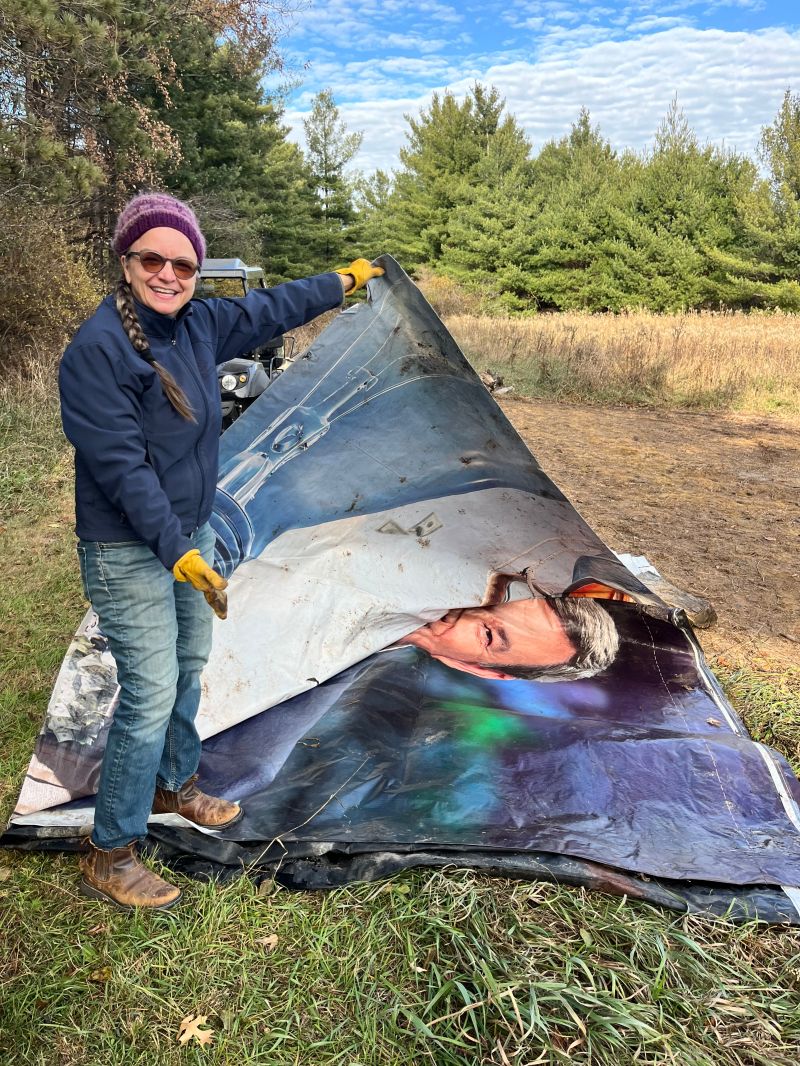
Round leaf bittersweet is an invasive woody vine, native to China, Korea, and Japan, that was introduced to North America in the mid-1860s as an ornamental shrub. The vines girdle and smother trees and out-compete our indigenous American bittersweet, making it a formidable foe in our Minnesota woodlands. In an attempt to eradicate bittersweet from their soon-to-be prairie, Wendy and Mark tried killing it off with a low-heat fire, digging up the roots, and smothering it with a large blue tarp. All efforts proved unsuccessful until now.

Read More

Indigenous-led organizations work to re-connect people with the land

Learn about Indigenous-led organizations, including the Great Lakes Indian Fish & Wildlife Commission (GLIFWC), Waḳaƞ Ṭípi Awanyankapi (formerly known as Lower Phalen Creek Project), Owámniyomni Okhódayapi (formerly known as Friends of the Falls), and Dream of Wild Health. 

Read More

Interpreting the past and future through feathers, fur and bones

Researchers at the Bell Museum study the ways animals adapt to environmental changes, the spread of zoonotic diseases, impacts of pollution, and declining species.

Read More

Burn Baby, Burn

Prairie, oak savanna, pine barrens, and wet meadows all have something in common – they like to burn, baby burn.
This week’s East Metro Water blog explores the unique habitat found in wet meadows. If you’re interested in learning more about prescribed fire, visit the open house at Lake Elmo Park Reserve on Tuesday, April 2, 4-7pm. Yes! There will be fire!

Read More

Indigenous Perspectives on Land Management

Oak savanna is one example of an ecosystem that has co-evolved with humans in several different locations in North America. In this transitional zone between forest and prairie, people used fire to maintain open areas as a way to attract large game animals such as bison and elk.

Read More

A World Without Us or Solarpunk?

Is there a different pathway to the future in which we humans get to stay on earth but find new and better ways to live in harmony with nature?

Read More

Where the land is neither wet nor dry

Dave Medvecky’s project in Isanti County will restore approximately 13 acres of wetlands that have been lost to farming for nearly a century.

Read More

Touring Wakáŋ Tipi at Bruce Vento Nature Sanctuary – Same View, New Perspective

“We’ve never lost our connection to this space but it’s important to bring native people back here and have them making decisions on how the land in managed,” says Keeli Siyaka, Environmental Justice Educator at the Lower Phalen Creek Project.

Read More

Transformation underway at Sunfish Lake Park

Sunfish Lake Park visitors will immediately notice the changes on site, where contractors and volunteers have been clearing buckthorn since late winter.

Read More

Students help to seed an outdoor laboratory at Crestview Elementary

The school is converting 2.5 acres of turf to prairie and rehabbing 7.5 acres of low-quality woodlands.

Read More