
Wake-surfing and wakeboarding have grown in popularity in recent years, leading many people to worry about the possible impacts to Minnesota lakes.
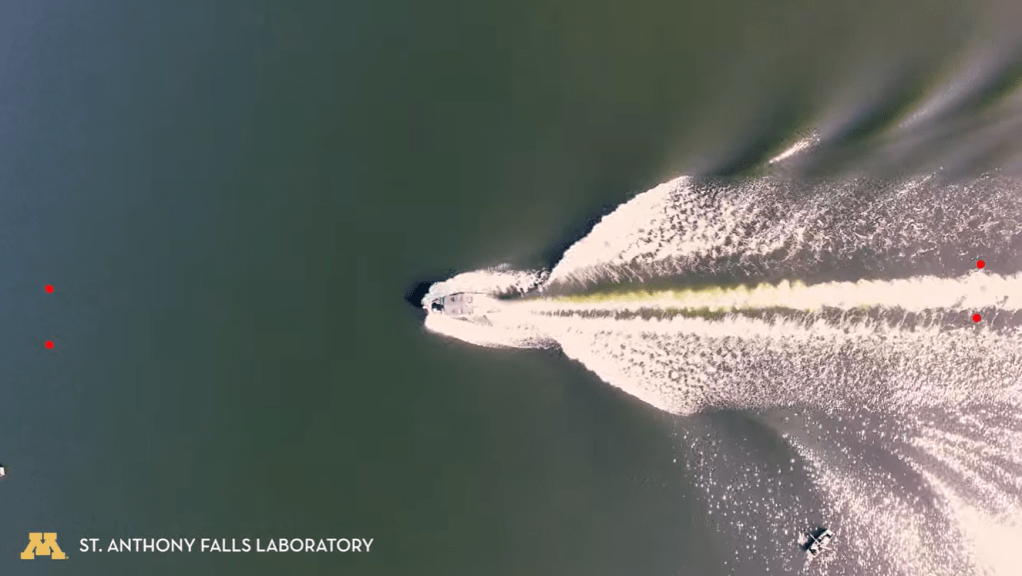
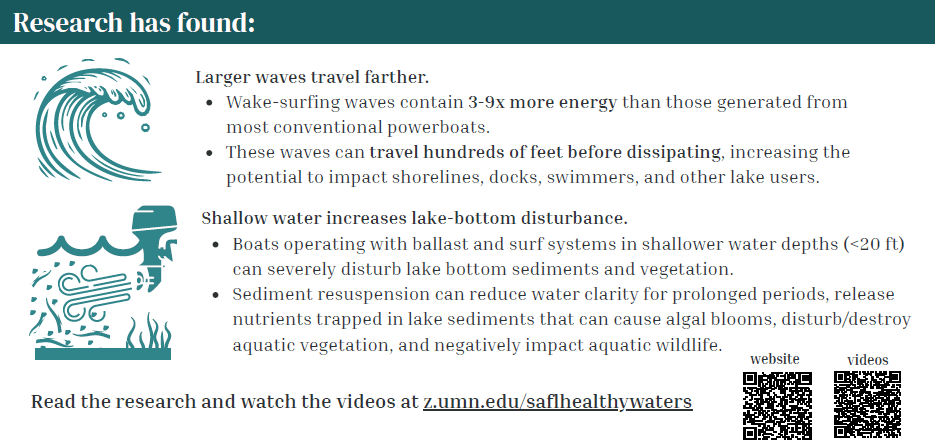
In 2020, researchers at the University of Minnesota’s St. Anthony Falls Laboratory (SAFL) began studying how the larger waves and turbulence produced during wake-surfing compare to those from traditional recreational boats. They found that wake-surfing waves contain three to nine times more energy than waves generated by conventional motorboats and can travel hundreds of feet before dissipating. In addition, boats operating with ballast and surf systems in shallow water depths (less than 20 ft deep) can severely disturb lake bottom sediment and vegetation. As a result, wake boating can contribute to shoreline erosion and impact lake water quality if it happens too close to shore or in too shallow of water.
What approaches have lake associations and local communities been taking to address this concern?
In 2024, the State of Vermont passed a statewide rule that limits wakesports on any lake to designated “wakesports zones” that are at least 500 feet from the shore, 20 feet deep, and 50 contiguous acres in size. So far, this is the only state to adopt a statewide approach to the issue.
In Minnesota, rules related to speed and horsepower limits, wake restrictions, and other types of surface use zoning on lakes and rivers are established by local government (city, township or county) and approved by the Minnesota Department of Natural Resources (DNR) before they go into effect. To date, Caribou Lake in Cook County is the only Minnesota lake to adopt a local ordinance prohibiting wake surfing and other enhanced wake activities. In Wisconsin, approximately 80 lakes have established similar restrictions.
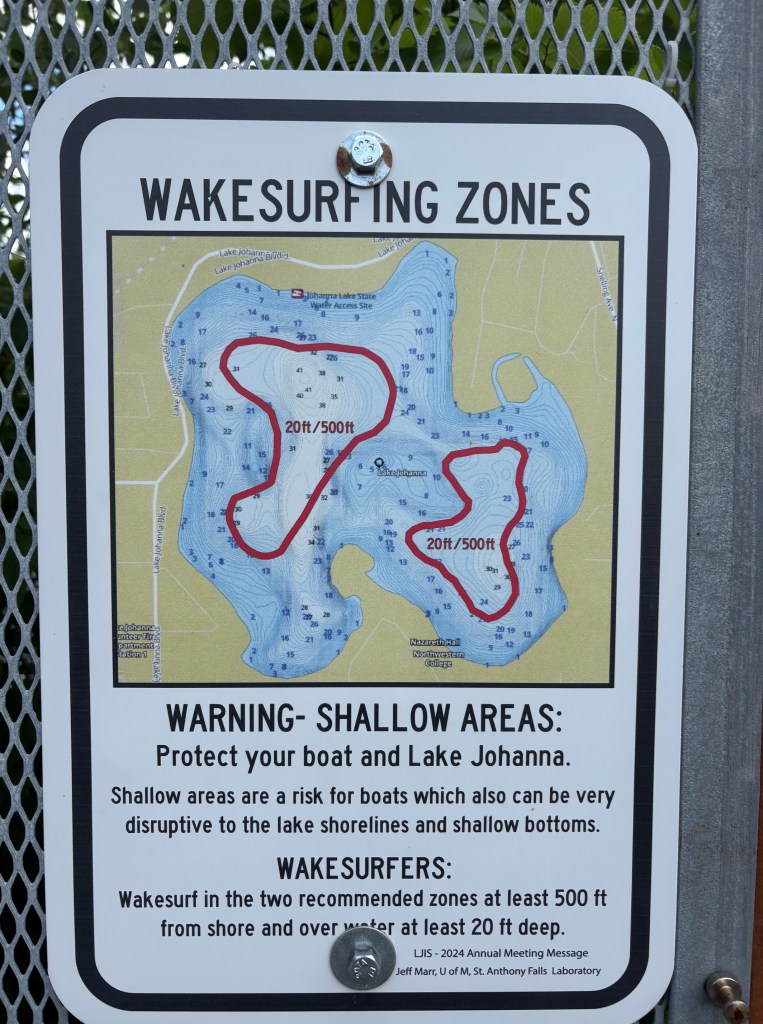
In other examples, lake associations have worked with cities and watershed organizations to install signs at public launches and/or distribute guidelines for safe wakeboating to local residents.
This summer, the East Metro Water Education Program (EMWREP) and Lower St. Croix Watershed Partnership compiled a wake boat information package for lake associations in Anoka, Chisago, Ramsey, and Washington Counties and worked with Washington Conservation District to develop maps that show potentially suitable areas for wake boating on local lakes. (Access the info package and maps here.)
In addition, Minnesota Lakes & Rivers Advocates has wake boat maps available for a fee for any lake in Minnesota.
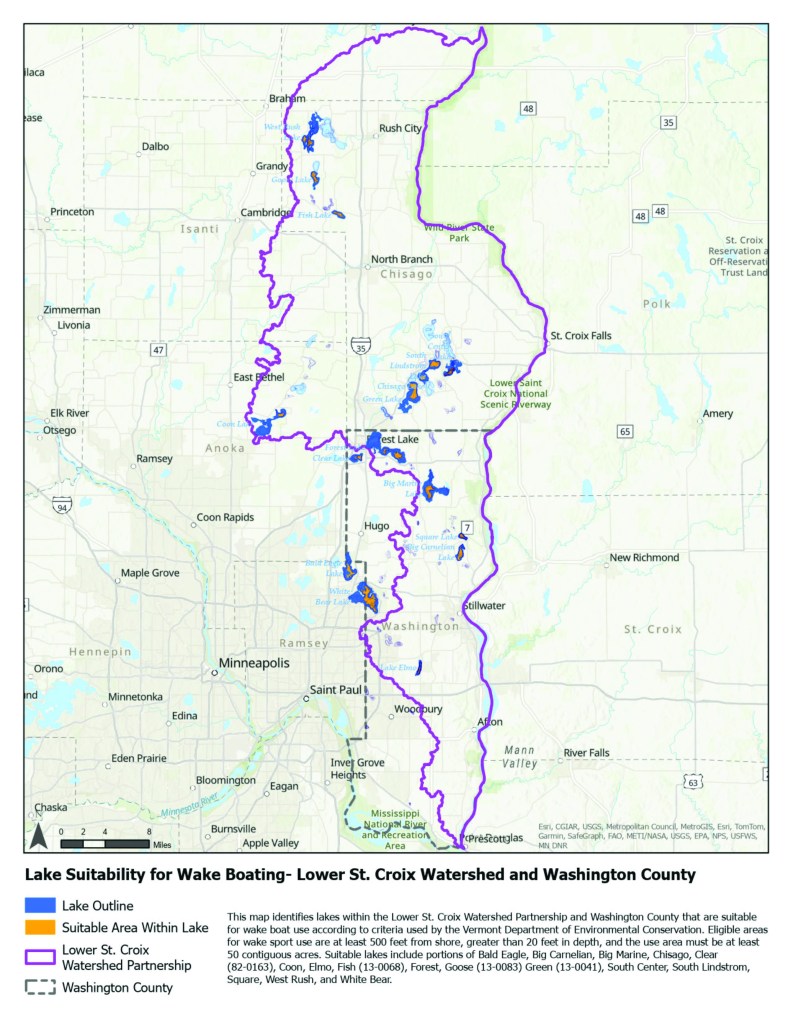
Based on guidelines suggested by SAFL and other lake management experts, its likely that larger lakes such as Big Carnelian, Forest, and White Bear can support some wakesports in deep water in the middles of the lakes, without damaging shorelines or triggering algal blooms. For smaller or shallower lakes, however, the science suggests that wakesports would likely cause problems.
It is important for shoreline owners and lake users to recognize that water recreation is just one of many issues affecting the health of our lakes. Other equally important concerns include aquatic invasive species, stormwater runoff, shoreline habitat degradation, and development.
Want to learn more about your favorite Minnesota lakes? Minnesota DNR operates an online “Lake Finder” at www.dnr.state.mn.us/lakefind. You can look up lakes by name and county to learn about fishing, public access sites, water quality, and water levels. The DNR also offers maps that show lake depth and recreational features.
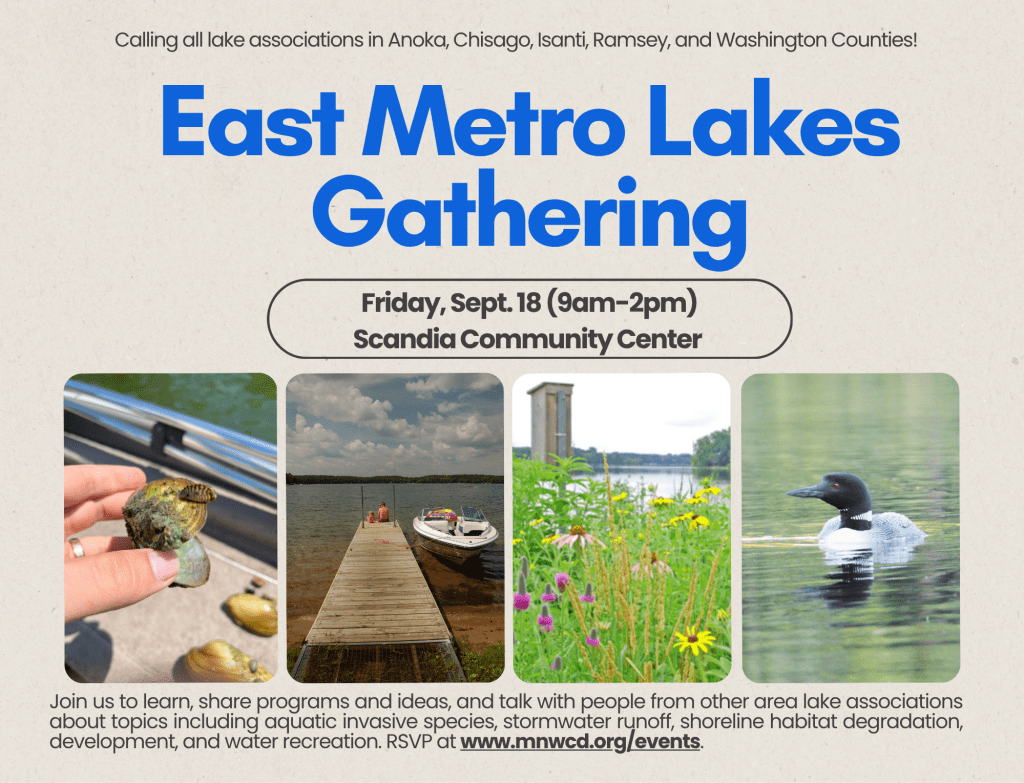
Live on a lake in Anoka, Chisago, Isanti, Ramsey or Washington County?
Join us on Friday, Sept 18 (9am-2pm) at Scandia Community Center (14727 209th St N, Scandia) for a lake association learning and networking event. This mini conference will be an opportunity to learn, share programs and ideas, and talk with people from other area lake associations about topics including aquatic invasive species, stormwater runoff, shoreline habitat degradation, development, and water recreation. RSVP here.


