Many homeowners assume that a tidy lawn with short grass is the best defense again ticks. On a large scale, however, suburban lawns may actually be making our tick problem worse.
Read More
Tips and tales about keeping water clean
Many homeowners assume that a tidy lawn with short grass is the best defense again ticks. On a large scale, however, suburban lawns may actually be making our tick problem worse.
Read More
Participating in No Mow May is a great entry-level action that anyone can take to help protect the environment, and best of all, it is FREE!
Many people who participate in No Mow May become inspired to take the next step and transition their conventional turf lawn into a low-mow or alternative lawn. Drought tolerant turf-grass species like fine fescues reduce the need for mowing, watering, and chemicals, while low-growing flowers like Dutch white clover, self-heal, yarrow, creeping thyme, and pussy-toes can also be incorporated to provide food for native bees.
Read More
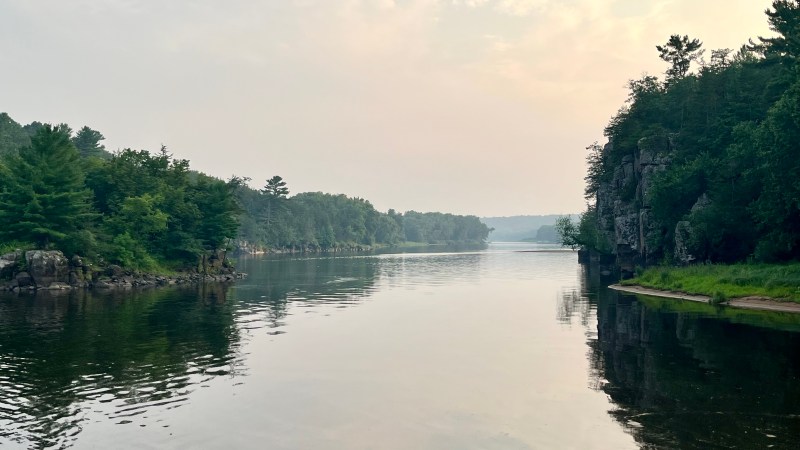
Nearly 8000 square miles of land in Minnesota and Wisconsin drains to the St. Croix River. Within this larger basin, 915 square miles of land on the Minnesota side is included in the Lower St. Croix watershed. This encompasses 127 lakes, over 1,000 miles of rivers and streams, and approximately 152,000 acres of wetlands.
In its first four years, the Lower St. Croix Watershed Partnership reduced phosphorus to local waterways by 10,959 pounds per year, which is nearly double what the group hoped to achieve over the course of its 10-year plan.
Read More
Minnesota is home to 14 species of frogs and toads. During the spring, their chorus rings out as the males search for females and compete to present themselves as the most attractive option with whom to settle down and make a few thousand babies. Because each species has a distinctly different call, you can determine which types of frogs live in your area simply by listening to their symphony.
Read More
Though Minnesota might be known as the “Land of 10,000 lakes,” we could just as easily call ourselves the “Land of 1,000,000 wetlands.”
Read More
Minnesota is home to 200 Mud Lakes, 150 Long lakes, and 120 Rice lakes.
In addition to their actual names, the Minnesota DNR also assigns lakes a shoreland classification – natural environment, recreational development, or general development – that is used to guide lot size, setbacks, and land uses on surrounding properties.
Read More
Minnesota’s Tree Steward program is designed for people who love trees, enjoy being outdoors, and want to volunteer in their community. In addition to caring for community trees, volunteers also help to lead reforestation efforts.
This spring, Washington Conservation District hopes to recruit and train 30-40 Tree Steward volunteers to work in communities across Washington County. There will be volunteer trainings on Saturday, April 5, 9am-2pm at Scandia Community Center and Saturday, April 12, 9am-2pm at Lake Elmo Park Reserve. The events are free and include lunch.
To learn more and sign-up, visit http://www.mnwcd.org/events.
Read More
Over the course of his career, Jim Birkholz has supported SWCDs around the state, established a thriving family-run orchard, and helped to complete dozens of large-scale land and water protection efforts in Chisago County.
Read More
Currently, an estimated 41,100 birds are crossing Minnesota every night and this number will climb to 18 million by mid-May.
One important and easy action you can take to protect birds during their spring and fall migration is to turn out the lights.
Read More
To plant a tree or a garden is an act of hope. We hope that the snow will melt and the sun will return. We hope that that neighborhood deer and rabbits will find enough food to eat, though not so much that our garden fails to grow. We hope that the earth will keep spinning, and the rain will fall, that there will be a warm home to live in, and hands to do the work. It’s a small act of courage in an uncertain world, though really, when you think about it, not so small at all.
Read More