Flowers bloom in the shadow of a great white bear

White Bear is a lake with a storied past. At 2438 acres, it is the second largest lake in the Twin Cities metro, and its history features a legendary fight with a giant bear, steamships, gangsters, famous authors, legal battles, and even an amusement park. Recently, efforts led by the Washington Conservation District have focused on improving habitat and reducing stormwater runoff from small communities located along the southeast shore of the lake.    

Read More
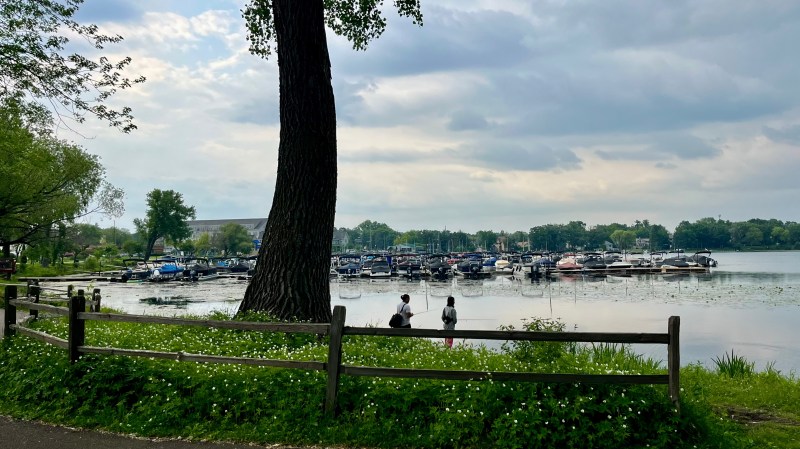
As phosphorus inputs decline, watershed organizations focus their attention on shorelines

A recent report from the Natural Shorelines Partnership noted that Minnesota has lost 50% of its natural shorelines over the past 100 years, and continues to lose shoreline habitat at a rate of 1-2% per decade.

Read More

Carrying stories around the bend – A restoration tale from Rice Creek

When the Twin Cities Army Ammunition Plant closed in 2005, it created an opportunity for Ramsey County to restore the surrounding landscape and for Rice Creek Watershed District to nurse the neglected stream back to good health.

Read More

Minnesota water – some getting better, some getting worse

In the Twin Cities east metro, improving lakes that are set to be “de-listed” include Bone Lake – Scandia (Comfort Lake – Forest Lake Watershed District); White Rock Lake – Scandia, Bald Eagle Lake – White Bear Township, and Golden Lake – Circle Pines (Rice Creek Watershed District); La Lake – Woodbury (South Washington Watershed District); and Kohlman Lake – Maplewood (Ramsey-Washington Metro Watershed District).

Read More

Tracking the health of Forest Lake area lakes and streams

Who tracks water quality in the Forest Lake area, and how do we nurse impaired lakes and streams back to good health?

Read More

Forest Lake Schools chart path to a greener future

Lakes International Language Academy & Forest Lake Area High School both gain recognition for environmental initiatives The fourth grade students at Lakes International Language Academy (LILA) have been learning a lot about water this year. “We have a science unit about matter and have focused on water throughout the year,” explains teacher Roberto Izquierdo. “It…

Read More

Hugo and Forest Lake find innovative ways to Reduce, Reuse & Replenish

Like most suburban communities, the City of Hugo uses nearly half of its municipal water supply to provide some form of irrigation. Unlike most communities, the city is telling residents in some neighborhoods to go ahead and keep the sprinklers running. It’s not that Hugo wants to waste water. In fact, the city is keenly…

Read More

As the Water Drop Rolls

Elsewhere across the east metro, homeowners wielding shovels and pitchforks laid traps, disguised as ornamental landscaping, to keep nutrients and other pollutants out of local waterways.

Read More

In Search of Hardwood Creek

Unique plants and animals that have long since disappeared from our area due to farming and development still find home in the groundwater fed wetlands surrounding the creek.

Read More

Local cities adapt to changing water availability

Redesigned stormwater ponds at Eagle Valley and Prestwick Golf Courses reuse runoff water from the road to water the golf course greens instead of pumping new water from the aquifer.

Read More