Brown’s Creek winds its way toward cleaner water

This summer, the Brown’s Creek Watershed District completes a large-scale stream restoration project, designed to reduce bank erosion, manage floodwaters during large rain events, and improve habitat for fish along a half-mile stretch of Brown’s Creek that flows between McKusick Ave. and the Brown’s Creek State Trail.

Members of the community are invited to view and learn about the Brown’s Creek stream restoration during a tour on Aug. 12 (6:30pm) and a community festival on Sept. 20 (10am-1pm).

Read More
One fish, two fish, plant for more fish?

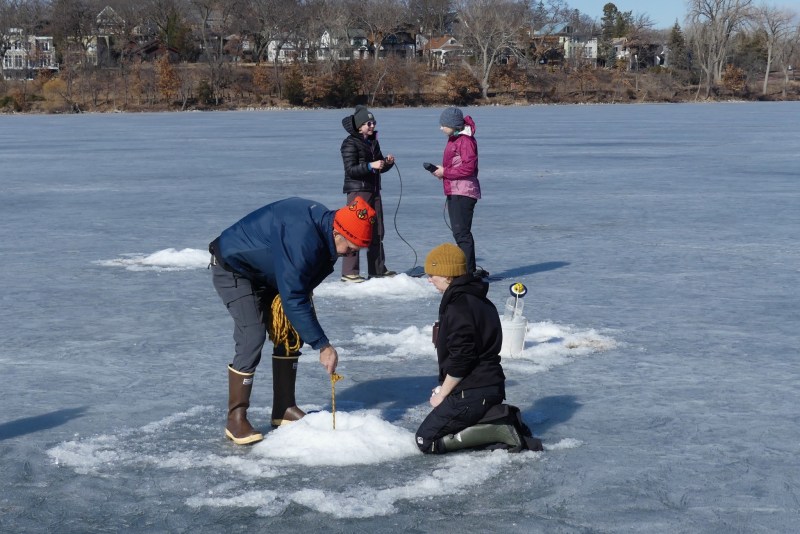
Seine netting is one technique that the Minnesota Department of Natural Resources (DNR) uses to collect fish when developing an “index of biological integrity” for a lake, known as an IBI score. The number and variety of fish caught helps the DNR to determine whether a lake fully supports aquatic life.

Read More

St. Croix Watershed research highlights growing impact of chloride pollution

Chloride is toxic to freshwater organisms like fish, frogs, and aquatic invertebrates and also alters lakes’ internal chemistry, causing a cascade of unexpected impacts.

Read More

Why is my lake green?

Across the state, numerous beaches have closed unseasonably early due to blue-green algal blooms, which can be toxic to both people and dogs.

How can you tell the difference between blue-green algae and run-of-the-mill pond scum?

Read More

Submit a nomination for 2025 Natural Shoreline Awards

The Natural Shoreline Award Program recognizes beautiful lakeshore, riverfront and streamside properties that incorporate native flowers, shrubs, trees and plants. Award-winning properties can be located in Chisago, Isanti, Ramsey or Washington Counties.

2025 Program Timeline:
– July 1 – August 7: Call for nominations
– August 7 – 31: Program judges will tour and evaluate shorelines
– September 9: Award recipients are announced

Learn more and submit your nominations.

Read More

Score your shore: A tool to measure the health of your lakeshore property

Maintaining and restoring lakeshore habitat isn’t just good for wildlife, it also helps to protect valuable real estate from literally washing away.

Read More

Keeping invaders out of Minnesota waters

In 2024, Minnesota deployed more than 800 watercraft inspectors to public boat launches around the state to help staunch the spread of zebra mussels, spiny waterflea, and other aquatic invaders. The goal? Preserve Minnesota’s famed “good life” and protect fishing, tourism, and cultural mainstays such as wild ricing and “up north at the cabin.”

One reason for optimism is that we are seeing fewer new infestations and better compliance with state laws for watercraft cleaning and inspections.

Unfortunately, however, the DNR still reported 41 new AIS infestations in Minnesota lakes and rivers last year.

Read More

Froggy Figaro

Minnesota is home to 14 species of frogs and toads. During the spring, their chorus rings out as the males search for females and compete to present themselves as the most attractive option with whom to settle down and make a few thousand babies. Because each species has a distinctly different call, you can determine which types of frogs live in your area simply by listening to their symphony.

Read More

Tips for dry feet and healthy wetlands

Though Minnesota might be known as the “Land of 10,000 lakes,” we could just as easily call ourselves the “Land of 1,000,000 wetlands.”

Read More

Minnesota Lakes – What’s in a Name?

Minnesota is home to 200 Mud Lakes, 150 Long lakes, and 120 Rice lakes.

In addition to their actual names, the Minnesota DNR also assigns lakes a shoreland classification – natural environment, recreational development, or general development – that is used to guide lot size, setbacks, and land uses on surrounding properties.

Read More