Submit a nomination for 2025 Natural Shoreline Awards

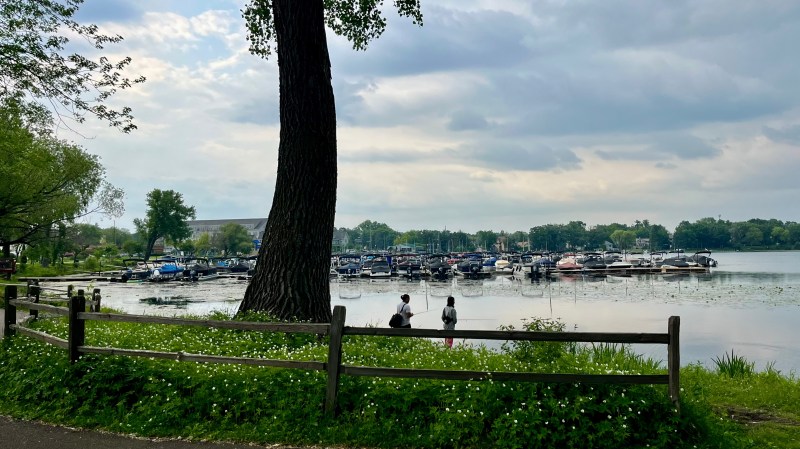
The Natural Shoreline Award Program recognizes beautiful lakeshore, riverfront and streamside properties that incorporate native flowers, shrubs, trees and plants. Award-winning properties can be located in Chisago, Isanti, Ramsey or Washington Counties.

2025 Program Timeline:
– July 1 – August 7: Call for nominations
– August 7 – 31: Program judges will tour and evaluate shorelines
– September 9: Award recipients are announced

Learn more and submit your nominations.

Read More

Mississippi River – Looking forward, looking back

The Mississippi tops American Rivers’ list of Most Endangered Rivers. And yet, as we look toward the future, there are reasons to remain optimistic.

Learn more and find ways to engage during “Mississippi River Days of Action” on June 1 – 15.

Read More

State funds help to amplify the work of local government partners in the St. Croix Watershed

Nearly 8000 square miles of land in Minnesota and Wisconsin drains to the St. Croix River. Within this larger basin, 915 square miles of land on the Minnesota side is included in the Lower St. Croix watershed. This encompasses 127 lakes, over 1,000 miles of rivers and streams, and approximately 152,000 acres of wetlands.

In its first four years, the Lower St. Croix Watershed Partnership reduced phosphorus to local waterways by 10,959 pounds per year, which is nearly double what the group hoped to achieve over the course of its 10-year plan.

Read More

Likely Stories: A Photographic Journey through Climate Adaptations in the St. Croix Watershed

“Likely Stories,” the project that emerged, can best be described as a photographic journey through climate adaptations in the St. Croix Watershed. As part of this project, the artists seek to document the local impacts of climate change, such as black ash swamps, decimated by Emerald ash borer, tamarack “ghost forests,” algae blooms on the river and inland lakes, and future changes at the Allen S. King power plant. Equally important, they also hope to showcase examples of individuals, communities and organizations that are taking action to build climate resiliency.

Read More

Chasing rainbows in the shallows

Seeing rainbows in the water at a stream or wetland near you? It could be from pollution, but not always! Learn how to tell the difference between natural sheens and spilled oil.

Read More

Local cities find innovative strategies to reduce chloride pollution

From heated sidewalks to GPS-based snow plow systems, local cities are taking big steps to reduce chloride pollution.

Read More

Will derby ducks sail on a cleaner creek in 2025?

The City recently restored a 300ft stretch of degraded stream along 3rd Ave. N near Perro Park, in partnership with Middle St Croix Watershed Management Organization (MSCWMO) and the Washington Conservation District. The goal of the project is to stabilize the streambank, reduce the amount of sediment and phosphorus flowing downstream to the St. Croix River, and improve habitat along Perro Creek. 

Read More

The Science of Leaves

Leaves are the primary source of organic matter in a woodland ecosystem and release essential nutrients like phosphorus and nitrogen as they decompose. In urban and suburban environments, however, fall leaves can also be a major source of stormwater pollution.

Studies show street sweeping can reduce phosphorus concentrations in stormwater by up to 80%.

Read More

As phosphorus inputs decline, watershed organizations focus their attention on shorelines

A recent report from the Natural Shorelines Partnership noted that Minnesota has lost 50% of its natural shorelines over the past 100 years, and continues to lose shoreline habitat at a rate of 1-2% per decade.

Read More